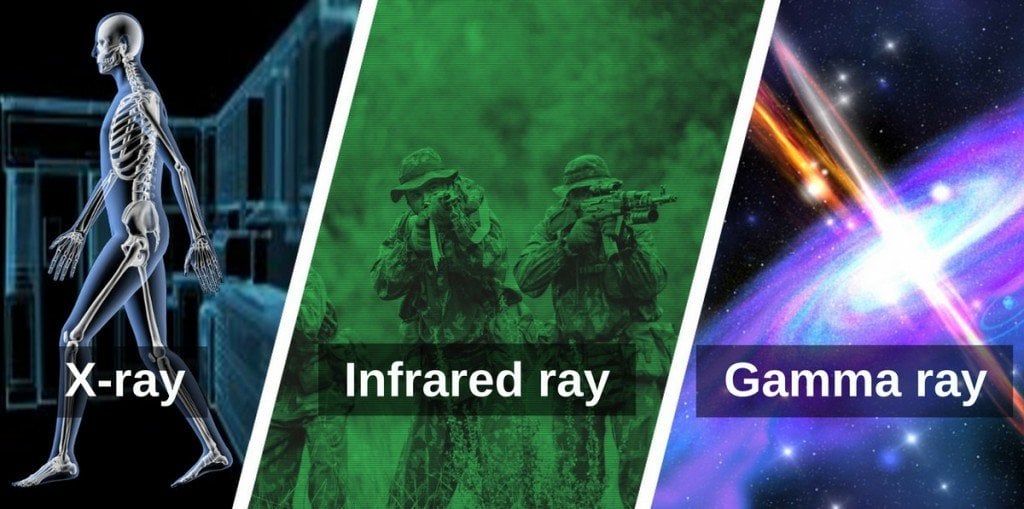
Yes,
Cadmium Zinc Telluride (CZT) is highly suitable for both
gamma-ray and
X-ray detection due to its excellent
material properties and ability to perform well in high-energy radiation environments. The effectiveness of CZT as a radiation detector comes from its
wide bandgap, high
atomic number (which increases the interaction probability with high-energy photons), and
good charge transport properties, which are essential for accurately measuring the energy and intensity of incident radiation. Below is a detailed explanation of how CZT performs in both
gamma-ray and
X-ray detection, highlighting the reasons for its suitability.
## 1. CZT for Gamma-Ray Detection
Gamma rays are high-energy photons with wavelengths shorter than X-rays, typically in the range of
100 keV to several MeV. Detecting gamma rays requires a material that can efficiently interact with these high-energy photons and provide a measurable signal. CZT is particularly effective for this purpose for several reasons:
## a. High Atomic Number
CZT has a relatively high atomic number compared to other semiconductor materials like silicon or germanium. The
atomic number of cadmium (Cd) is 48, zinc (Zn) is 30, and tellurium (Te) is 52, which results in a material with a higher
Zeff (effective atomic number). The higher atomic number increases the
photoelectric absorption cross-section, making CZT more efficient in absorbing
gamma photons. This enhanced photon absorption is particularly useful for detecting gamma radiation.
## b. High Density
CZT has a
high density (about
5.8 g/cm³), which is another key factor that increases the probability of photon interactions. High-density materials increase the
likelihood of gamma-ray interactions within the detector volume, improving the overall efficiency of the detection process.
## c. Efficient Charge Transport
For gamma-ray detection, CZT provides excellent charge transport properties, especially in terms of
carrier mobility and
charge collection efficiency. When a gamma photon interacts with the crystal, it produces
electron-hole pairs, which must be efficiently collected to generate a signal. The
high resistivity and
wide bandgap of CZT allow for
low leakage currents and
high-resolution energy measurements, which are crucial for accurately identifying gamma photon energies.
## d. Energy Resolution
CZT detectors offer
good energy resolution, which is vital for gamma-ray spectroscopy, where precise energy measurement is required. While
Germanium (Ge) detectors offer better energy resolution, CZT detectors offer a good balance of
performance and
cost-effectiveness.
Energy resolution is essential when distinguishing between gamma rays of different energies, and CZT's high charge collection efficiency aids in achieving this capability.
## 2. CZT for X-ray Detection
X-rays have slightly lower energies than gamma rays, typically in the range of
keV to hundreds of keV. While the fundamental requirements for detecting X-rays overlap with gamma-ray detection, the material properties required for X-ray detection have some additional considerations.
## a. High Photon Interaction Cross-Section
Like gamma rays, X-rays interact with the detector material primarily through the
photoelectric effect,
Compton scattering, and
pair production (at very high energies). CZT’s high atomic number and density provide a substantial
photon interaction cross-section for X-ray photons. This makes CZT highly efficient for detecting
X-rays across a wide range of energies, from
medical X-rays to
industrial X-ray inspection.
## b. Good Energy Resolution
X-ray detectors require
precise energy resolution for applications like
medical imaging (e.g., in
CT scans or
radiography) or
security scanning. CZT’s high
charge collection efficiency and
low leakage current contribute to
better energy resolution than other solid-state detectors like
sodium iodide (NaI) or
silicon detectors. This makes CZT a popular choice for applications where
high-resolution X-ray imaging is necessary.
## c. Direct Conversion of X-ray Photons
CZT is a
direct conversion detector, meaning it directly converts
X-ray photons into
charge carriers (electrons and holes) without the need for a scintillator material. This characteristic reduces the
complexity and
size of the detector system and enhances the
signal-to-noise ratio. Direct conversion also provides
faster response times, which is important in dynamic X-ray imaging applications.
## d. Immunity to Light Sensitivity
Unlike scintillator-based detectors, which are sensitive to
ambient light, CZT detectors are
insensitive to visible light. This makes them ideal for environments where ambient light might interfere with the detection process, such as in
medical imaging or
industrial radiography.
## 3. Key Advantages of CZT for Both Gamma-Ray and X-ray Detection
## a. High Detection Efficiency
CZT's
high atomic number and
density ensure that it provides high
photon interaction efficiency for both gamma and X-ray photons. This results in
better detection efficiency compared to other semiconductor materials like
silicon, which is less effective for high-energy photon detection.
## b. Compact and Portable
Since CZT detectors are
solid-state and
compact, they can be made into portable and rugged detection devices. This is particularly beneficial in applications where portability is important, such as
field detection,
security screening, and
medical diagnostics.
CZT-based detectors can be smaller and lighter than traditional detectors that rely on bulky
scintillators or
photomultiplier tubes (PMTs).
## c. Radiation Hardness
CZT is relatively
radiation hard, meaning that it can tolerate
high radiation doses without significant degradation of its performance. This is important for applications like
nuclear monitoring and
space exploration, where detectors are exposed to significant radiation fields over long periods.
## d. Wide Range of Applications
CZT is versatile and can be used in a broad range of applications requiring gamma-ray or X-ray detection. Some of these applications include:
*
Medical Imaging: CZT is used in
positron emission tomography (PET),
single photon emission computed tomography (SPECT), and
X-ray computed tomography (CT).
*
Industrial Imaging: CZT is used for
industrial X-ray inspection and
non-destructive testing (NDT), providing high-resolution images of materials or components.
*
Security and Border Control: CZT detectors are utilized in
security screening and
cargo inspection to detect contraband or nuclear materials.
*
Nuclear Monitoring: CZT is commonly used in
radiation monitoring and
nuclear material detection, such as in
nuclear power plants or
radiological emergency response systems.
## 4. Challenges of CZT for Gamma-Ray and X-ray Detection
While CZT is an excellent material for both gamma-ray and X-ray detection, it is not without its challenges:
## a. Material Defects
High-quality CZT crystals can be difficult to grow without defects, such as
dislocations or
grain boundaries, which can degrade the material’s
charge transport properties. These defects can lead to
poor energy resolution and
inefficient charge collection, especially in high-energy radiation detection.
## b. Cost and Scalability
The synthesis of high-quality CZT crystals is costly and requires specialized equipment. As a result, CZT detectors are more expensive than other materials like
silicon or
scintillators, which can limit their use in some applications. Furthermore, scaling up CZT production while maintaining consistent quality remains a challenge.
## c. Doping Control
Controlling the doping levels in CZT for
p-type and
n-type conductivity is crucial for achieving the desired performance in radiation detection.
Inhomogeneous doping or
overdoping can lead to
defects that affect the efficiency and performance of the detector.
## Conclusion
CZT is a versatile and highly effective material for both
gamma-ray and
X-ray detection. Its
high atomic number,
density,
energy resolution, and
charge transport properties make it an ideal choice for a wide range of radiation detection applications, from
medical imaging to
nuclear monitoring and
industrial inspection. While there are challenges related to
material defects,
cost, and
doping control, the continued development of CZT technology and crystal growth methods is improving its performance and making it a more accessible solution for high-energy photon detection.
CdZnTe Association (CdZnTe.com)
https://www.cdznte.com/blog/can-czt-be-used-for-both-gamma-ray-and-x-ray-detection.html



