Yes,
CZT detectors (
Cadmium Zinc Telluride) can indeed be used in
high-energy particle physics experiments, although their application in this field is somewhat specialized due to the unique requirements and characteristics of high-energy particle detectors. While other materials like
germanium and
silicon are more commonly associated with particle physics experiments, CZT’s specific advantages make it a viable option for certain types of detectors used in high-energy physics (HEP). The following detailed discussion explores how CZT detectors are applied in this field, the reasons for their use, and the advantages and challenges they present.
## 1. CZT Detectors in High-Energy Particle Physics: Key Applications
## a. Gamma-Ray and X-Ray Detection in HEP
* In
high-energy particle physics experiments,
gamma-ray and
X-ray detection plays a crucial role in identifying particle interactions, particularly in experiments involving
nuclear decay processes,
particle collisions, and
background radiation.
*
CZT detectors are capable of
high-energy photon detection due to their relatively
high atomic number (Z), making them efficient at detecting
gamma rays and
X-rays produced during particle interactions. This is particularly valuable in experiments studying
neutrino interactions,
dark matter, or other
rare particle processes, where gamma photons often carry important information about the underlying physics.
## b. Tracking and Imaging in High-Energy Physics Experiments
*
CZT-based detectors are used in some
imaging systems designed for high-energy physics applications, particularly in experiments where detecting the
position and
energy of particles is essential for understanding particle trajectories and decay processes. For instance,
CZT detectors are sometimes integrated into
tracker systems that measure the
energy deposition of particles as they pass through various detectors.
*
CZT’s ability to operate at room temperature makes it particularly suitable for these applications, where temperature stability and portability are often required.
## c. Background Radiation Measurement
* In particle physics experiments,
background radiation from cosmic rays and other environmental sources can interfere with measurements.
CZT detectors are often employed to measure these background signals, which is crucial for improving the
signal-to-noise ratio in high-energy experiments.
* For example,
CZT is used in
shielding systems to monitor radiation levels and ensure that
background contamination does not affect the accuracy of particle collision or detection experiments.
## 2. Advantages of CZT in High-Energy Particle Physics
## a. High Energy Resolution
* One of the main advantages of
CZT detectors is their
high energy resolution, which makes them useful for distinguishing between closely spaced energy levels in particle interactions. In high-energy physics experiments, the ability to precisely measure the energy of incoming particles or radiation is critical for accurate
particle identification and
spectral analysis.
* For example,
CZT detectors have demonstrated excellent performance in
gamma spectroscopy, offering energy resolution around
6-10% at
662 keV. This allows them to detect specific energy signatures from particle interactions or secondary radiation, contributing valuable data to the experiment.
## b. Room-Temperature Operation
* Unlike materials like
germanium, which require
cryogenic cooling to achieve optimal performance,
CZT detectors can operate effectively at
room temperature. This is a significant advantage in high-energy particle physics experiments, where the logistics of cooling systems can add complexity, weight, and power requirements.
*
Room-temperature operation allows for
compact designs and
simplified systems, especially in experiments where space and weight constraints are critical, such as those aboard spacecraft or in portable field instruments.
## c. Compactness and Versatility
*
CZT detectors are compact and easy to integrate into a variety of detector systems, including
scintillator-coupled devices,
imaging detectors, and
spectroscopic systems. Their
small size and
flexibility make them well-suited for high-energy physics experiments where precision is needed in tight spaces.
* The use of
CZT in multi-detector arrays allows for more sophisticated measurements, such as
position-sensitive gamma-ray spectroscopy and
advanced particle tracking, without significantly increasing the system’s size.
## d. Radiation Hardness
*
CZT detectors are relatively
radiation-hard, meaning they can withstand higher levels of ionizing radiation without significant degradation in performance. This is a crucial advantage in high-energy particle physics experiments, where detectors are exposed to high fluxes of radiation over long periods of time.
*
Radiation hardness ensures that
CZT detectors maintain stable
energy resolution and
detection efficiency even in extreme environments, such as those encountered in
high-energy particle accelerators or
space-based experiments.
## 3. Specific Use Cases in High-Energy Particle Physics
## a. Dark Matter Detection
* One of the most promising applications of
CZT detectors in particle physics is in the search for
dark matter. Several
dark matter detection experiments, including those focused on
weakly interacting massive particles (WIMPs), use
CZT-based detectors to measure the energy of particles produced in rare interactions.
*
CZT's ability to detect low-energy gamma rays and X-rays makes it ideal for such experiments, where the goal is to detect faint signals from dark matter interactions, which may involve the emission of gamma rays or electron recoils.
* Experiments like CoGeNT and CRESST (Cryogenic Rare Event Search with Superconducting Thermometers) have incorporated CZT detectors to help measure nuclear recoil events associated with possible dark matter particles.
## b. Neutrino Detection
* In neutrino physics, CZT-based detectors are sometimes used to detect the secondary gamma rays or X-rays produced when neutrinos interact with matter. Although neutrinos themselves are notoriously difficult to detect due to their weak interaction with matter, they can induce secondary radiation that can be captured using high-resolution detectors like CZT.
* CZT can be used in neutrino observatories or as part of multi-detector arrays in large-scale experiments aimed at studying neutrino properties, such as mass and oscillations.
## c. Particle Collision Experiments
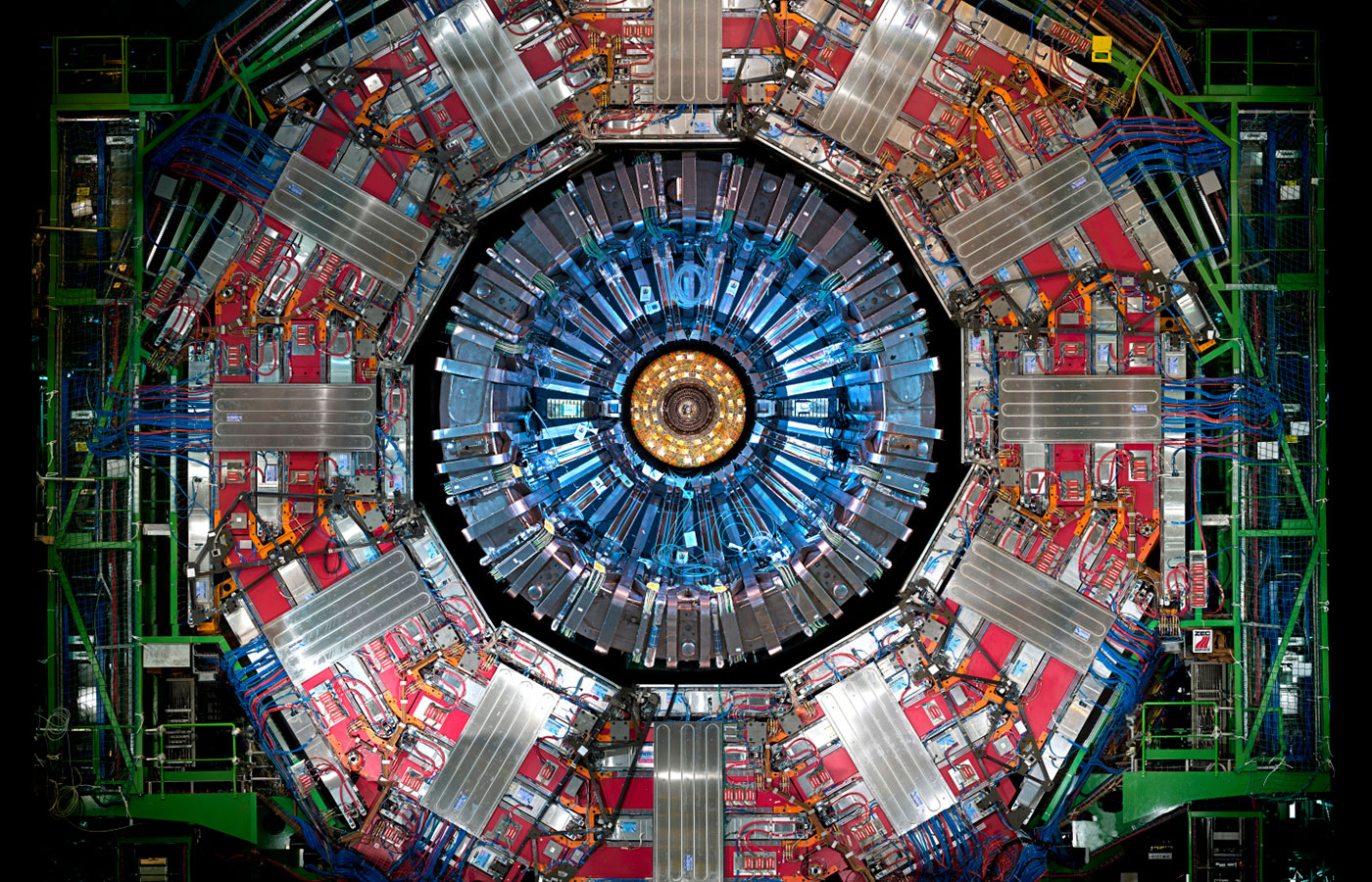
* In experiments at particle accelerators such as LHC (Large Hadron Collider), CZT detectors can be integrated into calorimeters or tracking systems to measure the energy deposition from high-energy particles produced during collisions.
* CZT's high energy resolution makes it particularly useful for distinguishing between different types of particle interactions, improving the data quality and event reconstruction in particle physics experiments. These detectors can help identify and study hadronic decays or high-energy photons produced during particle collisions.
## 4. Challenges of Using CZT in High-Energy Particle Physics
Despite its advantages, there are several challenges that can limit the widespread use of CZT detectors in high-energy particle physics:
## a. Charge Collection Efficiency
* Charge trapping and carrier recombination can reduce the charge collection efficiency of CZT detectors, especially in the presence of defects in the crystal. This can lead to poor energy resolution and reduced detector performance.
* High-quality CZT crystals with fewer dislocations and impurities are necessary to achieve optimal performance, but achieving perfect crystals can be challenging and expensive.
## b. Size and Cost
* While CZT detectors are compact, they may still be too expensive for use in large-scale particle physics experiments that require extensive detector arrays. The production of high-quality CZT crystals is still costly, which could limit its application in experiments that require large volumes of detection material.
## c. Material Defects and Crystal Growth
* The quality of CZT crystals is highly sensitive to the growth process and material purity. Small imperfections or contaminants can lead to inefficient charge collection, low detection efficiency, and poor energy resolution.
* Ensuring high-quality crystals for large-scale experiments remains a challenge in the development of CZT detectors for high-energy physics applications.
## Conclusion
In conclusion, CZT detectors have several key advantages that make them suitable for high-energy particle physics experiments, particularly in areas like gamma-ray detection, dark matter searches, neutrino studies, and background radiation monitoring. Their high energy resolution, room-temperature operation, and compactness make them an attractive choice in certain contexts, even though there are still challenges related to material quality, charge collection efficiency, and cost. As the technology for growing high-quality CZT crystals improves and the demand for compact, efficient, and radiation-hard detectors increases, CZT is likely to play an increasingly important role in high-energy physics experiments.
CdZnTe Association (CdZnTe.com)
https://www.cdznte.com/blog/can-czt-detectors-be-used-in-high-energy-particle-physics-experiments.html


