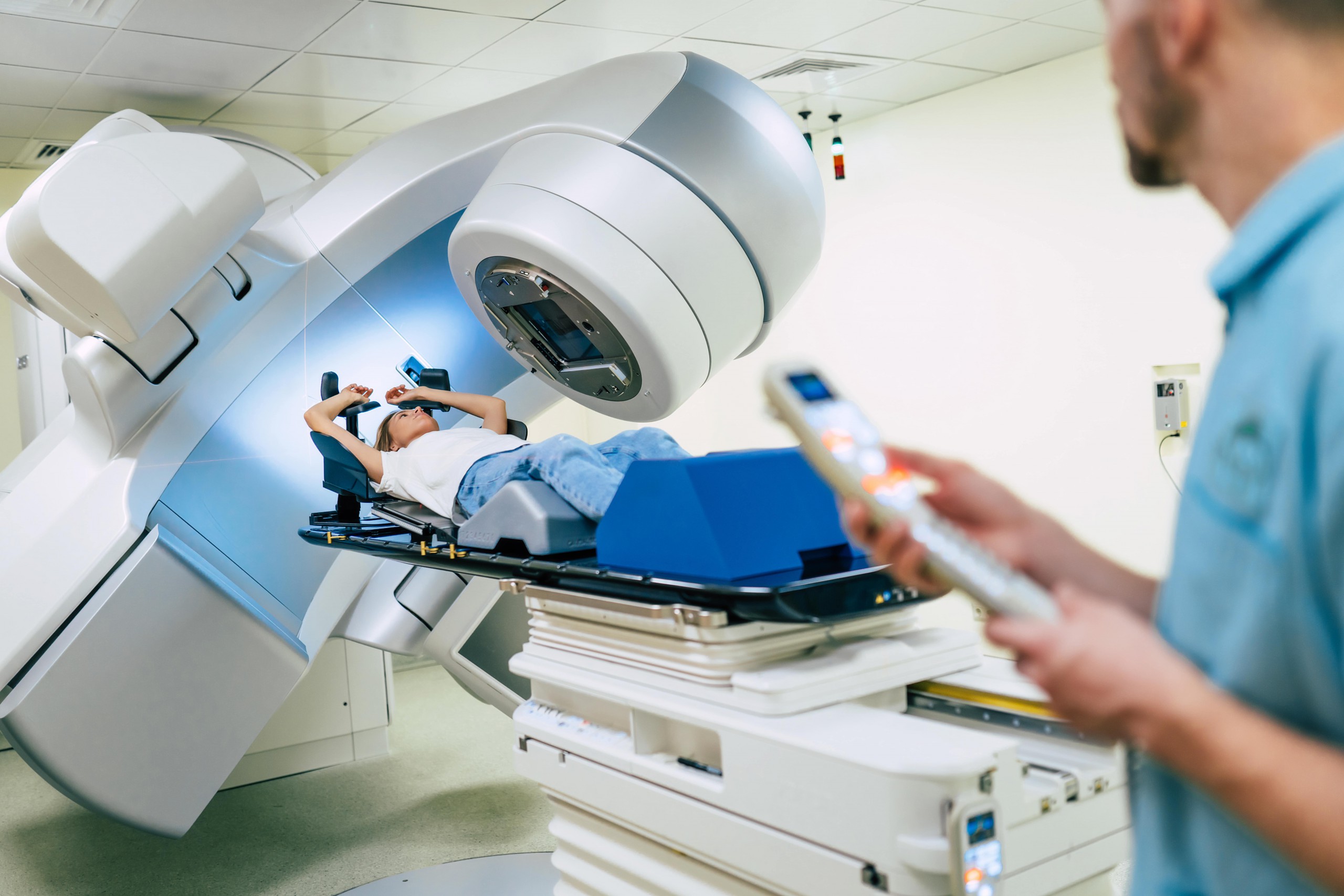
Medical radiation therapy plays a crucial role in the treatment of cancer and various other medical conditions. The effectiveness of radiation therapy heavily depends on the accuracy of radiation dose delivery and the ability to visualize the distribution of radiation within the body. Imaging systems that use radiation detectors are essential for treatment planning, real-time monitoring, and post-treatment evaluation.
Among the various detector technologies available for medical radiation therapy,
CZT (Cadmium Zinc Telluride) detectors and
scintillator-based detectors are two widely utilized technologies, each offering distinct advantages and limitations in terms of
sensitivity,
resolution, and
performance in different therapeutic settings. This detailed overview compares
CZT detectors and
scintillator-based detectors in the context of
medical radiation therapy.
## 1. Role of Radiation Detectors in Medical Radiation Therapy
Radiation therapy relies on precise dose delivery to target tumors while minimizing damage to surrounding healthy tissues. Key aspects of radiation therapy where detectors play a vital role include:
*
Treatment Planning: Accurate delineation of tumor boundaries and surrounding healthy tissues is essential for effective treatment planning. Imaging modalities such as
CT scans,
PET scans, and
X-ray systems are commonly used in this phase, where radiation detectors measure the intensity and energy of radiation beams.
*
Intra-treatment Monitoring: Continuous monitoring of radiation dose distribution in real-time during therapy ensures that the treatment is precisely delivered. Detectors help track radiation dose delivery and verify that the treatment area receives the intended dose.
*
Post-treatment Evaluation: After therapy, the imaging system may be used to assess the effectiveness of treatment, identify any changes in tumor volume, and evaluate potential side effects.
Both
CZT detectors and
scintillator detectors are commonly used in these applications, with their respective strengths and limitations influencing their choice for different medical radiation therapy systems.
## 2. CZT Detectors in Medical Radiation Therapy
CZT detectors are
solid-state semiconductor detectors that convert incoming ionizing radiation directly into electrical signals. The direct conversion of radiation into an electrical signal makes
CZT detectors highly efficient and capable of providing detailed information on both
spatial resolution and
energy resolution.
## Advantages of CZT Detectors in Medical Radiation Therapy
*
High Energy Resolution: One of the most significant advantages of
CZT detectors is their
high energy resolution, making them highly suitable for applications that require precise energy discrimination. In radiation therapy, this capability is essential for identifying and distinguishing radiation from different sources, as well as for characterizing the energy spectrum of the radiation being delivered to the tumor. Accurate energy resolution enhances the ability to assess the quality of radiation beams and optimizes treatment planning.
*
High Spatial Resolution:
CZT detectors offer
superior spatial resolution compared to scintillator-based detectors. High spatial resolution is particularly crucial in radiation therapy for accurate
tumor localization and ensuring that the treatment dose is precisely delivered to the target area. This is especially important in
conformal radiation therapy, where radiation beams are shaped to conform to the tumor’s contours, as well as in
stereotactic radiation therapy where high precision is required.
*
Direct Conversion of X-rays to Electrical Signals: The
direct conversion process in
CZT detectors eliminates the need for intermediate light conversion, which results in fewer losses and greater clarity in the final image. This direct conversion helps to maintain image sharpness and minimizes the
blurring and
signal distortion that can occur with other technologies such as
scintillator detectors.
*
Compact and Lightweight:
CZT detectors are compact and lightweight, which is advantageous for applications such as
mobile radiation therapy systems or when integrating detectors into small spaces, such as in
beam monitoring systems.
*
Real-time Dose Measurement: Due to their
high sensitivity and
real-time response,
CZT detectors are ideal for continuous monitoring during radiation delivery. This real-time feedback helps ensure that the radiation dose is being delivered accurately and within prescribed limits.
## Challenges and Limitations of CZT Detectors
*
Cost:
CZT detectors tend to be more expensive than scintillator detectors due to the complex manufacturing process and the material costs of
Cadmium Zinc Telluride crystals. This cost factor can be a limiting factor in certain clinical settings or for small clinics with limited budgets.
*
Temperature Sensitivity:
CZT detectors can be sensitive to
temperature fluctuations, and maintaining optimal performance may require cooling systems. This can be a challenge in real-time therapy settings where the detector needs to maintain consistent performance over long treatment periods.
*
Manufacturing Complexity: The fabrication of
CZT detectors can be challenging, and achieving the desired material quality can be difficult. This may lead to variations in
detector performance and require additional calibration to ensure accuracy.
## 3. Scintillator Detectors in Medical Radiation Therapy
Scintillator detectors utilize materials such as
NaI(Tl) (sodium iodide doped with thallium),
CsI(Tl) (cesium iodide doped with thallium), and other scintillating crystals that emit visible light when exposed to ionizing radiation. This emitted light is then converted into an electrical signal by a
photomultiplier tube (PMT) or
photodiode.
## Advantages of Scintillator Detectors in Medical Radiation Therapy
*
High Throughput and Speed:
Scintillator detectors are often faster than
CZT detectors in terms of response time. This makes them ideal for applications that require
real-time monitoring and
high throughput. Scintillator-based detectors are frequently used in
dynamic imaging systems where multiple frames per second are required, such as in
fluoroscopy or
real-time tumor tracking during radiation delivery.
*
Cost-Effectiveness:
Scintillator-based detectors are generally more
cost-effective compared to
CZT detectors, making them attractive for widespread use in medical radiation therapy systems, particularly in resource-limited settings or systems that do not require the highest possible resolution. Scintillators are readily available and simpler to manufacture than
CZT detectors, which helps reduce costs.
*
Robustness:
Scintillator detectors are known for their
robustness and
stability in various environmental conditions. They are less sensitive to temperature variations compared to
CZT detectors, which can be advantageous for long treatment sessions or when operating in fluctuating environments.
*
Well-established Technology: Scintillator detectors have been in use for many years in various
radiology and
nuclear medicine applications. Their performance is well-understood, and they are a
reliable and
proven technology for medical radiation therapy systems.
## Challenges and Limitations of Scintillator Detectors
*
Lower Energy Resolution: One of the most significant drawbacks of
scintillator detectors is their
lower energy resolution compared to
CZT detectors. This limits their ability to accurately distinguish between different energies of radiation, which can be a disadvantage in therapies that require precise control over radiation types (e.g.,
proton therapy or
heavy ion therapy).
*
Lower Spatial Resolution: Scintillator-based detectors generally offer
lower spatial resolution than
CZT detectors, which can affect the precision of tumor targeting. The need for light conversion, followed by detection via
photomultiplier tubes, introduces
signal losses and
blurring in the image, making it more challenging to achieve high-definition imaging for accurate treatment planning.
*
Light Scattering:
Scintillators can experience
light scattering within the crystal material, leading to a decrease in the spatial accuracy of the detection process. The
photomultiplier tubes (PMTs) or
photodiodes used in scintillator systems can also introduce additional noise, further affecting the image quality.
## 4. Comparison of CZT and Scintillator Detectors in Medical Radiation Therapy
Here’s a detailed comparison of
CZT detectors and
scintillator-based detectors in terms of their performance for medical radiation therapy:
|
Performance Factor |
CZT Detectors |
Scintillator Detectors |
| ----------------------------- | ----------------------------------------------------------------------------------------------------- | ----------------------------------------------------------------------------------------------------------- |
|
Energy Resolution | High, provides accurate differentiation of radiation energy | Lower, less effective in energy-sensitive applications |
|
Spatial Resolution | High, suitable for precise tumor localization and accurate treatment planning | Moderate, can result in lower precision in tumor targeting |
|
Real-time Monitoring | Excellent, provides real-time dose and radiation monitoring | Good, fast response but limited by light conversion process |
|
Cost | High, due to complex manufacturing process and material costs | Lower, more cost-effective and accessible |
|
Temperature Sensitivity | Sensitive, may require cooling systems to maintain performance | Less sensitive, stable under varying temperatures |
|
Durability and Robustness | Can be sensitive to environmental conditions, especially temperature | More robust, stable in diverse environments |
|
Applications | Best for high-resolution imaging, energy-sensitive radiation monitoring, and real-time tumor tracking | Suitable for general-purpose radiation therapy, fluoroscopy, and systems with lower resolution requirements |
## 5. Conclusion
Both
CZT detectors and
scintillator-based detectors offer unique advantages and trade-offs in
medical radiation therapy applications.
CZT detectors are highly suited for applications requiring
high spatial resolution,
energy resolution, and
real-time dose monitoring, making them ideal for
conformal therapy,
stereotactic treatments, and high-precision
tumor tracking. However, their
higher cost and
temperature sensitivity may limit their use in certain environments.
On the other hand,
scintillator detectors are
cost-effective,
robust, and capable of high-throughput, making them ideal for
general-purpose imaging in medical radiation therapy. While they offer lower spatial and energy resolution than
CZT detectors, their
speed and
reliability make them suitable for a variety of clinical applications where high resolution is not critical.
In conclusion, the choice between
CZT detectors and
scintillator-based detectors in medical radiation therapy depends on the specific requirements of the treatment system, including
resolution,
cost, and the need for
real-time monitoring and
precise dose delivery.
CdZnTe Association (CdZnTe.com)
https://www.cdznte.com/blog/czt-vs-scintillators-for-medical-radiation-therapy-a-technological-overview.html



