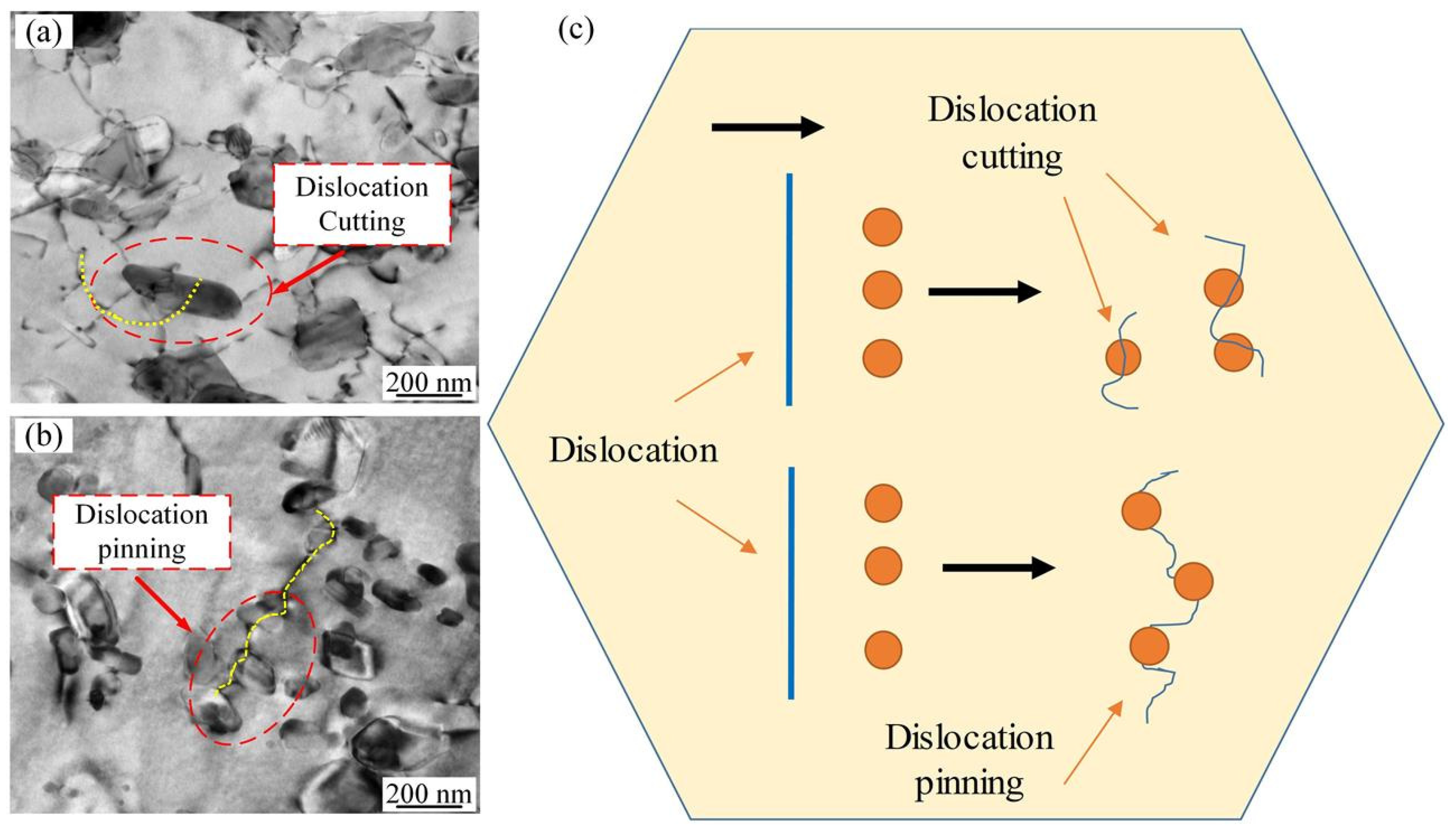
Free carriers injected by electrodes or generated by illumination in CdZnTe play a significant role in
dislocation pinning, which affects the material’s mechanical and electronic properties. The underlying mechanisms involve interactions between these carriers and the defects or dislocations in the crystal lattice. Here is a detailed explanation:
## 1. Carrier Trapping at Dislocation Sites
* Dislocations in CdZnTe act as
extended defects with localized electronic states within the bandgap.
* Free carriers (electrons or holes) injected by electrodes or generated by illumination can become
trapped at these localized states along dislocation cores or in the strain fields surrounding dislocations.
* The trapped charges modify the
electrostatic environment near the dislocation, effectively creating
Coulombic pinning centers that hinder the motion of the dislocation line under mechanical stress.
## 2. Charge-Induced Lattice Distortion
* When carriers are trapped at or near dislocations, they induce
local lattice distortions due to their charge and associated electric fields.
* This distortion increases the
energy barrier for dislocation glide or climb by altering the potential landscape that dislocations experience.
* As a result, dislocations become less mobile, which manifests macroscopically as increased hardness and reduced plasticity.
## 3. Modification of Dislocation Core Charge State
* The charge state of a dislocation core can change with carrier injection or illumination-generated carriers.
* Changing the dislocation’s charge state can modify the
interaction strength between dislocations and other defects or impurities, effectively increasing their
pinning strength.
* For example, a neutral dislocation may become negatively or positively charged, enhancing its interaction with charged point defects or impurity atoms, leading to stronger anchoring.
## 4. Screening and Electrostatic Forces
* Free carriers alter the
screening length of the material; increased carrier concentration reduces the screening length.
* A shorter screening length can increase the localized electrostatic forces at the dislocation, further
restricting dislocation movement.
* Conversely, if carrier concentration is low, electrostatic interactions are weaker and dislocations can move more freely.
## 5. Carrier-Mediated Interaction with Point Defects
* Dislocations often interact with
point defects (vacancies, interstitials, impurity atoms), which also trap carriers.
* Carrier trapping can stabilize these point defects near dislocations, enhancing their pinning effect.
* The combined dislocation-point defect-carrier complex forms a more stable and less mobile obstacle to dislocation motion.
## 6. Dynamic Pinning Under Illumination and Bias
* Under illumination or applied bias, continuous generation or injection of carriers maintains a steady-state population of trapped charges at dislocations.
* This dynamic equilibrium sustains dislocation pinning over time, increasing mechanical strength and potentially modifying electronic transport properties.
## Summary
Free carriers injected by electrodes or generated via illumination contribute to dislocation pinning in CdZnTe by:
* Being trapped at dislocation cores or nearby defect sites,
* Altering the electrostatic potential and charge state of dislocations,
* Inducing local lattice distortions that increase dislocation mobility barriers,
* Enhancing interactions between dislocations and point defects,
* Sustaining dynamic pinning under continuous carrier generation.
These effects combine to reduce dislocation mobility, increasing the hardness and improving the structural stability of CdZnTe crystals.
CdZnTe Association (CdZnTe.com)
https://www.cdznte.com/blog/how-do-free-carriers-injected-by-electrodes-or-generated-by-illumination-contribute-to-dislocation-pinning-in-cdznte.html



