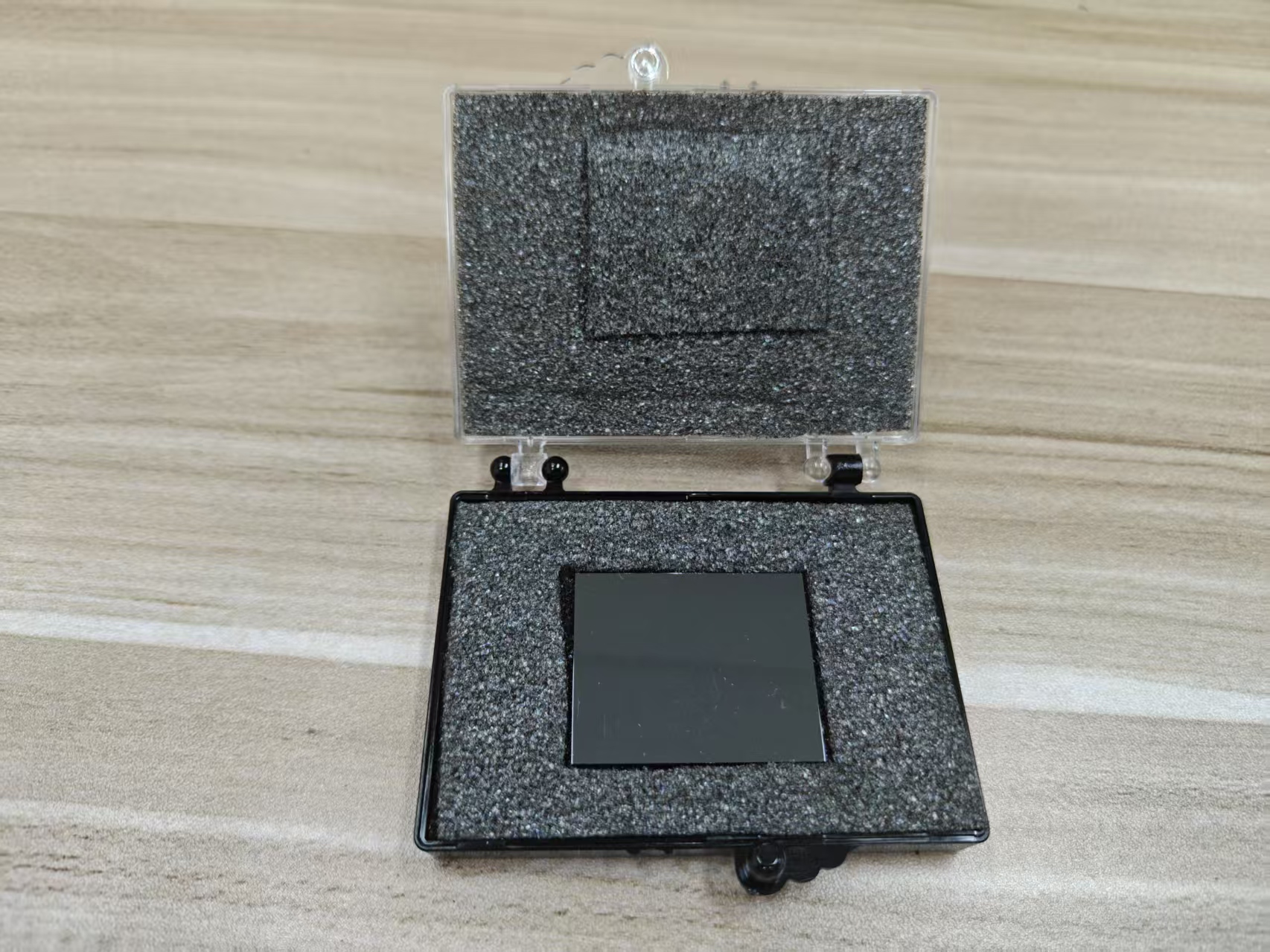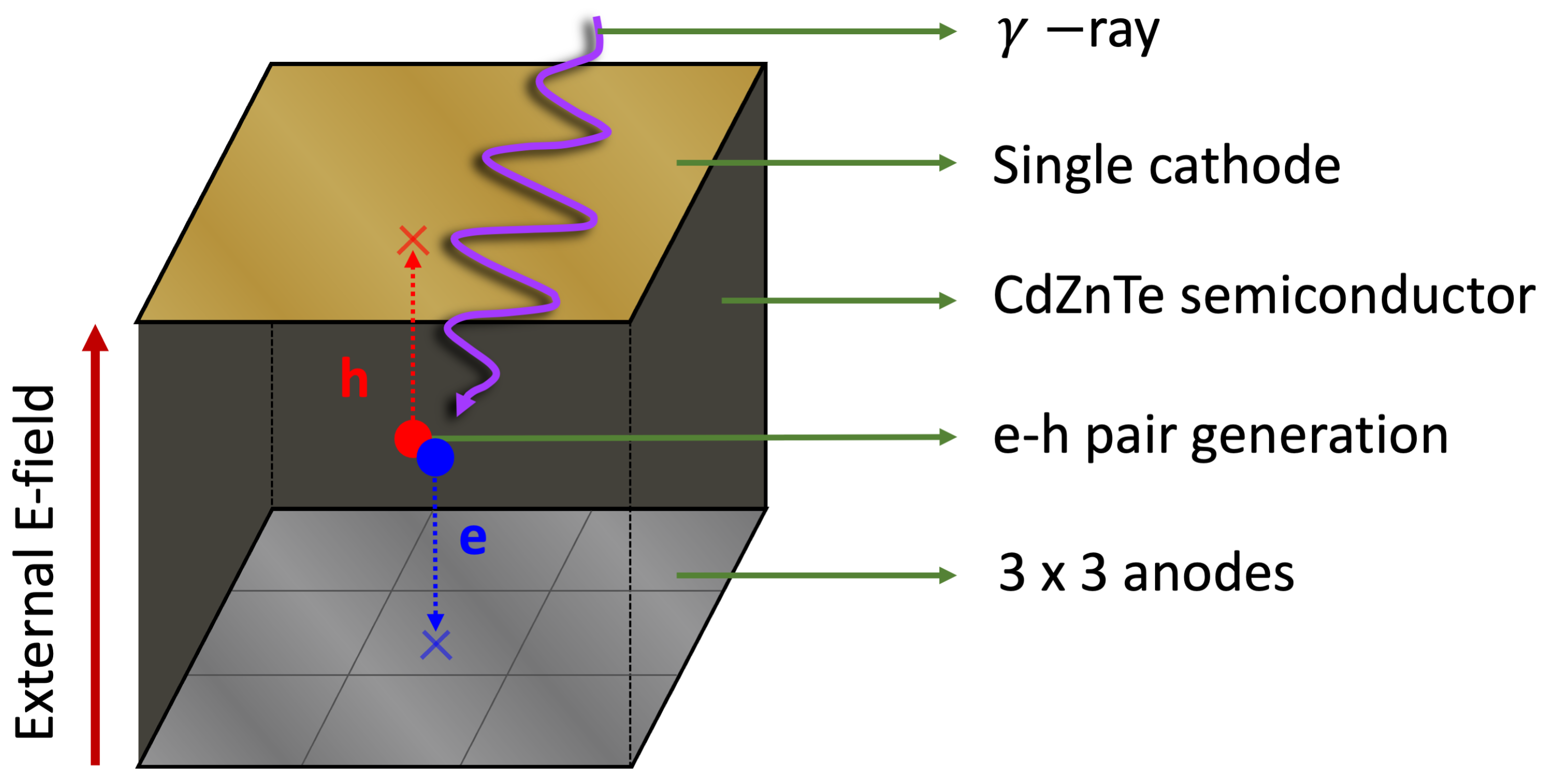
Al doping in CdZnTe (
Cadmium Zinc Telluride) films can significantly modify their photoluminescence (PL) properties, which is of particular interest in applications such as radiation detection and optoelectronics. The impact of Al doping on the PL properties is primarily influenced by how aluminum affects the crystal structure, electronic states, defect levels, and the overall material composition of the CdZnTe matrix. Below, we explore the key mechanisms through which Al doping modifies the PL properties of CdZnTe films.
## Carrier Concentration and Defect States
Al doping typically introduces changes in the carrier concentration and defect states within CdZnTe films. Aluminum, when substituted for Cd or Zn, can act as a donor dopant, introducing additional free electrons into the conduction band. These free carriers can influence the recombination dynamics of electron-hole pairs, which directly affects the PL emission characteristics.
In the case of CdZnTe, the doping of Al might increase the carrier concentration, leading to quenching of the PL intensity, particularly at low temperatures, due to enhanced non-radiative recombination through defect states. These defect states can arise from aluminum substitution or from the formation of new defect complexes, such as aluminum-vacancy pairs, which can act as recombination centers, promoting non-radiative processes.
## Shifts in Emission Peaks
Al doping can lead to changes in the energy levels of the material, altering the positions of the PL peaks. The incorporation of Al atoms, which have a smaller ionic radius than Cd or Zn, may induce lattice strain or distortions. These structural modifications can change the bandgap of the material, leading to shifts in the energy of the PL emission. In general, if Al doping results in a larger bandgap due to lattice compression, the PL emission might shift to shorter wavelengths (blue shift), while if it induces lattice expansion, a red shift might be observed.
Moreover, Al doping can cause variations in the composition of the CdZnTe alloy (i.e., by altering the Zn/Cd ratio), which could lead to additional changes in the PL spectrum. For example, when the Al doping induces a shift in the balance of Cd and Zn, the PL characteristics will reflect changes in the alloy’s electronic structure and band alignment.
## Formation of Deep Level Defects
One of the most significant effects of Al doping on the PL of CdZnTe films is the potential formation of deep-level defects, especially under conditions of high doping concentration. Al can introduce new deep-level states within the bandgap, which can act as efficient non-radiative recombination centers. These deep levels may originate from:
*
Aluminum-related defects: When Al atoms substitute Cd or Zn in the lattice, they can introduce local lattice distortions, leading to defect states in the bandgap.
*
Al-vacancy complexes: The combination of Al and Cd or Zn vacancies can form complexes that create deep traps for carriers, reducing the recombination efficiency and thus the PL intensity.
These deep-level defects often result in broad, low-energy PL emissions in the visible or infrared region, typically associated with the transition of electrons from the conduction band to deep states within the bandgap. These defect-related emissions may significantly alter the high-energy band-edge PL emission, leading to a decrease in the intensity and quality of the near-band-edge PL.
## Strain and Lattice Distortions
The size mismatch between Al and Cd or Zn atoms can introduce strain into the crystal lattice of the CdZnTe film. This strain can affect the electronic structure and the effective mass of charge carriers, influencing the recombination processes. Strain-induced modifications to the electronic band structure may result in shifts of the PL peaks, changes in their intensity, or even the emergence of new emission bands associated with the relaxation of strain.
In some cases, high levels of doping may lead to phase segregation, where regions of the film rich in Al may exhibit altered PL properties compared to the bulk material. This phase segregation can also contribute to additional emission peaks or altered line shapes in the PL spectrum.
## Impact on Exciton Dynamics
In CdZnTe films, excitonic emissions play a key role in PL properties, especially at low temperatures. Al doping may modify the exciton binding energy and the exciton diffusion length due to changes in the electronic band structure. This can lead to alterations in the nature of the excitonic recombination process, such as a reduction in exciton lifetime or changes in the relative intensities of bound-exciton and free-exciton emissions.
At higher Al doping levels, the increased concentration of free carriers can also screen the Coulomb interaction between electrons and holes, potentially reducing excitonic effects and shifting the PL emissions toward more free carrier-related transitions.
## PL Intensity Quenching
In many cases, Al doping leads to a reduction in the overall PL intensity of CdZnTe films. This is primarily due to the increased carrier concentration and the generation of non-radiative recombination centers associated with the defects introduced by Al atoms. These non-radiative centers act as traps, which capture charge carriers before they can recombine radiatively, effectively quenching the PL emission. The quenching effect may be more pronounced at higher doping concentrations and can lead to the suppression of the PL signal, particularly at room temperature.
## Conclusion
Al doping in CdZnTe films significantly affects their photoluminescence properties by modifying carrier concentration, introducing defects, altering the crystal structure, and influencing exciton dynamics. The incorporation of Al can lead to shifts in the emission peaks, changes in the PL intensity, and the formation of deep-level defects, all of which play a crucial role in determining the optical properties of the material. While low levels of doping might enhance certain optical properties, higher concentrations can lead to defect-induced PL quenching and the formation of non-radiative recombination centers. Thus, careful control of Al doping concentrations and processing conditions is essential for optimizing the photoluminescence characteristics of CdZnTe films for specific applications.
CdZnTe Association (CdZnTe.com)
https://www.cdznte.com/blog/how-does-al-doping-modify-the-photoluminescence-properties-of-cdznte-films.html