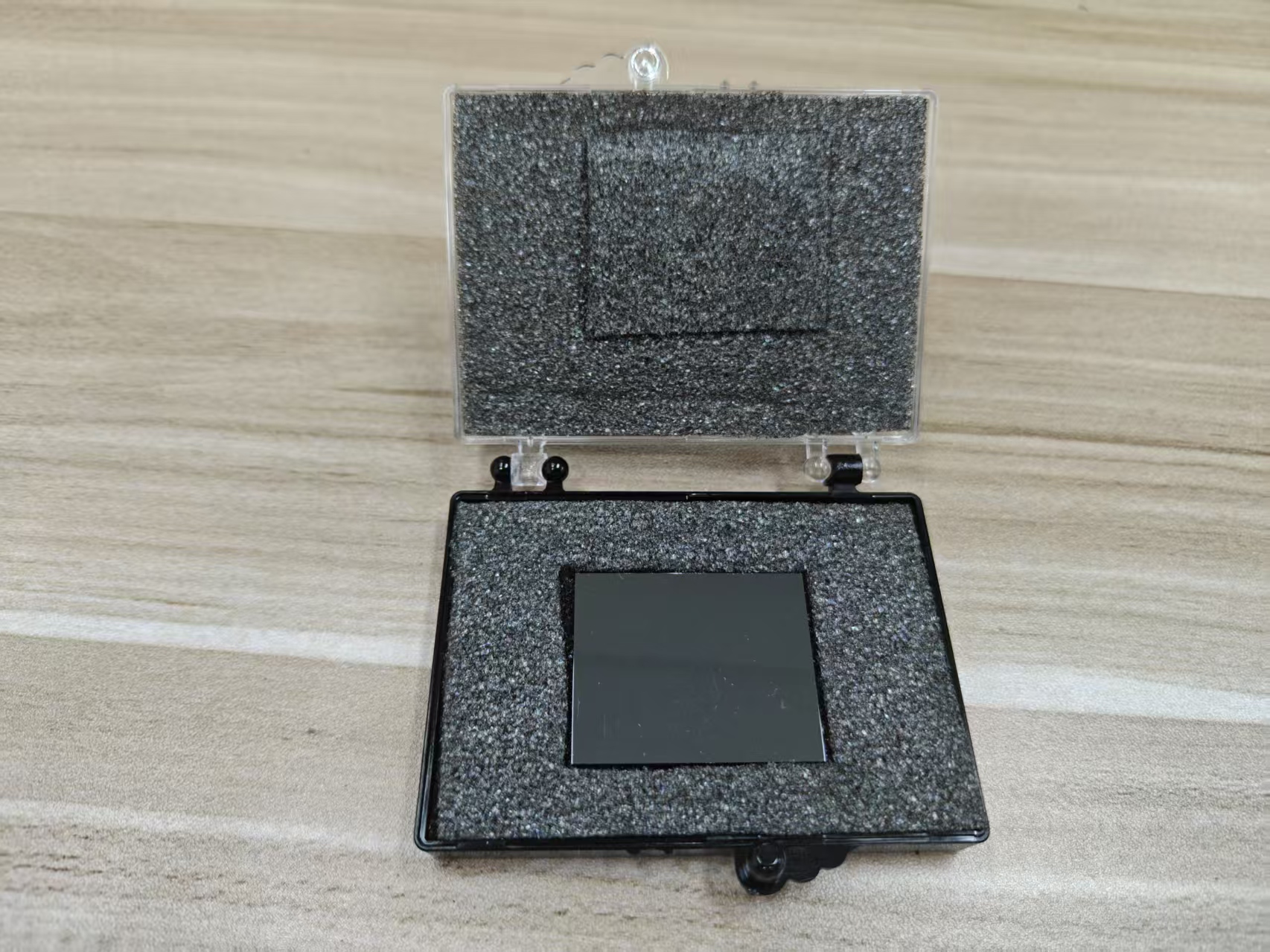
Cadmium Zinc Telluride (CZT)
 detectors and
scintillation materials are both widely used in radiation detection applications, but they have distinct characteristics and advantages that make them suitable for different purposes. In this detailed comparison, we’ll focus on key parameters like
energy resolution,
efficiency,
response time,
temperature sensitivity, and
operating conditions to understand how CZT compares to traditional scintillation materials.
## 1. Fundamental Principles of Detection
*
CZT Detectors: CZT is a
semiconductor material that works by directly converting
high-energy photons (like gamma rays or X-rays) into
electron-hole pairs. These pairs are separated and collected using an
applied electric field, generating a current that is measured and correlated to the energy of the incident photon. This is called
direct conversion.
*
Scintillation Materials: Scintillators are
phosphorescent materials that emit visible light when they interact with radiation. The incoming photons (gamma or X-rays) are absorbed by the scintillator and converted into
visible light photons. These light photons are then detected by a
photodetector (such as a
photomultiplier tube (PMT) or
photodiode), which converts the light into an electrical signal.
## 2. Energy Resolution
Energy resolution is a critical factor in radiation detection, especially for applications like
spectroscopy where accurate identification of photon energies is essential.
*
CZT:
CZT detectors typically offer
better energy resolution than scintillation detectors, especially in the
5-10% FWHM range at
662 keV (using
Cs-137). The
direct conversion mechanism in CZT leads to
more precise charge collection and thus better spectral performance, making CZT highly effective for applications requiring
high-resolution spectroscopy (e.g.,
nuclear spectroscopy,
radiological monitoring, and
medical imaging).
*
Scintillation Materials: Scintillators typically offer
poorer energy resolution compared to CZT. The energy resolution of
NaI(Tl) (the most commonly used scintillator) is typically in the
8-10% FWHM range at
662 keV. The
light output of scintillators can vary depending on the type of material and its
luminescence efficiency, which affects the accuracy with which the energy of the incident photon is measured. In some scintillators,
non-proportional light yield (the relationship between the energy of the incoming photon and the emitted light) can degrade energy resolution.
## 3. Efficiency and Sensitivity
Efficiency refers to how well the material absorbs and interacts with the incident radiation, which is crucial for effective detection.
*
CZT: CZT has a
high atomic number and
high density, leading to a
high photon interaction probability, which results in better detection efficiency for
gamma rays and
X-rays compared to some scintillators. The
high Z elements in CZT (Cadmium, Zinc, and Tellurium) contribute to
greater photon absorption, especially for higher-energy gamma rays. Additionally,
direct photon-to-charge conversion makes CZT
more efficient at converting radiation into usable signals.
*
Scintillation Materials: Scintillators like
NaI(Tl) and
CsI(Tl) generally have good
photon detection efficiency, but their efficiency can be lower than CZT for certain energies. For instance,
NaI(Tl), which is widely used for gamma-ray detection, tends to have
good efficiency but can be less effective in certain high-energy gamma-ray applications when compared to CZT. Furthermore, the
light collection system in scintillation detectors can introduce losses in detection efficiency, as not all emitted light may reach the photodetector.
## 4. Response Time
The response time of a detector is important in time-sensitive applications, such as in
pulse-height analysis or
dynamic radiation environments.
*
CZT: CZT detectors are typically
faster in terms of response time compared to scintillation-based detectors. The
direct conversion of photon energy into
charge carriers results in
instantaneous collection and measurement of the signal. This allows CZT detectors to have a
shorter rise time and
fall time, making them ideal for high-throughput applications or situations requiring fast
time-resolved spectroscopy.
*
Scintillation Materials: Scintillation materials generally have
slower response times compared to semiconductor detectors like CZT. The conversion of photon energy into visible light and then the subsequent detection by a photodetector introduces a time delay. In some scintillators, especially in
organic scintillators, the
decay time (time it takes for the scintillator to stop emitting light after photon interaction) can be significant, which can limit their use in applications requiring
fast timing.
## 5. Temperature Sensitivity
Temperature sensitivity affects the detector's performance in varying environmental conditions, such as in
outdoor radiation monitoring or in
space applications.
*
CZT: CZT is generally
more temperature-sensitive than scintillation materials. The
charge transport properties of CZT can degrade at higher temperatures, leading to increased
dark current and
decreased energy resolution. To optimize performance, CZT detectors often require
cooling systems (typically
peltier cooling or
cryogenic cooling) when used in
high-precision applications.
*
Scintillation Materials: Scintillators, especially
NaI(Tl), are
less sensitive to temperature changes compared to CZT. The performance of scintillation detectors can be maintained over a wider range of temperatures without significant degradation, making them suitable for applications where temperature stability is crucial or difficult to control.
## 6. Size and Portability
CZT detectors tend to be
compact and
lightweight compared to traditional scintillation detectors, making them ideal for portable and field applications.
*
CZT: Since
CZT is a solid-state material, the detectors can be made
smaller and
more rugged than scintillation-based detectors, which typically require a
photomultiplier tube (PMT) and
optical coupling to the scintillator. This makes CZT detectors
more portable and easier to deploy in applications like
security screening,
radiation monitoring, and
nuclear safeguards.
*
Scintillation Materials: Scintillator detectors require a
photomultiplier tube (PMT) to detect the light emitted by the scintillator, making them bulkier. Additionally,
light collection systems (e.g.,
light guides) add to the overall size and weight of the detector. While
NaI(Tl) detectors are generally portable, they are still larger and less compact than solid-state detectors like CZT.
## 7. Radiation Hardness and Durability
Radiation hardness refers to a detector’s ability to withstand high levels of radiation without significant degradation in performance.
*
CZT:
CZT detectors exhibit good
radiation hardness, making them suitable for use in environments with high radiation flux, such as in
nuclear reactors,
space applications, and
medical applications. Their
solid-state nature makes them less susceptible to damage from radiation compared to scintillators, which can suffer from
light output degradation or
crystal damage over time.
*
Scintillation Materials: Scintillation crystals like
NaI(Tl) can experience degradation in their
scintillation light yield over time due to
radiation damage, especially under continuous exposure to high levels of radiation. In high-radiation environments,
scintillators may require frequent recalibration or replacement, which is not as necessary with CZT detectors.
## 8. Cost and Complexity
*
CZT: The manufacturing of high-quality
CZT crystals is more
complex and
costly compared to
scintillation materials. Growing defect-free CZT crystals is challenging, and achieving good charge transport properties requires precise control over the synthesis and
doping processes. As a result, CZT detectors tend to be
more expensive than scintillation-based detectors.
*
Scintillation Materials: Scintillation detectors, particularly
NaI(Tl), are generally
cheaper to produce than CZT detectors. The manufacturing process for scintillation materials is well-established and less complex than that for CZT.
NaI(Tl), in particular, offers
good performance at a
lower cost, making it a popular choice for many applications, especially where high energy resolution is not a critical requirement.
## 9. Applications
Both CZT and scintillation materials have
specific strengths that make them suitable for different applications:
*
CZT: Best for applications requiring
high energy resolution,
compact size,
radiation hardness, and
fast response time. This includes
nuclear spectroscopy,
medical imaging (such as
CT scans or
PET),
radiological monitoring, and
security screening.
*
Scintillation Materials: Preferred for
high-throughput applications like
industrial radiography,
security screening,
nuclear power plant monitoring, and
large-area radiation surveys. They are often chosen when cost and ease of use are more critical than
high energy resolution.
## Conclusion
CZT detectors and
scintillation materials each have their strengths and weaknesses, making them suitable for different radiation detection needs:
CZT: Offers
better energy resolution,
faster response time, and
higher efficiency, making it ideal for high-resolution applications such as spectroscopy and
medical imaging.
*
Scintillators: Generally provide
good detection efficiency and are easier to manufacture at lower cost, making them well-suited for
large-scale or
high-throughput applications where energy resolution and fast timing are less critical.
The choice between CZT and scintillation materials ultimately depends on the
specific application requirements.
CdZnTe Association (CdZnTe.com)
https://www.cdznte.com/blog/how-does-czt-compare-to-scintillation-materials-in-radiation-detection.html