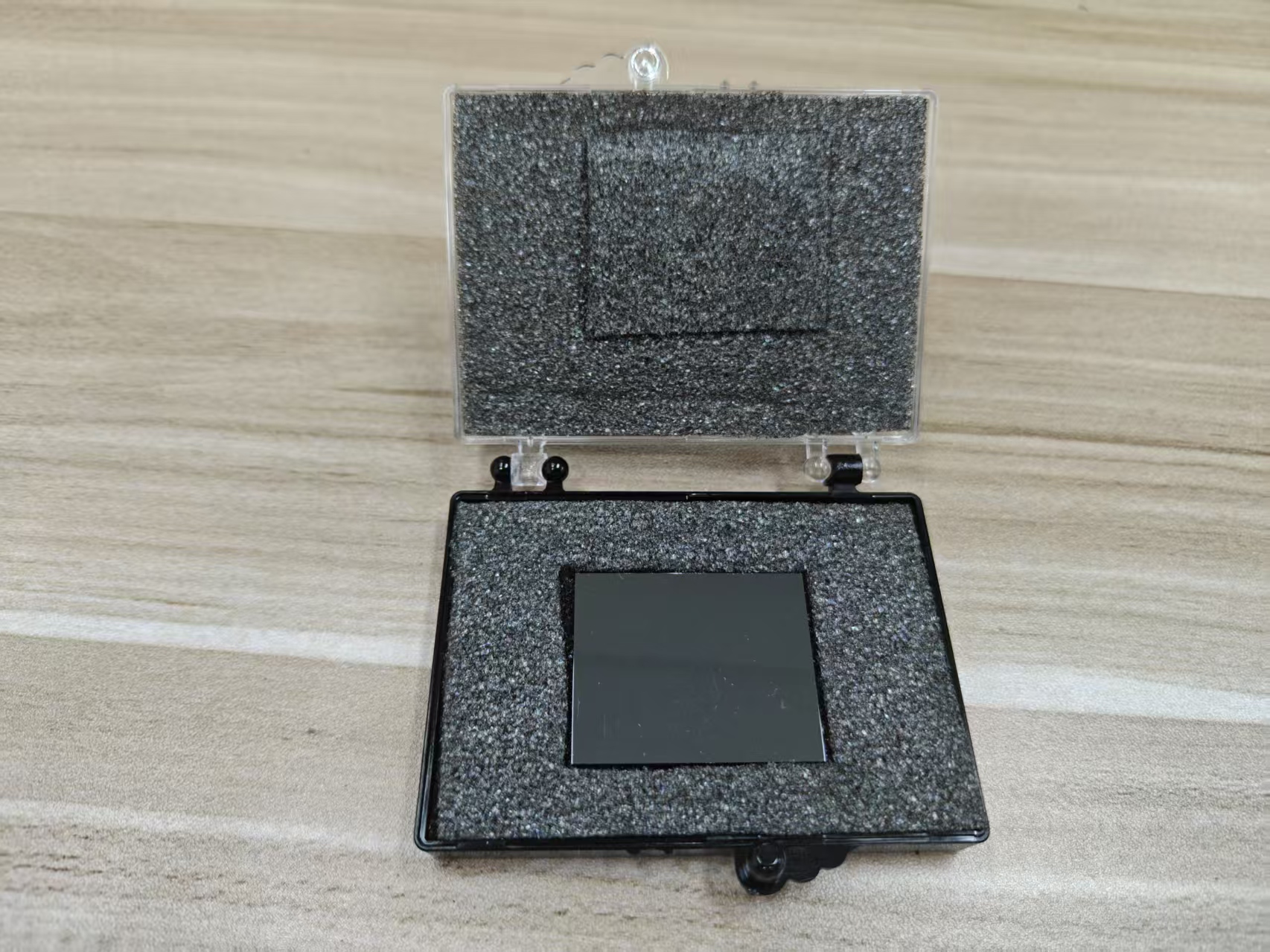
Passivation layers play a crucial role in improving the performance of
Cadmium Zinc Telluride (CZT) crystals, especially when used as radiation detectors. The surface of CZT crystals inherently contains a high density of
dangling bonds,
surface states, and
defects that act as recombination centers for charge carriers (electrons and holes). These surface recombination sites degrade charge collection efficiency and reduce detector performance. The composition and quality of the passivation layer significantly influence the
surface recombination velocity and thereby the overall electrical and detection properties of the CZT crystal.
Here is a detailed technical explanation of how passivation layer composition affects surface recombination in CZT crystals.
## Surface Recombination in CZT Crystals
Surface recombination occurs when electrons and holes recombine non-radiatively at the surface of the semiconductor, usually facilitated by defects or surface states. In CZT, surface defects—such as dangling bonds, native oxides, and contamination—create energy states within the bandgap that trap carriers and facilitate recombination. This process reduces the number of charge carriers collected by electrodes and thus decreases detector sensitivity and energy resolution.
## Role of Passivation Layers
A passivation layer is a thin coating deposited on the CZT crystal surface to:
* Chemically stabilize the surface
* Reduce the density of surface states and dangling bonds
* Prevent oxidation and contamination
* Create an electrical barrier that suppresses surface recombination
The effectiveness of passivation depends heavily on the
composition and
deposition quality of the layer.
## Influence of Passivation Layer Composition
## 1. Native Oxides vs. Engineered Passivation Materials
*
Native Oxides (CdO, ZnO, TeOx): CZT naturally forms native oxide layers on its surface, which often have poor stoichiometry and high defect densities. These native oxides typically contain numerous
trap states that promote surface recombination rather than suppress it. The presence of native oxides without additional passivation tends to increase surface recombination velocity, leading to poor charge collection efficiency.
*
Engineered Passivation Layers: Deposition of high-quality passivation films such as
silicon dioxide (SiO₂),
silicon nitride (Si₃N₄),
aluminum oxide (Al₂O₃), or
organic polymers has been shown to dramatically reduce surface state densities. These materials form stable, chemically inert interfaces that effectively
saturate dangling bonds and prevent carrier recombination.
## 2. Chemical Bonding and Interface Quality
The chemical nature of the passivation layer determines how well it can bond to the CZT surface and reduce recombination centers:
*
High-Quality Chemical Bonds: Passivation materials that form
strong covalent or ionic bonds with the CZT surface atoms can effectively neutralize dangling bonds and defects, reducing surface recombination. For example,
Al₂O₃ deposited by atomic layer deposition (ALD) creates a high-quality interface with CZT, leading to a significant reduction in surface recombination velocity.
*
Poor Interface Quality: Passivation layers with poor adhesion or mismatched thermal expansion coefficients can cause
interface defects or mechanical stress, which may introduce new recombination centers. This degrades performance by increasing surface recombination.
## 3. Electrical Properties of Passivation Materials
*
Dielectric Constant: Materials with a higher dielectric constant can better screen surface charges, reducing band bending and suppressing surface recombination. For instance,
Al₂O₃ has a relatively high dielectric constant compared to SiO₂, often resulting in better passivation performance.
*
Fixed Charges and Interface Traps: Some passivation layers introduce
fixed charges or
interface traps that influence the band structure near the surface. A positive or negative fixed charge at the interface can either repel minority carriers from the surface or attract them, thus modulating recombination rates. Proper tuning of passivation composition and process can control these fixed charges to minimize recombination.
## 4. Thickness and Uniformity
The composition determines the achievable
thickness and
uniformity of the passivation layer:
*
Thin, Uniform Layers: Thin, conformal passivation layers of uniform composition minimize defects and pinholes that can act as recombination centers.
*
Layer Composition Impact: Some materials, like ALD-grown Al₂O₃, enable excellent thickness control and conformal coverage even on complex surfaces, reducing recombination sites more effectively than sputtered or thermally grown oxides.
## 5. Influence on Surface Band Bending
Passivation layer composition affects the
surface band bending in CZT crystals, which influences the recombination process:
*
Reduction of Surface Band Bending: Effective passivation reduces surface band bending by neutralizing surface charges and states. This decreases the electric field near the surface that drives carriers into recombination sites.
*
Composition-Dependent Band Alignment: Different passivation materials have distinct band alignments with CZT, affecting carrier confinement near the surface and recombination probability.
## Summary
The composition of the passivation layer critically influences surface recombination in CZT crystals through chemical bonding quality, interface state density, electrical properties, and physical uniformity. Well-chosen passivation materials such as
Al₂O₃,
SiO₂, or
Si₃N₄ form stable, defect-minimized interfaces that reduce surface recombination velocity, thereby improving charge collection efficiency, signal uniformity, and energy resolution in CZT detectors. Conversely, poor-quality or inappropriate passivation materials can increase surface recombination by introducing defects, interface traps, or unstable surface chemistry.
Optimizing passivation layer composition and deposition methods is essential for enhancing CZT crystal detector performance by suppressing detrimental surface recombination effects.
CdZnTe Association (CdZnTe.com)
https://www.cdznte.com/blog/how-does-passivation-layer-composition-influence-surface-recombination-in-czt-crystal.html