## Introduction
Surface passivation is a critical process in the preparation and maintenance of CdZnTe (CZT) radiation detectors. Its influence extends beyond immediate electrical improvements to long-term stability and performance retention during extended storage or operational periods. Understanding how surface passivation affects these aspects is essential for optimizing device reliability, minimizing degradation, and ensuring consistent detector functionality over time.
## Passivation and Chemical Stability of the CZT Surface
The surface of CZT crystals is inherently reactive and prone to oxidation, contamination, and degradation when exposed to ambient conditions such as moisture, oxygen, and airborne pollutants. Passivation forms a chemically inert or protective layer that acts as a barrier between the CZT bulk and the environment:
* This barrier significantly slows down oxidation of Cd, Zn, and Te atoms at the surface, preventing the formation of non-uniform oxides that can create surface defects.
* It reduces adsorption of water molecules and contaminants that could chemically or physically alter the detector surface.
* By limiting these degradation pathways, passivation maintains surface integrity, which is crucial for stable electrical characteristics.
Without effective passivation, continued surface oxidation or contamination over storage or operation can deteriorate detector sensitivity and increase leakage currents.
## Passivation Effects on Electrical Stability and Leakage Current Over Time
Surface states and defects are known sources of leakage current and noise in CZT detectors. Passivation reduces surface trap densities and electrically active defects, leading to:
* Lower initial leakage current and noise levels immediately after treatment.
* Sustained suppression of leakage current over time, as the passivation layer prevents new trap formation from environmental degradation.
* Stabilized charge transport properties, ensuring that dark current or surface leakage does not gradually increase during storage or extended operation.
This electrical stability is vital for maintaining a high signal-to-noise ratio and consistent detector response over months or years.
## Influence on Charge Collection Efficiency and Energy Resolution Retention
Over time, unpassivated or poorly passivated surfaces may develop increasing trap densities due to surface contamination or oxidation. These trap states cause charge recombination and carrier loss near the surface, degrading:
* Charge collection efficiency, as free carriers generated by radiation interaction can be trapped or recombined before reaching electrodes.
* Energy resolution, because fluctuating carrier losses introduce signal variations and broaden the detected spectral peaks.
Passivation preserves a clean, stable surface, minimizing trap generation and carrier recombination sites. This retention of surface electronic quality leads to long-term maintenance of energy resolution and detector sensitivity.
## Mechanical and Environmental Protection by Passivation Layers
Beyond chemical and electrical effects, passivation layers can also provide mechanical and environmental protection:
* They can protect against surface abrasion, micro-cracking, or mechanical damage during handling, shipping, or operation.
* Passivation can reduce moisture ingress and prevent humidity-induced surface swelling or delamination.
* These protections help avoid the formation of surface defects that would otherwise worsen detector performance over time.
Thus, passivation acts as a multi-functional shield preserving the physical and functional integrity of the CZT detector surface.
## Role of Passivation in Mitigating Aging Effects and Performance Drift
Aging phenomena in CZT detectors often manifest as gradual performance drift, including increasing leakage currents, worsening energy resolution, or unstable baseline signals. Passivation mitigates these effects by:
* Limiting chemical reactions and contaminant adsorption that induce aging-related surface states.
* Stabilizing the electrochemical environment at the surface, reducing the likelihood of charge trapping center formation.
* Maintaining stable Schottky barrier properties at metal contacts, which are sensitive to surface states and contamination.
Consequently, passivated detectors exhibit slower aging rates and more predictable long-term behavior, facilitating reliable operation in practical applications.
## Impact of Passivation on Storage Conditions and Shelf Life
Detectors may be stored for extended periods before use. Without passivation, storage in ambient conditions can lead to:
* Progressive surface oxidation and contamination.
* Formation of electrically active defects that degrade performance once the detector is deployed.
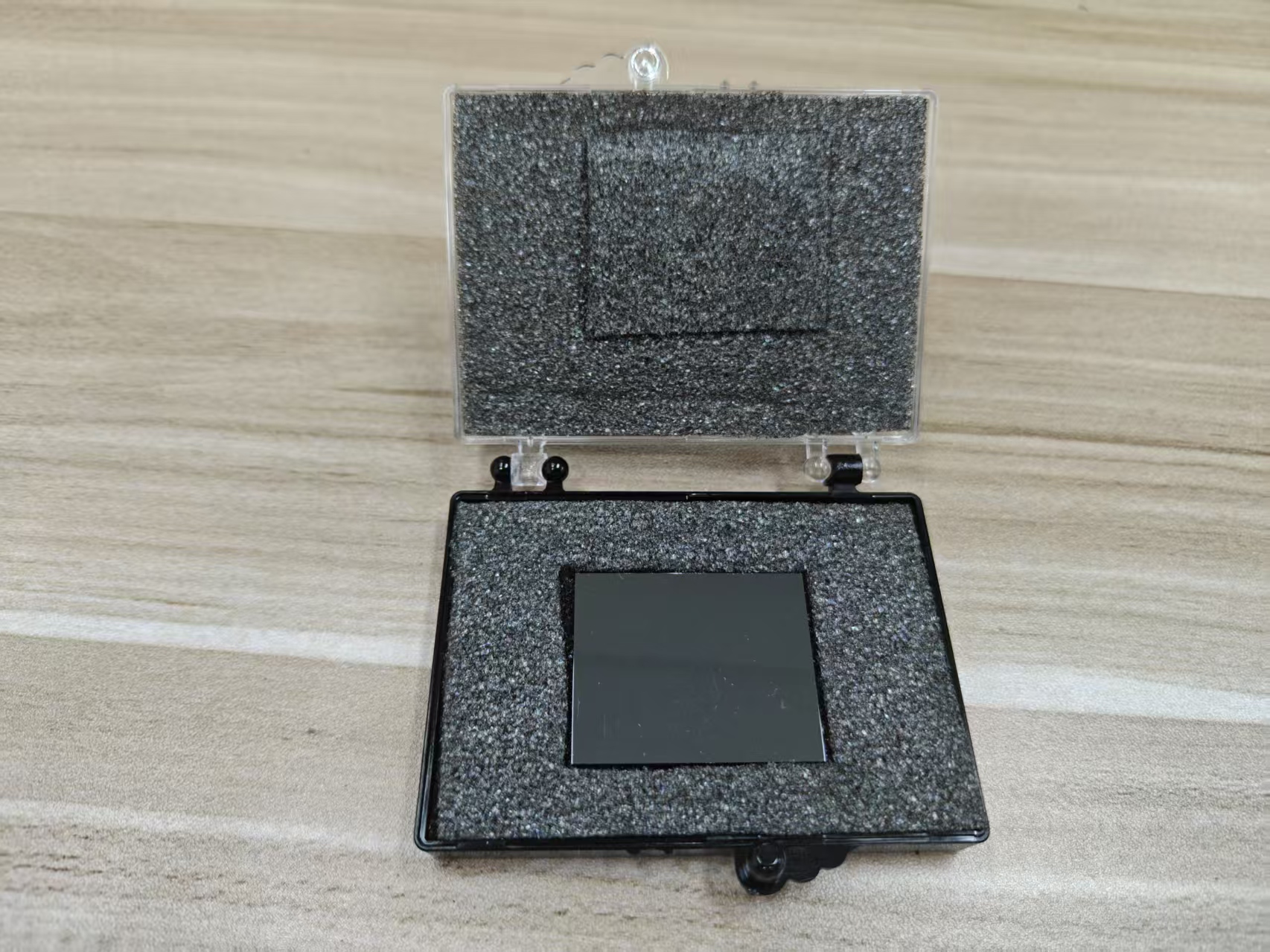
Passivated CZT detectors show improved shelf life, retaining near-initial electrical and spectroscopic properties after storage in air or controlled environments. This stability reduces the need for reprocessing or recalibration before use, enhancing production efficiency and device reliability.
## Synergy with Other Surface Treatments for Enhanced Stability
Passivation is often combined with pre-treatment steps such as chemical etching or cleaning, which remove damaged or contaminated surface layers. This synergy:
* Ensures a pristine surface onto which the passivation layer can form uniformly.
* Enhances the adhesion and chemical stability of the passivation film.
* Further extends stability and performance retention during storage and operation.
Optimizing these process combinations maximizes the long-term benefits of passivation.
## Conclusion
Surface passivation plays a crucial role in maintaining the stability and performance retention of CdZnTe detectors over extended storage or operational periods. By forming a chemically inert, electrically insulating, and mechanically protective layer, passivation minimizes surface degradation, leakage current increase, trap state formation, and aging-related performance drift. These effects collectively ensure that CZT detectors preserve their high sensitivity, energy resolution, and reliability throughout their service life, making passivation indispensable for practical detector deployment in radiation detection applications.
CdZnTe Association (CdZnTe.com)
https://www.cdznte.com/blog/how-does-surface-passivation-influence-the-stability-and-performance-retention-of-czt-detectors-over-extended-storage-or-operation-periods.html