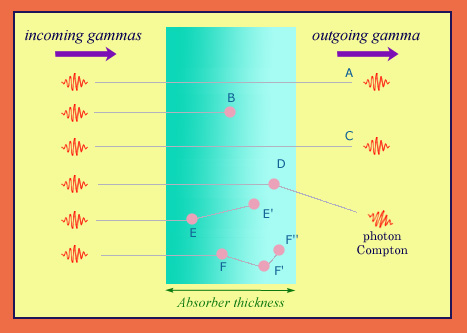
The
attenuation coefficient of low-energy gamma-rays in
CdZnTe (CZT) detectors plays a critical role in shaping the
design constraints for
CZT-based neutron detectors. This coefficient quantifies how much gamma radiation is absorbed or scattered as it passes through the material, and it is crucial for determining the thickness, geometry, and efficiency of the detector. In the context of neutron detection, where
gamma-ray detection is used to identify neutron capture events (e.g., via Gd(n,γ) reactions), understanding and controlling the attenuation of low-energy gamma-rays is essential for optimizing detector performance.
## 1. Gamma-Ray Attenuation and its Impact on Detector Thickness
The
attenuation coefficient defines the rate at which the intensity of gamma-rays decreases as they pass through the material. The attenuation of low-energy gamma-rays in CZT affects several aspects of detector design:
## a. Detector Thickness
*
CZT-based detectors must be designed with the correct thickness to maximize
gamma-ray absorption while minimizing unwanted
energy loss or
background interference.
* For low-energy gamma-rays (e.g., from Gd(n,γ) reactions), a
thicker detector ensures that more gamma photons are absorbed, increasing detection efficiency. However, this also means
higher internal attenuation could occur.
* The attenuation coefficient for low-energy gamma-rays in CZT typically increases as the photon energy decreases. This means that
thicker detectors are more effective at detecting lower-energy gamma-rays but may also cause
increased self-absorption of the detected signal, potentially reducing the overall
signal-to-noise ratio (SNR).
## b. Optimizing Thickness for Maximum Efficiency
* A balance must be struck in the detector design: too thin and the gamma-ray absorption may be insufficient; too thick and the attenuation may cause
unnecessary internal absorption, leading to lower detection efficiency for gamma-rays that should be counted.
*
Simulations based on the attenuation coefficient can help determine the optimal thickness that maximizes
detection efficiency for the target gamma-ray energies while minimizing attenuation losses.
## 2. Energy Resolution and Gamma-Ray Detection
The
energy resolution of the detector is highly influenced by the attenuation of low-energy gamma-rays:
## a. Attenuation of Low-Energy Gamma Rays
*
Low-energy gamma-rays are particularly sensitive to attenuation effects due to their
higher probability of interacting with the material via processes such as the
photoelectric effect.
* As gamma-rays travel through the detector, they lose energy due to attenuation, potentially causing
pulse pileup or
broadening of the energy peaks in the resulting spectrum.
* High
gamma-ray attenuation could reduce the detector's ability to precisely measure the energy of the gamma photons, leading to
poorer energy resolution.
## b. Design for Energy Discrimination
* In neutron detection systems,
energy resolution is crucial to distinguish prompt gamma-ray emissions from background radiation.
* The thickness and geometry of the CZT crystal must be designed to
optimize attenuation and
preserve energy resolution, ensuring that the gamma signal is strong enough for detection but not over-attenuated, which could lead to distorted spectra.
## 3. Background Radiation and Gamma-Ray Interactions
CZT detectors often operate in environments with
background radiation, including
cosmic rays and
natural radioactivity. The attenuation coefficient influences the detector's ability to distinguish
background gamma-rays from those emitted by
neutron capture reactions:
## a. Reducing Background Interference
*
Thicker CZT detectors absorb more background gamma-rays, reducing the likelihood of these signals reaching the detector’s sensitive regions.
* However,
increased thickness can also lead to
higher self-absorption of the relevant neutron-induced gamma signals, reducing the
signal-to-background ratio.
* The attenuation coefficient must be carefully considered to design a detector that
minimizes background noise without sacrificing the ability to detect
low-energy neutron-induced gamma-rays.
## b. Optimizing Geometry for Neutron Detection
* Detector designs must incorporate
optimized geometries such as
multi-crystal configurations or
position-sensitive detectors to reduce background influences and ensure that gamma-ray photons from neutron captures are detected with high efficiency.
## 4. Neutron Capture Events and High-Energy Gamma Detection
In a typical
neutron detector using CZT, the goal is to detect prompt gamma rays from the interaction of thermal neutrons with elements like gadolinium (Gd). The low-energy gamma-rays emitted from such reactions are often within the
100–500 keV range. The
attenuation coefficient for these energies plays a critical role in:
## a. Enhancing Gamma Detection Efficiency
* As the
attenuation coefficient increases for low-energy gamma-rays, the likelihood of these rays being absorbed increases. Therefore,
thicker crystals or
optimized geometries can be employed to maximize the gamma-ray interaction, enhancing detection efficiency for neutron capture events.
## b. Distinguishing Neutron-Capture Signals
* The ability to distinguish
neutron-capture-induced gamma-rays from background radiation is critical. A
high attenuation coefficient can help absorb
background gamma rays, but the system must be designed so that
thermal neutron gamma signals are not excessively attenuated, as this would reduce the ability to detect the neutron interaction accurately.
## 5. Trade-Off Between Efficiency and Detector Size
The attenuation of gamma-rays affects the size of the detector that is practically achievable. While a
larger detector volume improves gamma-ray absorption, it also results in:
*
Increased self-attenuation of the signal due to longer path lengths within the material.
*
Higher likelihood of pulse pileup or energy loss, which can degrade the detector’s resolution and efficiency.
*
Thinner detectors reduce internal attenuation but may require a larger volume to compensate for the reduced
probability of photon interactions.
The attenuation coefficient must be taken into account when designing the optimal balance between
detector size and
gamma-ray interaction efficiency.
## Conclusion
The
attenuation coefficient of low-energy gamma-rays in CZT detectors significantly influences several key design parameters for
CZT-based neutron detectors:
* It helps determine the
optimal thickness of the detector for maximum gamma-ray absorption without excessive internal absorption or signal loss.
* It affects the
energy resolution and
signal-to-noise ratio, especially when trying to resolve low-energy gamma-ray peaks from neutron capture events.
* It influences the detector's ability to
distinguish between signal and background radiation, guiding the choice of materials, geometry, and size to minimize interference and improve detection performance.
By carefully considering the
attenuation properties of CZT for low-energy gamma-rays, designers can create more efficient, sensitive, and reliable neutron detectors.
CdZnTe Association (CdZnTe.com)
https://www.cdznte.com/blog/how-does-the-attenuation-coefficient-of-low-energy-gamma-rays-influence-the-design-constraints-of-czt-based-neutron-detectors.html



