## Introduction
Radiation detectors are essential tools in various fields such as nuclear medicine, homeland security, astrophysics, and industrial inspection. Among the most commonly used detectors are CdZnTe (CZT) semiconductor detectors, scintillator detectors, and high-purity germanium (HPGe) detectors. Each technology presents unique advantages and trade-offs concerning size, energy resolution, and operating conditions. A comprehensive comparison among these three detector types illuminates the practical considerations for their selection in specific applications.
## Size and Form Factor
* CdZnTe Detectors:
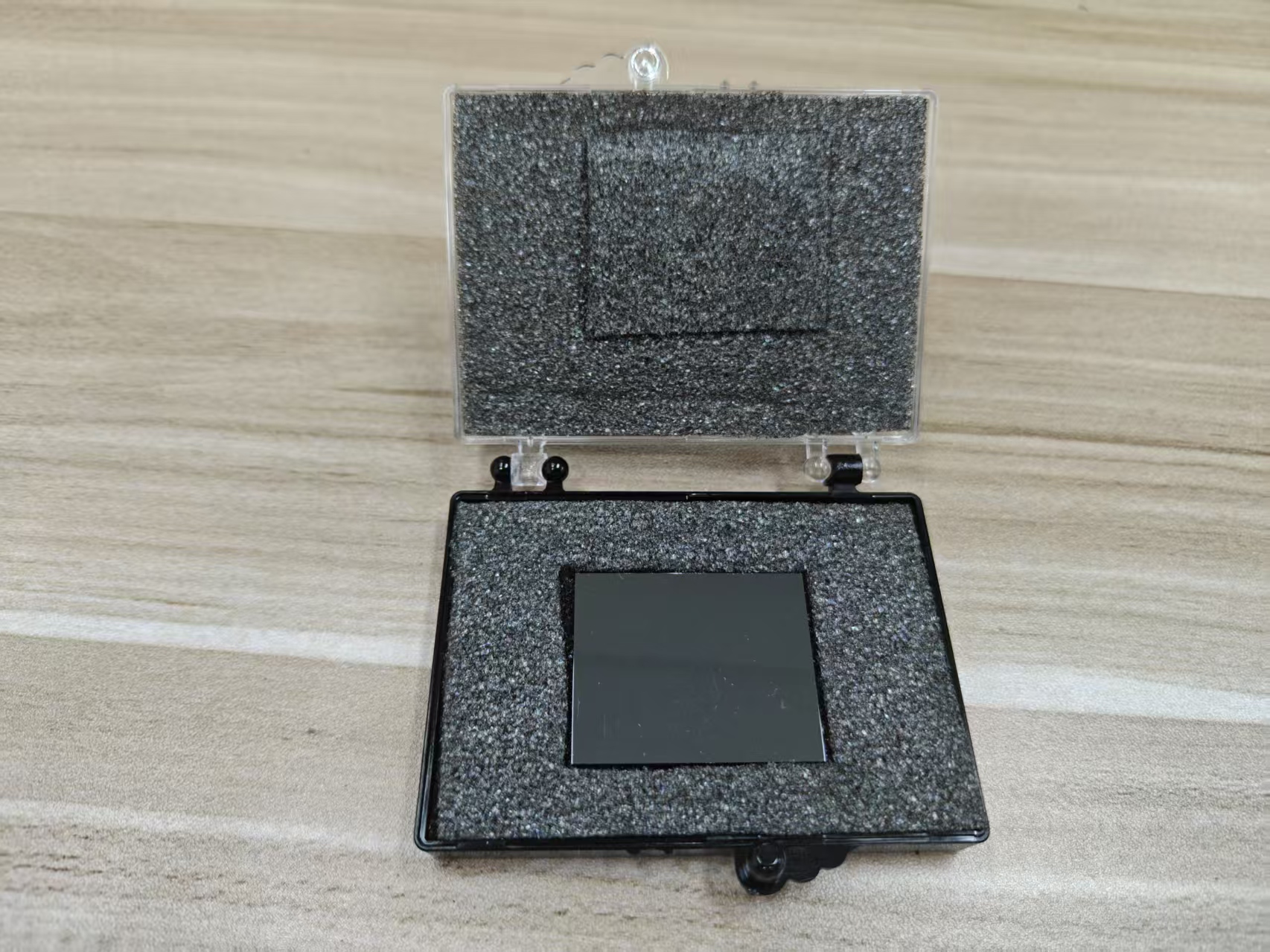
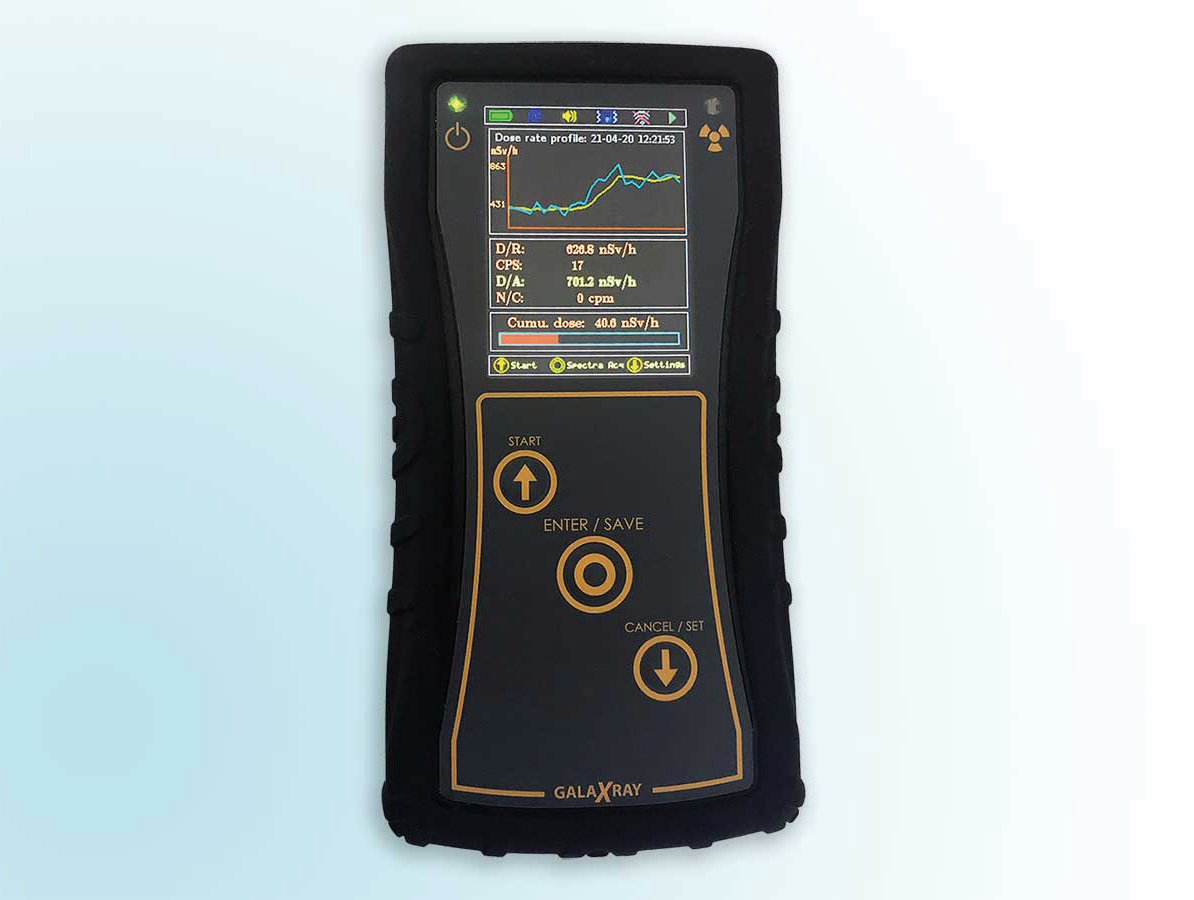
CdZnTe detectors are compact solid-state devices, typically fabricated in sizes ranging from a few millimeters to a few centimeters in thickness and lateral dimensions. Their compact size is a result of high atomic number constituents and high density, which provide substantial gamma-ray stopping power even in relatively small volumes. The solid-state nature of CZT allows for miniaturized, portable detector assemblies that can be integrated into handheld devices or compact imaging systems. This small form factor is advantageous for field use and embedded applications where space is limited.
* Scintillator Detectors:
Scintillator detectors can vary widely in size, from small crystals a few millimeters thick to large scintillator blocks several centimeters or more in thickness and diameter. Their size is often dictated by the required detection efficiency and spatial resolution. While scintillators can be fabricated in large volumes to maximize efficiency, this also results in bulkier, heavier detectors. Scintillator arrays designed for imaging purposes often require substantial size and complex photodetector coupling, increasing overall system dimensions.
* HPGe Detectors:
High-purity germanium detectors typically require relatively large crystal volumes to achieve high efficiency for gamma-ray detection, often ranging from several centimeters in diameter and length. The detector size is generally larger than typical CZT detectors due to the need for sufficient active volume and electrode structures. Moreover, the entire system includes not only the crystal but also cooling apparatus and vacuum housings, making the overall footprint significantly larger than CZT and many scintillator detectors.
## Energy Resolution
* CdZnTe Detectors:
CdZnTe detectors provide superior energy resolution compared to scintillators, typically achieving energy resolutions around 1–2% full width at half maximum (FWHM) at 662 keV (Cs-137 gamma line). This high resolution stems from the direct conversion of gamma photons into electron-hole pairs, minimizing statistical fluctuations and allowing for precise spectral discrimination. Although CZT’s energy resolution does not match that of HPGe, it is sufficient for many spectroscopic applications, including isotope identification and imaging.
* Scintillator Detectors:
Scintillators generally exhibit poorer energy resolution than semiconductor detectors, with typical FWHM values ranging from 6% to 10% at 662 keV, depending on the scintillator material (e.g., NaI(Tl), CsI(Tl), or LaBr3). This limitation arises from the indirect detection process, where gamma photons are first converted into scintillation light photons, then detected by photomultiplier tubes or photodiodes. The multiple conversion steps introduce statistical fluctuations, light collection inefficiencies, and noise sources that degrade energy resolution.
* HPGe Detectors:
HPGe detectors offer the best energy resolution among the three technologies, commonly achieving sub-0.2% FWHM at 662 keV. The extremely pure germanium crystals enable very efficient charge collection and minimal charge trapping. This superb energy resolution is critical for applications requiring fine spectral analysis, such as nuclear forensics, environmental monitoring, and fundamental research in gamma-ray spectroscopy.
## Operating Conditions
* CdZnTe Detectors:
One of the primary advantages of CZT detectors is their capability to operate reliably at room temperature. The wide bandgap and high resistivity of CdZnTe allow for low leakage currents and noise without the need for cryogenic cooling. This feature greatly simplifies system design, reduces power consumption, and enhances portability. The absence of cooling requirements makes CZT detectors attractive for field applications, portable devices, and systems where maintenance is difficult.
* Scintillator Detectors:
Scintillator detectors also operate at room temperature, requiring no cooling systems. This makes them similarly advantageous in terms of operational convenience and deployment flexibility. Their mechanical robustness and straightforward operation have made scintillators popular in many commercial and industrial radiation detection systems. However, some scintillators are hygroscopic and require encapsulation, which can affect system design.
* HPGe Detectors:
HPGe detectors require cryogenic cooling, typically achieved with liquid nitrogen or mechanical coolers, to maintain the germanium crystal at temperatures near 77 K. Cooling is essential to suppress thermal generation of charge carriers, which would otherwise cause high leakage currents and noise. The need for cooling systems increases complexity, cost, size, and power requirements, limiting HPGe detector use in portable or field applications. Additionally, cooldown and warm-up cycles impose operational constraints and maintenance demands.
## Additional Considerations
* Cost and Availability:
CZT detectors tend to be more expensive than scintillators due to complex crystal growth and fabrication processes but are generally less costly and easier to maintain than HPGe systems. Scintillators are often the most cost-effective option for large-area or high-efficiency applications. HPGe detectors are expensive and require skilled handling due to their cooling and vacuum system requirements.
* Spectroscopic and Imaging Performance:
CZT detectors provide a good balance between energy resolution and spatial resolution, enabling use in advanced imaging modalities such as gamma cameras and Compton imagers. Scintillators, while generally lower in resolution, can be fabricated in large volumes for high detection efficiency and combined with pixelated photodetectors for imaging. HPGe detectors excel in spectroscopy but are limited in spatial resolution and portability.
## Conclusion
CdZnTe detectors offer a unique combination of moderate to high energy resolution, compact size, and room-temperature operation, positioning them between scintillator and HPGe detectors in terms of performance and convenience. Scintillators provide large detection volumes and room-temperature operation but with significantly lower energy resolution. HPGe detectors deliver superior energy resolution but require bulky cryogenic systems and have larger footprints. The choice among these technologies depends on the application requirements for resolution, size, operating conditions, cost, and portability.
CdZnTe Association (CdZnTe.com)
https://www.cdznte.com/blog/how-does-the-cdznte-detector-compare-with-scintillator-and-hpge-detectors-in-terms-of-size-energy-resolution-and-operating-conditions.html