## Introduction to Dose Reduction in PCCT
Photon-counting computed tomography (PCCT) represents a paradigm shift in CT imaging, combining high spatial resolution and spectral discrimination.
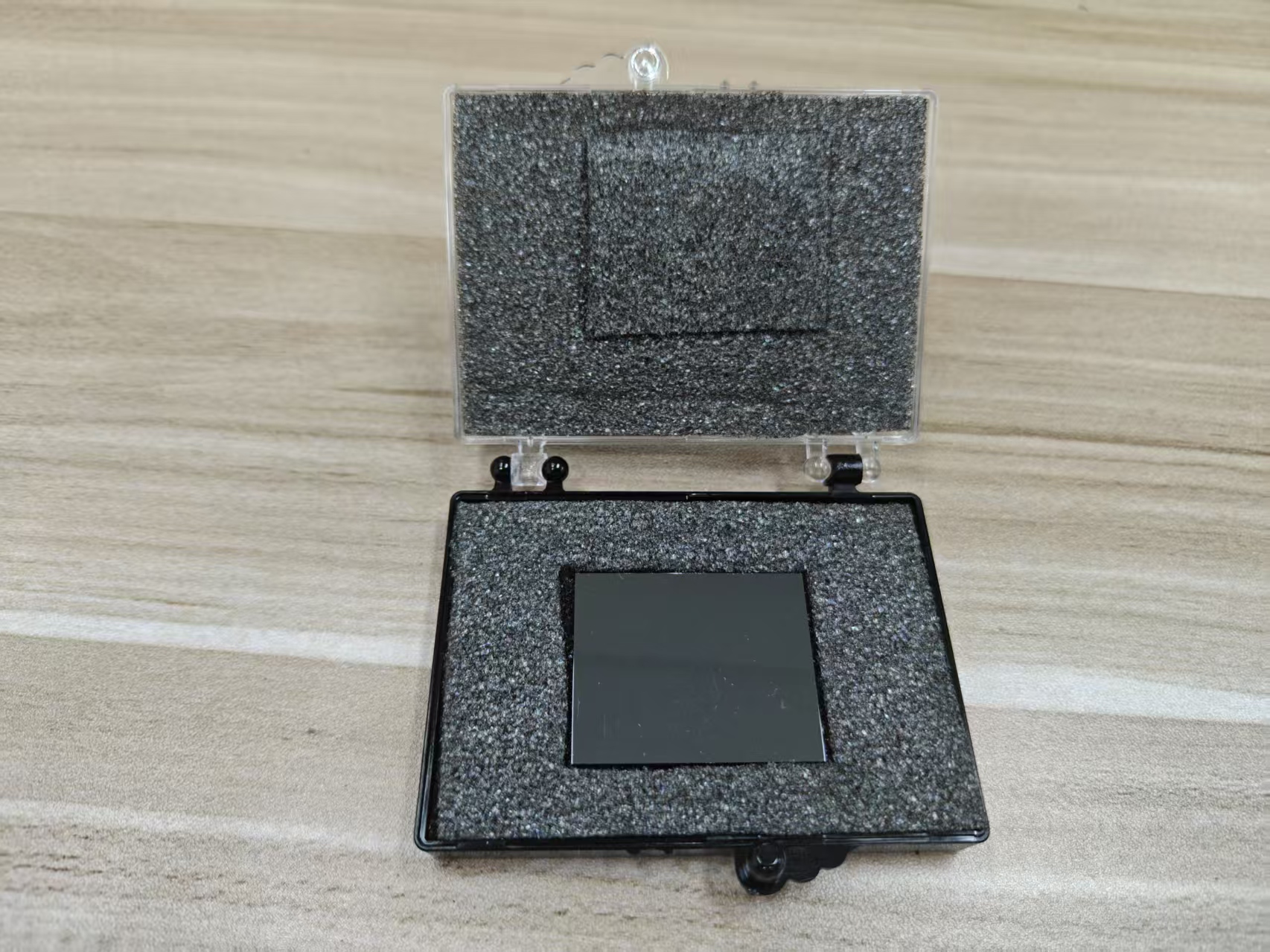
Cadmium Zinc Telluride (CZT) detectors are central to this advancement because of their direct photon-to-charge conversion, high atomic number, and energy discrimination capabilities. These intrinsic features allow PCCT to capture more information per photon than conventional energy-integrating detectors, enabling potential radiation dose reductions. When combined with advanced reconstruction algorithms, CZT-based PCCT can preserve diagnostic image quality while reducing patient exposure, an essential consideration in repeated or dose-sensitive imaging scenarios.
## Intrinsic Advantages of CZT Detectors for Dose Efficiency
CZT detectors provide several physical advantages that directly support dose reduction. First, the direct conversion mechanism minimizes electronic noise by eliminating intermediate light conversion stages, which improves the signal-to-noise ratio (SNR) even at lower photon counts. Second, the high atomic number and density of CZT allow more efficient photon absorption, particularly at lower X-ray energies where conventional detectors may underperform. Third, the energy-resolving capability enables the allocation of detected photons to optimal energy bins for contrast discrimination, effectively extracting more diagnostic information per incident photon. These features form a foundation for low-dose imaging, as fewer photons are required to achieve sufficient image quality.
## Role of Energy Discrimination and Spectral Binning
The spectral capabilities of CZT detectors facilitate optimized use of the X-ray spectrum for dose reduction. By separating photons into discrete energy bins, PCCT systems can enhance contrast between tissues or contrast agents without increasing tube current. Low-energy photons, which provide high contrast for iodine or soft tissue, can be preferentially weighted, while high-energy photons, which penetrate denser anatomy, can be selectively incorporated to reduce artifacts. This spectral optimization reduces the need for excessive photon flux, allowing lower tube current or shorter exposure times while maintaining contrast-to-noise ratio (CNR) in reconstructed images.
## Impact of High Spatial Resolution on Dose Reduction
CZT detectors feature fine pixelation, supporting ultra-high spatial resolution. High-resolution detectors improve the efficiency of reconstruction algorithms by providing precise spatial sampling of anatomical structures, reducing partial volume effects. With accurate localization of edges and fine details, reconstruction algorithms can achieve equivalent or superior image quality with fewer detected photons. As a result, lower radiation doses can be used without compromising the visibility of small lesions, microcalcifications, or vascular structures. High-resolution data combined with advanced algorithms supports iterative noise suppression and edge preservation, further enhancing dose efficiency.
## Advanced Iterative Reconstruction Algorithms
Iterative reconstruction (IR) methods leverage statistical models of photon detection, system geometry, and noise characteristics to generate high-quality images from low-dose data. In CZT-based PCCT, IR algorithms utilize the energy-resolved counts from multiple bins to model the expected signal more accurately, incorporating photon statistics and detector-specific response functions. This approach allows significant reduction of quantum noise, enabling diagnostically acceptable images at substantially lower photon fluence. Advanced algorithms such as model-based iterative reconstruction (MBIR) and spectral constrained iterative reconstruction exploit both spatial and spectral correlations to minimize artifacts, preserve edges, and maintain quantitative accuracy in material decomposition under reduced-dose conditions.
## Noise Reduction and Dose-Optimized Weighting
CZT detectors provide precise energy information that can be integrated into dose-optimized reconstruction strategies. Photon-counting data allows algorithms to weight photons according to energy-dependent SNR, emphasizing photons that contribute most to diagnostic contrast. Low-dose exposures inherently produce higher relative noise, but by exploiting spectral weighting and iterative noise modeling, algorithms suppress image noise while maintaining sharpness and contrast. This combination of detector physics and algorithmic processing maximizes the information extracted from each photon, directly reducing the number of photons—and hence dose—required for clinically usable images.
## Material Decomposition and Dual-Energy Applications
Material decomposition benefits significantly from the CZT detector’s spectral information. By accurately distinguishing materials such as iodine, calcium, and soft tissue, reconstruction algorithms can selectively enhance clinically relevant contrast without additional X-ray exposure. For example, iodine quantification in contrast-enhanced imaging can be achieved with lower tube current because the algorithm leverages energy bins that specifically correspond to iodine K-edge absorption. This selective enhancement reduces the need for high-dose acquisitions while preserving the accuracy of quantitative measurements and visual assessment.
## Integration of Detector and Algorithm Performance
The synergy between CZT detectors and advanced reconstruction algorithms is critical for dose reduction. The high SNR, energy resolution, and spatial sampling of the CZT detector provide raw data of sufficient quality even at reduced photon flux. Advanced reconstruction algorithms exploit these detector characteristics to suppress noise, correct for charge-sharing effects, compensate for spectral distortion, and enhance spatial fidelity. Together, this integration allows PCCT systems to achieve lower radiation doses without sacrificing image quality, material quantification, or diagnostic confidence.
## Clinical Implications
Clinically, this combination enables safer imaging protocols for sensitive populations, such as pediatric, oncology, or longitudinal studies, where repeated imaging is necessary. Low-dose PCCT can maintain visualization of small vessels, lesions, and microcalcifications, while spectral reconstruction provides material-specific information critical for treatment planning and monitoring. Additionally, dose reduction improves patient throughput and reduces radiation-induced risk, supporting broader adoption of spectral CT in routine clinical practice.
## Conclusion
The combination of CZT detectors with advanced reconstruction algorithms in PCCT imaging allows substantial radiation dose reduction while preserving image quality. CZT’s direct conversion, high absorption efficiency, fine pixelation, and energy discrimination provide high-quality raw data even at lower photon counts. Iterative and spectral reconstruction algorithms exploit this data to suppress noise, enhance edges, and preserve material-specific contrast. Together, these technological advancements enable low-dose, high-resolution, and spectrally accurate imaging, representing a transformative improvement in both patient safety and diagnostic capability for next-generation clinical PCCT.
CdZnTe Association (CdZnTe.com)
https://www.cdznte.com/blog/how-does-the-combination-of-a-czt-detector-with-advanced-reconstruction-algorithms-enable-dose-reduction-while-preserving-image-quality-in-pcct-imaging.html