## Introduction to Myocardial Perfusion Imaging in SPECT-CT
Cardiac SPECT-CT is a critical diagnostic tool for assessing myocardial perfusion, detecting ischemia, and guiding therapeutic decisions. Traditional scintillation-based detectors, such as NaI(Tl), have limitations in spatial resolution, energy discrimination, and quantitative accuracy, which can compromise the detection of small perfusion defects and accurate activity measurements.
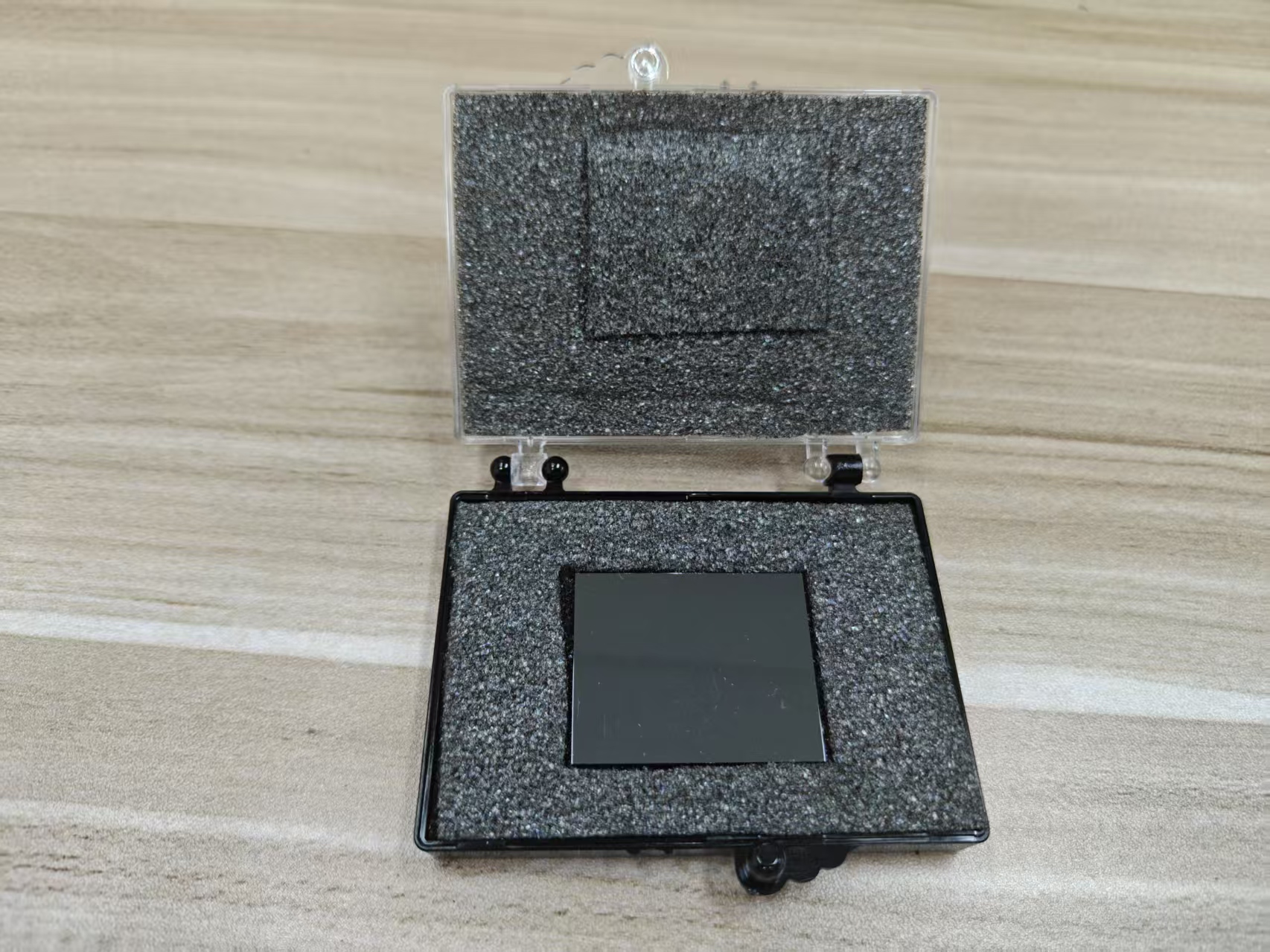
Cadmium Zinc Telluride (CZT) detectors offer significant advantages due to their direct conversion mechanism, pixelated architecture, and high energy resolution. These features enable more precise localization and quantification of radiotracer uptake, leading to improved assessment of myocardial perfusion.
## Direct Conversion Mechanism and Charge Collection
CZT detectors convert incident gamma photons directly into electron-hole pairs without the intermediate step of scintillation light production. This direct conversion reduces energy loss and statistical broadening associated with light collection in scintillators, preserving the full signal amplitude corresponding to the incident photon energy. In cardiac SPECT-CT, this ensures that the counts recorded from each myocardial region accurately reflect the deposited radiotracer activity, enhancing quantitative reliability. The high charge collection efficiency of CZT, particularly for electrons, minimizes depth- and pixel-dependent variations, supporting uniform and reproducible measurements across the detector surface.
## High Energy Resolution and Scatter Rejection
Energy resolution is a critical factor in myocardial perfusion quantification, as scattered photons degrade image contrast and introduce errors in activity estimation. CZT detectors typically achieve energy resolution of 4–6% at 140 keV for Tc-99m, which is significantly better than conventional NaI(Tl) scintillators. Superior energy discrimination allows the use of narrower energy windows to exclude Compton-scattered photons, reducing background counts and enhancing the accuracy of reconstructed perfusion images. In multi-isotope protocols, such as simultaneous rest/stress imaging, high energy resolution enables separation of photon contributions from different tracers, preventing cross-talk and maintaining quantitative fidelity.
## Pixelated Architecture and Spatial Resolution
CZT detectors employ a finely pixelated array, often combined with depth-of-interaction (DOI) measurement, to localize gamma interactions with high precision. The small-pixel effect ensures that electron signals dominate the collected charge, reducing lateral spread and minimizing parallax errors. In myocardial perfusion imaging, this high intrinsic spatial resolution allows accurate delineation of perfusion defects, especially sub-centimeter ischemic regions, and minimizes partial volume effects. Precise spatial localization ensures that activity counts are correctly assigned to specific myocardial segments, improving segmental quantification and reducing artifacts caused by spillover or adjacent tissue uptake.
## Depth-of-Interaction and Parallax Correction
Photon interactions occurring at different depths within the CZT detector can produce parallax-related spatial errors, particularly in oblique projections common in cardiac imaging. Depth-of-interaction sensing in CZT detectors allows event-by-event correction, ensuring that each photon is assigned to its true spatial origin. This correction reduces blurring and enhances segmental quantification accuracy, enabling more precise measurement of radiotracer distribution in the left ventricular myocardium. Improved DOI correction is particularly valuable in gated cardiac SPECT, where accurate volumetric and functional measurements rely on spatially precise perfusion data.
## High Sensitivity and Count Statistics
The high stopping power of CZT for gamma photons increases detection efficiency, allowing more photons to be collected per unit activity. Higher count statistics reduce image noise and improve the statistical reliability of measured perfusion. In clinical practice, this allows lower injected activity or shorter acquisition times without compromising quantitative accuracy. The combination of high sensitivity and energy resolution ensures that the measured counts closely represent true myocardial uptake, improving reliability in stress/rest comparisons and absolute perfusion quantification.
## Event-by-Event Correction and Multi-Pixel Signal Processing
CZT detectors integrated with multi-channel ASIC readout electronics enable sophisticated event-by-event processing, including charge-sharing correction, pulse shape analysis, and multi-pixel summation. These corrections recover the full energy of interactions that may span multiple pixels or be partially affected by K-fluorescence escape, ensuring accurate energy assignment for each photon. In myocardial perfusion imaging, this maintains uniform energy response across the detector array and preserves quantitative accuracy, especially in small regions of interest or near edges of the field of view.
## Quantitative Reconstruction and Correction Algorithms
The combination of CZT detector characteristics supports advanced quantitative reconstruction algorithms. Accurate photon energy measurement, precise spatial localization, and DOI information allow for corrections for attenuation, scatter, and partial volume effects in a voxel-wise manner. In myocardial perfusion SPECT-CT, these corrections are essential for converting count-based images into absolute or relative activity maps of the left ventricle. The improved input data from CZT detectors reduces systematic errors in reconstruction, resulting in more accurate estimates of myocardial blood flow and perfusion defect severity.
## Clinical Implications
By providing high spatial and energy resolution, uniform detector response, and precise depth-of-interaction information, CZT-based SPECT-CT enables more reliable quantification of myocardial perfusion. Clinically, this translates to improved detection of small ischemic regions, more accurate assessment of perfusion heterogeneity, and enhanced reproducibility of segmental and global perfusion metrics. The ability to quantify tracer uptake with reduced injection dose or shorter acquisition time further benefits patient safety and comfort. Ultimately, CZT detectors enhance diagnostic confidence and support more accurate clinical decision-making in cardiac imaging.
## Conclusion
CZT detectors improve the quantification accuracy of myocardial perfusion in cardiac SPECT-CT through direct charge conversion, high energy resolution, small-pixel spatial localization, depth-of-interaction correction, and high sensitivity. Event-by-event corrections and advanced reconstruction algorithms further enhance the fidelity of measured radiotracer distribution. Together, these features enable precise, reliable, and reproducible perfusion measurements, improving detection of ischemia, assessment of segmental function, and overall clinical utility of cardiac SPECT-CT imaging.
CdZnTe Association (CdZnTe.com)
https://www.cdznte.com/blog/how-does-the-czt-detector-enable-improved-quantification-accuracy-of-myocardial-perfusion-in-cardiac-spect-ct.html