## Introduction
In CZT detectors, the efficiency of charge collection plays a critical role in determining the signal quality, energy resolution, and overall performance of the detector. Charge collection efficiency refers to the detector's ability to capture the charge carriers (electrons and holes) generated when high-energy photons (such as X-rays or gamma-rays) interact with the CZT crystal. The pixel size in a CZT pixeled array directly influences this efficiency, as it determines the area available for charge collection and how effectively charge carriers are collected from the radiation interaction site. This article explores how pixel size impacts the efficiency of charge collection in CZT detectors, including the trade-offs between spatial resolution, charge collection efficiency, and detector performance.
## 1. Impact of Pixel Size on Charge Collection Area
The pixel size in a CZT pixeled array determines the area of the detector that is responsible for collecting the charge generated by an interaction. Smaller pixels provide a smaller collection area for each individual interaction, whereas larger pixels provide a larger collection area.
* Smaller pixel size: As the pixel size decreases, the area available for charge collection becomes smaller. Each pixel can only collect charge from a more localized region within the crystal, which can lead to lower charge collection efficiency. The smaller the pixel, the fewer charge carriers are collected per pixel, potentially leading to weaker signals and lower energy resolution.
* Larger pixel size: In contrast, larger pixels provide a larger area for charge collection, which increases the amount of charge gathered from the interaction. This results in stronger signals and potentially higher energy resolution, as a larger amount of charge is available for the detector's electronics to measure.
Thus, the charge collection efficiency is inversely proportional to the pixel size — smaller pixels tend to have lower efficiency, while larger pixels tend to have higher efficiency.
## 2. Pixel Size and Charge Carrier Transport
Another factor influencing charge collection efficiency is the transport of charge carriers (electrons and holes) from the interaction site to the pixel electrode. This is particularly important in CZT, where the mobility of charge carriers can vary with the material quality and the geometry of the pixel array.
* Smaller pixels: When the pixel size is smaller, the distance that charge carriers must travel to reach the electrode may increase, which can cause charge loss due to recombination or trapping. The smaller the pixel, the more susceptible the detector is to losses in charge transport, which decreases the charge collection efficiency.
* Larger pixels: In larger pixels, the distance for charge carriers to travel is shorter, which can reduce the risk of charge loss. Charge carriers can more easily reach the electrode, improving the collection efficiency. However, this can lead to issues with pixel cross-talk or a loss of spatial resolution, as the pixel's larger size may reduce the detector's ability to distinguish between closely spaced radiation events.
In summary, the charge transport distance becomes less of a limiting factor as the pixel size increases, leading to higher charge collection efficiency in larger pixels compared to smaller ones.
## 3. Effect of Pixel Size on Signal Strength and Noise
The efficiency with which a detector collects charge has a direct impact on the signal strength and signal-to-noise ratio (SNR). Smaller pixels, while offering high spatial resolution, may result in weaker signals due to reduced charge collection efficiency. This reduction in signal strength can also impact the noise level.
* Smaller pixels: With reduced charge collection efficiency, smaller pixels may collect fewer charge carriers per interaction. As a result, the signal strength produced by each pixel is weaker, leading to a lower SNR. This can degrade the overall performance of the detector, especially in applications where high energy resolution and sensitive measurements are required.
* Larger pixels: Larger pixels, which collect more charge, produce stronger signals and generally offer higher SNR. This leads to better energy resolution and overall detector performance. The noise in the system is more easily overcome with a larger amount of collected charge, allowing for more accurate measurements.
However, the trade-off between spatial resolution and charge collection efficiency is important to consider. While larger pixels improve charge collection and signal strength, they reduce the detector's ability to precisely locate radiation events.
## 4. Charge Losses and Recombination in Small Pixels
Smaller pixels are more susceptible to charge losses due to recombination and trapping of charge carriers. Recombination occurs when electrons and holes, generated by photon interactions, recombine before they can be collected by the electrodes. This phenomenon is particularly problematic in small pixels because:
* Smaller collection volume: The smaller the pixel, the less likely it is that the generated charge carriers will remain separated long enough to reach the electrodes. If the electric field within the pixel is not sufficiently strong or uniform, recombination can occur, leading to lower charge collection efficiency.
* Increased likelihood of trapping: In small pixels, the charge carriers may also get trapped in defects or impurities in the CZT material before reaching the pixel electrode, which further reduces the number of charge carriers available for detection.
To mitigate these effects, high-quality CZT crystals and careful design of pixel electrodes are essential. The electric field distribution must be optimized to prevent recombination and trapping, ensuring that as much charge as possible is collected.
## 5. Impact of Pixel Size on Detector Resolution
As mentioned, the pixel size has a direct impact on the spatial resolution of the detector. However, the trade-off is that improving spatial resolution by reducing pixel size often leads to a decrease in charge collection efficiency. The smaller the pixel, the more likely it is to experience:
* Lower charge collection: With fewer charge carriers collected per pixel, the overall spatial resolution comes at the cost of signal strength and energy resolution.
* Blurring in large pixels: In contrast, larger pixels improve charge collection but sacrifice spatial resolution, as the detector cannot differentiate between closely spaced radiation events. Larger pixels may suffer from cross-talk, where neighboring pixels "interfere" with each other, affecting the accuracy of the spatial measurement.
The choice of pixel size therefore represents a balance between achieving the desired spatial resolution and maintaining charge collection efficiency. This balance is critical for optimizing the performance of the detector for a given application.
## 6. Trade-Offs in Pixel Size Selection for Specific Applications
Different applications have different priorities, and the choice of pixel size must be tailored accordingly:
* High-energy photon detection (e.g., in gamma-ray spectroscopy) benefits from larger pixels, which provide better charge collection efficiency and energy resolution.
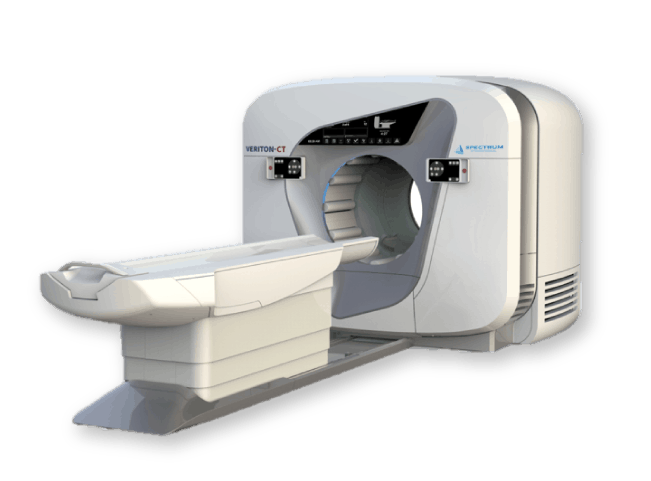
* High-resolution imaging applications (e.g., in medical imaging, such as SPECT or CT scans) may require smaller pixels to ensure fine spatial resolution, even though this may compromise charge collection efficiency and signal strength.
* Security scanning applications, where image clarity and small object detection are crucial, may favor smaller pixel sizes to improve spatial resolution, despite the trade-offs in charge collection efficiency.
In each case, optimizing pixel size is a key consideration for meeting the performance criteria of the application.
## Conclusion
The efficiency of charge collection in CZT detectors is highly influenced by the pixel size. Smaller pixels generally result in lower charge collection efficiency due to reduced collection area and greater susceptibility to recombination and trapping of charge carriers. However, smaller pixels improve spatial resolution, which is desirable for applications requiring fine detail in the radiation images. On the other hand, larger pixels offer higher charge collection efficiency and stronger signals, which is beneficial for applications prioritizing signal strength and energy resolution. Ultimately, the choice of pixel size in a CZT pixeled array involves a trade-off between spatial resolution and charge collection efficiency, with the optimal size being application-specific.
CdZnTe Association (CdZnTe.com)
https://www.cdznte.com/blog/how-does-the-efficiency-of-charge-collection-vary-with-pixel-size-in-czt-detectors.html