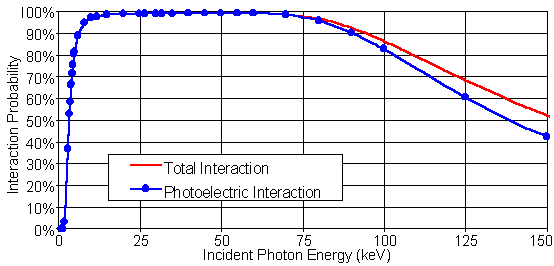
The efficiency of
Cadmium Zinc Telluride (CZT) detectors can change over time due to several factors that influence their performance and degradation mechanisms. While CZT detectors are known for their high energy resolution and excellent detection capabilities, their performance can degrade with prolonged use, exposure to harsh environmental conditions, and material aging. Below is a detailed analysis of how the efficiency of CZT detectors changes over time and the factors contributing to this change:
## 1. Aging and Charge Carrier Trapping
One of the primary mechanisms behind the degradation of CZT detectors' efficiency over time is
charge carrier trapping. This occurs when electrons or holes, generated by the interaction of radiation with the material, become trapped at
defects or
impurities within the crystal structure.
*
Defect Accumulation: Over time,
radiation damage can cause the accumulation of
defects in the crystal lattice, such as
vacancies,
interstitials, or
dislocations. These defects can trap charge carriers and impede their movement, leading to
reduced charge collection efficiency and
lower detector response. The material may experience a
decrease in charge transport quality, which directly impacts its ability to accurately detect radiation.
*
Trapping Centers:
Deep-level defects in the CZT crystal, which can act as
trapping centers for charge carriers, can also increase with prolonged exposure to radiation. This results in a
slower response time and
lower energy resolution over time.
## 2. Temperature Effects
CZT detectors are sensitive to temperature fluctuations, and changes in temperature can affect their long-term performance. The
energy resolution of CZT detectors tends to degrade at
higher temperatures due to several factors:
*
Increased Leakage Currents: As the temperature increases, the leakage current in the CZT detector also increases, which can lead to
higher noise and
lower signal-to-noise ratio (SNR). This compromises the detector’s ability to discriminate between different energy levels of radiation.
*
Thermal Drift:
Temperature variations over time can cause
thermal drift in the detector, leading to shifts in the
energy threshold and causing long-term degradation in the detector's overall efficiency. The performance degradation is typically observed as a loss in
spectral resolution and a decrease in
response uniformity.
*
Thermal Expansion: The
differential thermal expansion of the CZT crystal and its housing or electrode materials may cause mechanical stress over time, leading to
micro-cracking or changes in the
crystal structure, which can affect the detector’s efficiency.
## 3. Radiation Damage and Accumulation
CZT detectors, like any other radiation-sensitive materials, are susceptible to damage from prolonged exposure to
high radiation fluxes. In applications such as
nuclear power plants,
space missions, or
medical imaging, where the detectors are exposed to continuous or high-intensity radiation, the accumulation of radiation-induced defects can significantly degrade the detector's efficiency over time.
*
Ionization Damage: The ionization process caused by
high-energy photons or
particles in the detector leads to the generation of
electron-hole pairs. However, over time, these interactions can also cause
displacement damage, leading to a build-up of
defects that reduce the material's
charge collection efficiency.
*
Threshold Shift: The threshold at which the detector can differentiate radiation events may shift due to
radiation-induced defect formation within the crystal. This can lead to a
decrease in detection efficiency for specific energy ranges.
*
Damage Recovery: CZT detectors do have some degree of
self-healing properties, especially at
low radiation doses, but at higher flux levels, this recovery is insufficient, and
permanent damage to the crystal lattice may occur. This permanent damage results in an irreversible decline in performance.
## 4. Electrode and Contact Degradation
The electrodes and electrical contacts used in CZT detectors are subject to wear and degradation over time. As the material undergoes
prolonged radiation exposure, the
metal-semiconductor contact may degrade, leading to
increased contact resistance and
poor charge collection at the electrode interface.
*
Polarization Effects: CZT detectors are prone to
polarization effects over time, where the buildup of charge at the electrode interfaces can lead to a
non-uniform electric field within the detector. This results in a
loss of charge collection efficiency and
degraded performance in terms of both
sensitivity and
energy resolution.
*
Material Migration:
Material migration can occur at the electrode interface, especially when exposed to high radiation doses or extreme temperatures. This can lead to
electrode corrosion or the formation of insulating layers at the interface, further degrading the detector's performance.
## 5. Environmental Factors
Environmental factors such as
humidity,
pressure, and
exposure to corrosive gases can affect the
long-term stability of CZT detectors. The material may undergo
chemical reactions with its environment, particularly the cadmium component, which can degrade the crystal structure over time.
*
Moisture Exposure:
Water vapor or
moisture in the environment can degrade the surface of CZT crystals, leading to
surface oxidation and the formation of
insulating layers. This will decrease the detector’s
electrical conductivity and can even affect its
sensitivity to radiation.
*
Corrosive Gases: Exposure to gases such as
sulfur compounds can also degrade the CZT crystal surface, leading to
material corrosion and further performance loss. This type of degradation is especially important for detectors used in
industrial applications or
environmental monitoring in
corrosive environments.
## 6. Detector Aging and Calibration Drift
CZT detectors are susceptible to
calibration drift over time. As the crystal ages and undergoes various degradation mechanisms, the detector may require
frequent recalibration to maintain accuracy.
*
Energy Calibration Drift: The energy calibration of a CZT detector may shift due to factors like
temperature fluctuations,
radiation exposure, and
electrode degradation. This can cause errors in energy measurements, affecting the overall accuracy of the system.
*
Long-Term Stability: Some CZT detectors experience
drifting in their energy resolution,
counting efficiency, and
timing performance over time. This long-term instability must be regularly monitored and corrected to ensure reliable performance, especially in
medical imaging or
nuclear safety applications.
## 7. Performance in High-Flux Environments
In high-flux radiation environments, such as those found in
nuclear reactors,
particle accelerators, or during
space missions, CZT detectors are more likely to experience
radiation damage that accelerates performance degradation. These environments can cause the crystal lattice to undergo significant changes, resulting in
reduced efficiency.
*
Saturation Effects: In environments with high radiation flux, CZT detectors may experience
saturation effects, where the detector's ability to distinguish between radiation events becomes impaired. This can occur when the detector is exposed to
excessive radiation for prolonged periods, leading to a
reduced dynamic range and
lower efficiency.
## Mitigating Efficiency Loss in CZT Detectors:
To counteract these performance issues and extend the useful life of CZT detectors, the following techniques are being developed:
1.
Temperature Control:
Cooling systems such as
thermoelectric coolers (TECs) or
cryogenic cooling can help maintain
stable operating temperatures, reducing temperature-induced performance degradation.
2.
Radiation Hardening: Developing
radiation-hardened CZT materials with
enhanced resistance to damage from high radiation doses can help maintain detector performance in harsh environments.
3.
Improved Electrode Materials: The use of
advanced electrode materials and
coatings can mitigate
polarization and
electrical contact degradation, improving long-term performance.
4.
Regular Calibration: Regular recalibration of detectors can help to compensate for drift in performance and ensure consistent readings over time.
## Conclusion:
The efficiency of CZT detectors degrades over time due to various factors, including
charge carrier trapping,
radiation-induced defects,
temperature effects, and
electrode degradation. While these detectors are highly efficient initially, long-term exposure to radiation, environmental stressors, and operational conditions can lead to a gradual loss in
sensitivity,
energy resolution, and
accuracy. Efforts to mitigate these issues include improving
material purity,
enhancing crystal growth methods, and developing
advanced cooling and calibration techniques. Regular monitoring and recalibration are essential to ensure consistent performance over the operational lifetime of CZT detectors.
CdZnTe Association (CdZnTe.com)
https://www.cdznte.com/blog/how-does-the-efficiency-of-czt-detectors-change-over-time.html



