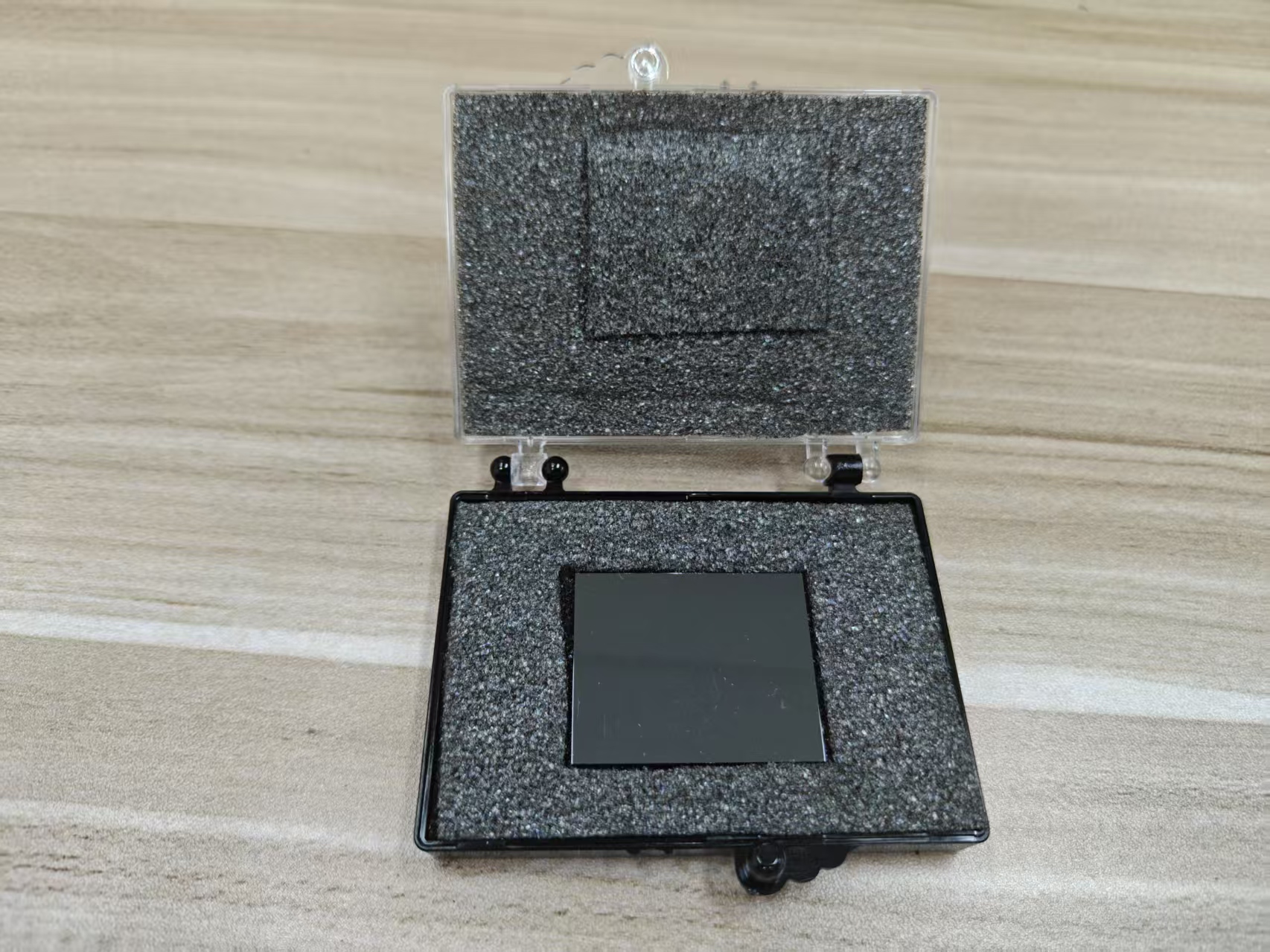
The incorporation of rare-earth (RE) dopants into
Cadmium Zinc Telluride (CZT) crystals is a technique that has been explored to modify and improve the material’s electrical properties, especially for use in radiation detection and other optoelectronic applications. Rare-earth dopants, such as lanthanides (e.g., Europium, Ytterbium, Terbium), are known to introduce specific electronic states into the material, which can significantly influence charge transport, recombination processes, and carrier dynamics within the CZT crystal. The effects of rare-earth doping can be complex, and their influence on electrical properties depends on several factors, such as the type and concentration of dopant, the crystal growth conditions, and the intended application. Below is a detailed exploration of how rare-earth doping impacts the electrical characteristics of CZT crystals.
## Influence on Carrier Mobility and Lifetime
Rare-earth dopants can affect the carrier mobility and lifetime in CZT by introducing localized states in the band structure, which can act as either traps or recombination centers for charge carriers.
*
Trap Formation: Certain rare-earth ions, particularly those with a high ionic charge, tend to create deep trap states within the bandgap of CZT. These states can capture charge carriers, reducing the effective mobility and lifetime of electrons and holes. For example, Europium (Eu³⁺) or Terbium (Tb³⁺) dopants can lead to the formation of deep donor or acceptor levels in the CZT bandgap.
*
Carrier Lifetime Reduction: The introduction of these trap states typically increases recombination events, which shortens the effective carrier lifetime. This results in a higher leakage current and can degrade detector performance in radiation applications.
*
Optimizing Trap Levels: In some cases, controlled doping with rare-earth elements may introduce shallow traps that help improve the overall performance of CZT detectors by optimizing charge collection efficiency. However, excessive doping can overwhelm the beneficial effects, leading to increased dark current.
## Electrical Conductivity and Resistivity
Rare-earth doping can influence the electrical conductivity and resistivity of CZT crystals. The effect depends on whether the rare-earth dopant introduces donor or acceptor states in the crystal.
*
Donor Effects: Some rare-earth dopants, such as Ytterbium (Yb³⁺) or Lanthanum (La³⁺), can act as shallow donors, releasing electrons into the conduction band and thus increasing the conductivity of the material. The introduction of donors tends to make CZT more n-type, enhancing the material’s ability to conduct electrons.
*
Acceptor Effects: Conversely, dopants like Cerium (Ce³⁺) can act as acceptors, creating p-type conductivity by capturing electrons from the conduction band. This would decrease the electrical conductivity and increase resistivity in CZT.
*
Optimization of Carrier Type: The type of rare-earth dopant used, along with its concentration, can be tailored to achieve a desired balance between n-type and p-type conductivity, which is critical for optimizing the performance of CZT detectors, especially in applications where the charge carrier type significantly influences device behavior.
## Influence on Dielectric Properties
Rare-earth doping also alters the dielectric properties of CZT, which in turn affects the material's ability to respond to external electric fields. These changes can influence the behavior of CZT in high-energy applications, such as radiation detection.
*
Dielectric Constant Changes: The incorporation of rare-earth ions typically leads to an increase or decrease in the dielectric constant (relative permittivity) of the material, depending on the ionic radius and the type of dopant used. This change in permittivity influences the interaction between the applied electric field and the material’s charge carriers.
*
Electrostatic Effects: Rare-earth dopants may also modify the electrostatic interactions within the crystal, which can impact the efficiency of charge collection in detectors and influence the distribution of electric fields across the material.
## Impact on Recombination and Photoluminescence
The rare-earth dopants can significantly affect the recombination processes in CZT, leading to changes in photoluminescence (PL) and overall charge carrier dynamics.
*
Recombination Centers: As mentioned earlier, rare-earth ions can serve as recombination centers, where electrons and holes recombine non-radiatively. This can result in an increase in dark current, especially if the recombination centers are deep and lead to non-radiative decay of charge carriers.
*
Improvement in PL Efficiency: Some rare-earth dopants, particularly those with strong luminescent properties (e.g., Europium or Terbium), can enhance the photoluminescence efficiency of CZT crystals by promoting radiative recombination processes. This property can be beneficial in optoelectronic applications where photoluminescence is a desired characteristic, though this might not be directly relevant for radiation detection.
## Bandgap Tuning and Energy Absorption
Rare-earth dopants can also influence the bandgap of CZT, which affects the material’s ability to absorb and detect specific energies of radiation.
*
Bandgap Modification: The introduction of certain rare-earth elements can slightly modify the electronic structure of CZT, leading to a narrowing or widening of the bandgap. For instance, rare-earth dopants that introduce new electronic states within the bandgap can reduce the effective bandgap, thus making the material more responsive to lower energy photons.
*
Energy Absorption Characteristics: The presence of rare-earth elements can also alter the absorption coefficient of CZT for particular wavelengths of radiation. This can be beneficial in applications where specific radiation energy ranges need to be optimized.
## Charge Carrier Trapping and Recombination in High-Field Conditions
In radiation detectors, the performance is highly dependent on the behavior of charge carriers under high electric fields, which is relevant when dopants are used.
*
Trap-Assisted Tunneling: In detectors operating under high bias fields, rare-earth dopants can influence trap-assisted tunneling (TAT) mechanisms. For instance, if the dopant introduces shallow traps, it could enhance the tunneling of carriers through these states, thereby improving charge collection efficiency. However, deeper traps could lead to degradation in charge collection efficiency.
*
High-Field Carrier Behavior: Rare-earth dopants can modify the mobility of carriers in response to high fields, either by reducing the field-dependent mobility or enhancing it through defect compensation.
## Optimizing Detector Performance
Rare-earth dopants are often used to
optimize the performance of CZT detectors by controlling the material’s electronic properties. Proper doping can improve the crystal’s ability to operate at higher voltages with lower leakage current, improving sensitivity and energy resolution in radiation detection applications. However, the concentration of the dopant must be carefully controlled, as excessive doping can introduce too many traps, resulting in increased dark current and decreased charge collection efficiency.
## Common Rare-Earth Dopants and Their Effects
*
Europium (Eu³⁺): Used to introduce luminescent properties and may also influence charge transport by acting as a trap or recombination center.
*
Ytterbium (Yb³⁺): Often used for enhancing charge carrier mobility due to its donor-like characteristics.
*
Terbium (Tb³⁺): Known for its effect on the optical properties and used for enhancing the material’s luminescent efficiency.
*
Lanthanum (La³⁺): Can act as a donor dopant, helping to enhance the conductivity and improve the material's overall charge transport characteristics.
## Conclusion
Incorporating rare-earth dopants into CZT crystals can significantly alter their electrical properties, particularly in terms of carrier mobility, recombination, resistivity, and response to high electric fields. Rare-earth dopants can act as donor or acceptor centers, modify the band structure, and influence carrier dynamics through trapping and recombination processes. While controlled doping with rare-earth elements can enhance the performance of CZT detectors by improving charge transport and reducing dark current, excessive or improper doping can lead to an increase in leakage current and degradation in performance. Therefore, careful selection and optimization of dopant concentration and type are essential for achieving the desired electrical and optoelectronic properties for specific applications in radiation detection, imaging, and other fields.
CdZnTe Association (CdZnTe.com)
https://www.cdznte.com/blog/how-does-the-incorporation-of-rare-earth-dopants-alter-electrical-properties-of-czt-crystal.html