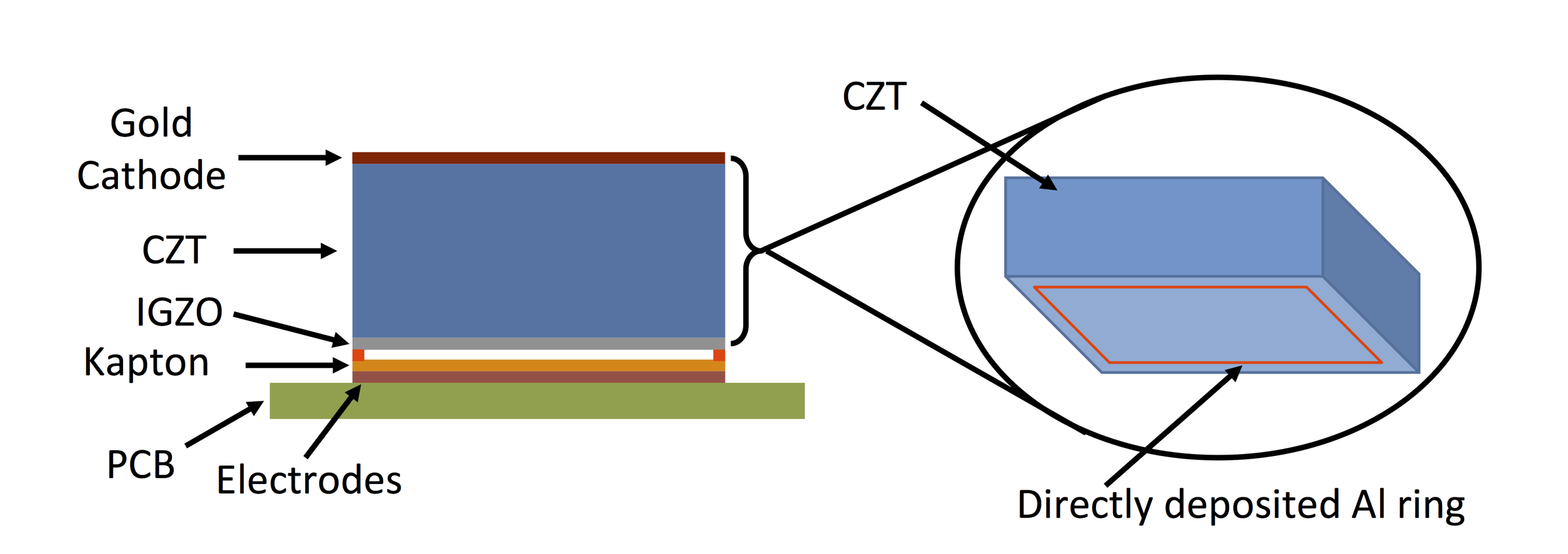
The interface between the
CZT (Cadmium Zinc Telluride) crystal and the
electrode is crucial in determining the overall
performance and
efficiency of
CZT-based radiation detectors. The
quality and
properties of this interface directly impact key factors such as
charge collection efficiency,
energy resolution,
response time, and
overall detection efficiency. Here’s a detailed explanation of how the
CZT-electrode interface influences detector performance:
## 1. Charge Collection Efficiency
The primary role of the electrode in a
CZT radiation detector is to collect the
charge carriers (electrons and holes) generated by
incident radiation (e.g., X-rays or gamma rays) in the
CZT crystal. The
charge collection efficiency (CCE) is a critical performance parameter that influences the
energy resolution and
response speed of the detector.
*
Ideal Interface: In an ideal scenario, the electrode must
efficiently collect all the charge carriers without causing significant
charge trapping or
recombination. The
contact resistance between the electrode and the CZT crystal should be
low to facilitate smooth charge collection.
*
Poor Interface: If the interface is
poorly designed or
non-ideal, it can lead to
charge trapping at the interface due to
defects or
imperfections in the
CZT crystal or the
electrode material. This can lead to a
loss of charge carriers and a
reduced CCE, thereby lowering the
energy resolution and
efficiency of the detector.
## Factors Affecting Charge Collection Efficiency:
*
Surface States and Defects: The presence of
surface states, such as
vacancies or
dislocations, at the CZT-electrode interface can trap charge carriers, preventing them from being collected at the electrode. This effect can lead to
lower signal output and a
lower detection efficiency.
*
Contact Geometry: The
geometry of the electrode (e.g., planar vs. grid contact) plays a significant role in ensuring uniform
electric field distribution across the crystal, which in turn affects
charge drift and
collection efficiency.
## 2. Electric Field Distribution
The
electric field across the CZT crystal is responsible for driving the
charge carriers towards the electrodes after they are generated by incident radiation. The
interface between the CZT crystal and the electrode significantly influences the uniformity and distribution of this electric field.
*
Ohmic Contacts: When the electrode forms an
ohmic contact with the CZT crystal, it ensures a
uniform electric field across the detector. This promotes
efficient charge transport and minimizes the likelihood of
non-uniform charge collection, which could degrade detector performance.
*
Rectifying Contacts: A
rectifying contact (such as a Schottky contact) creates an
asymmetric electric field at the interface, which may lead to
non-uniform charge collection. While this type of contact can sometimes improve
sensitivity for certain types of radiation, it often results in
slower response times and
increased noise.
The
contact material and the
quality of the electrode (e.g.,
metallic contact versus
transparent conducting materials) will also affect the electric field's behavior.
Poor contact or
inconsistent electric fields may result in
lower charge drift velocities and
higher charge recombination rates, negatively affecting the efficiency of the detector.
## 3. Surface Treatment and Passivation
The
surface treatment of the CZT crystal before electrode deposition is another important factor that impacts the CZT-electrode interface:
*
Passivation: A
passivation layer (often made of
insulating materials) is applied to the
CZT surface to
reduce surface states and
minimize charge trapping. This layer is particularly important for
detectors exposed to
high radiation environments, where
surface defects can accumulate over time.
*
Surface Roughness: The
roughness of the crystal surface can also affect the
quality of the electrode contact. A
smooth surface allows for a more
uniform contact, reducing the likelihood of
electrode-pinhole formation that can create
non-ideal electrical paths and diminish the detector's efficiency.
Improper or inconsistent passivation can lead to
leakage currents,
low detector efficiency, and
poor energy resolution due to the increased
surface recombination and
trap states.
## 4. Polarization and Signal Output
At the interface between the
CZT crystal and the electrode,
polarization effects can occur, especially under high radiation flux conditions. These effects can
alter the detector’s signal output and lead to
distortion in the
energy spectrum.
*
Polarization refers to the
build-up of charge at the interface, which can result in an unwanted
shift in the signal. This is particularly problematic in
CZT detectors, where
high electric fields and
non-uniform doping profiles can accentuate the polarization effects.
*
Contact Polarization: If the
CZT electrode does not properly balance the
charge transport at the interface,
polarization can accumulate over time and result in a
gradual degradation of detector performance, such as
reduced energy resolution and
lower sensitivity.
## 5. Electrode Materials
The choice of electrode material and the deposition technique has a significant influence on the performance of the CZT detector:
*
Metals such as
gold (Au),
platinum (Pt), and
indium (In) are commonly used due to their
low work function, ensuring efficient electron injection. The
quality of the metal deposition (such as
thin-film deposition techniques) influences the
interface quality.
*
Transparent conducting oxides (TCOs) like
indium tin oxide (ITO) are also used in some applications, especially where
high-energy photons (like
X-rays or
gamma rays) need to be detected. These materials can help
minimize signal attenuation at the electrode interface.
* The
electrode material's work function,
interface roughness, and
adherence to the CZT crystal influence the
contact resistance and
overall detector performance.
## 6. Temperature Effects
Temperature fluctuations can also affect the
CZT-electrode interface. As the temperature of the detector changes, it can lead to:
*
Thermal expansion mismatches between the CZT crystal and the electrode, potentially creating
mechanical stress and causing
micro-cracks at the interface.
* Changes in
electrical properties of both the
electrode material and
CZT may influence the
efficiency of charge collection, especially in
high-temperature environments.
Proper temperature compensation mechanisms, such as
thermal stabilization and
cryogenic cooling, are often required to ensure consistent performance under varying environmental conditions.
## Conclusion
In summary, the
interface between the CZT crystal and the electrode is a critical determinant of the
performance and
efficiency of CZT-based radiation detectors. Key factors include:
*
Charge collection efficiency: Poor interface quality or surface defects can lead to
charge trapping and
non-uniform collection.
*
Electric field distribution: Uniform field distribution ensures
efficient charge transport and minimizes
losses.
*
Electrode material choice: The material’s
work function,
adhesion, and
contact resistance influence detector performance.
*
Surface treatment and passivation: Proper passivation minimizes surface states and
charge recombination.
*
Polarization effects: Incorrect contact design can lead to
polarization, distorting the signal.
Therefore, optimizing the
CZT-electrode interface by selecting appropriate materials, ensuring proper surface treatment, and carefully managing temperature effects is crucial to maximizing the
efficiency,
energy resolution, and
long-term stability of CZT-based radiation detectors.
CdZnTe Association (CdZnTe.com)
https://www.cdznte.com/blog/how-does-the-interface-between-the-czt-crystal-and-the-electrode-influence-detector-efficiency.html



