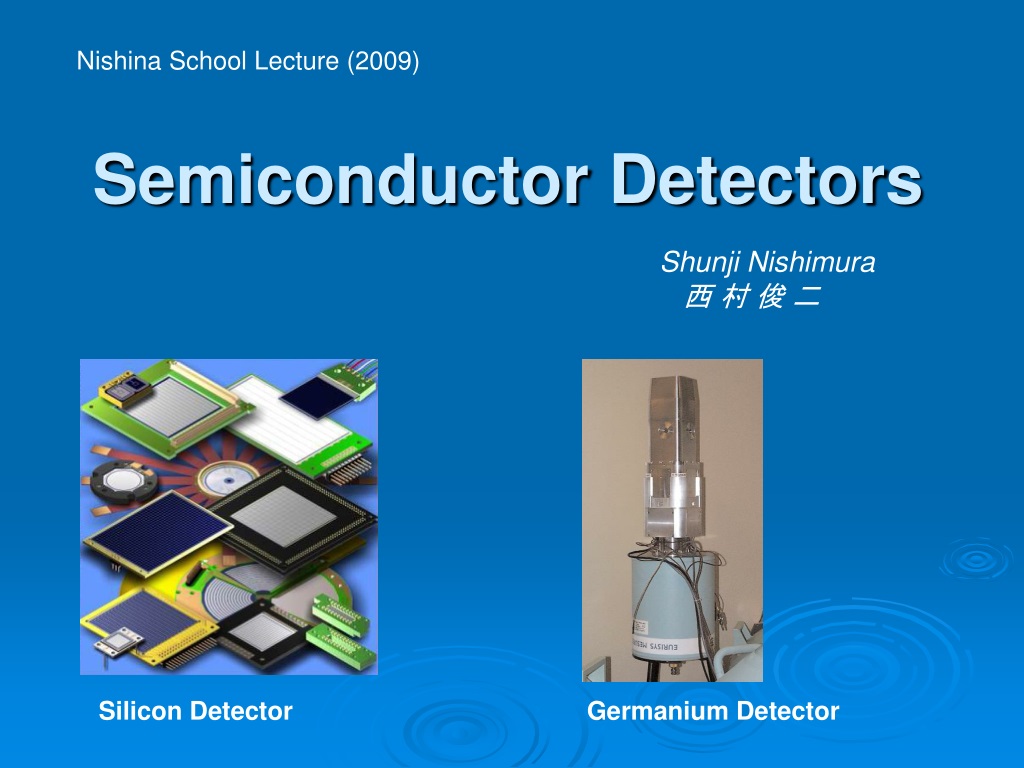
The pulse height resolution (PHR) of a detector is a key parameter that characterizes its ability to distinguish between different energy levels of incoming radiation. The PHR is typically defined by the full width at half maximum (FWHM) of the energy spectrum, and it directly influences the accuracy and precision of energy measurements. For semiconductor radiation detectors, such as
Cadmium Zinc Telluride (CZT), Silicon (Si), and Germanium (Ge), the PHR is influenced by factors such as charge collection efficiency, material purity, and crystal defects.
In the context of CZT detectors, their pulse height resolution is typically compared to that of other semiconductor detectors, such as Si and Ge, to understand their performance in various radiation detection applications. Below is a detailed technical comparison of CZT's pulse height resolution with other semiconductor detectors.
## Pulse Height Resolution in CZT
CZT detectors offer moderate pulse height resolution, which is typically in the range of
5% to 10% FWHM at 662 keV (depending on the specific crystal quality and configuration). The resolution of CZT is limited by several factors:
1.
Material Quality and Defects: CZT crystals are often subject to defects such as dislocations, grain boundaries, and deep-level traps, which can capture charge carriers before they reach the electrodes. These defects can cause incomplete charge collection and fluctuations in the pulse height, thus reducing the resolution.
2.
Charge Carrier Trapping: CZT is known to have a relatively high density of deep-level traps, which can capture charge carriers, leading to incomplete charge collection. These trapped carriers can contribute to noise and reduce the stability of the signal, further degrading the pulse height resolution.
3.
Electric Field Non-Uniformity: Inhomogeneities in the crystal or the electric field applied across the detector can lead to uneven charge collection, causing fluctuations in the signal. This non-uniformity can reduce the accuracy of energy measurements and impact the resolution.
4.
Intrinsic Noise: CZT detectors generally exhibit higher intrinsic noise compared to materials like Ge, which further limits their pulse height resolution. The noise may arise from thermal effects, leakage current, and the effects of radiation-induced damage to the crystal.
Despite these limitations, CZT detectors can still achieve reasonable energy resolution in certain applications, particularly at higher photon energies. CZT is also advantageous for room-temperature operation, compactness, and cost-effectiveness, which makes it suitable for portable and large-area applications despite its moderate resolution.
## Pulse Height Resolution in Other Semiconductor Detectors
## 1. Germanium (Ge) Detectors
*
Resolution: Ge detectors are the gold standard for high-energy resolution in radiation detection. Their pulse height resolution typically ranges from
0.1% to 1% FWHM at 1 MeV. This high resolution is a result of their extremely low intrinsic noise, excellent charge collection efficiency, and high-purity crystal structure.
*
Factors Contributing to Superior Resolution:
*
High Purity: Ge detectors are made from high-purity crystals, which minimizes the presence of defects and impurities that could otherwise degrade resolution.
*
Low Intrinsic Noise: The low intrinsic noise of Ge detectors arises from their high carrier mobility and low leakage current, which leads to stable and accurate energy measurements.
*
Low Temperature Dependency: Ge detectors typically operate at cryogenic temperatures (usually with liquid nitrogen cooling), which reduces thermal noise and allows for extremely high-resolution measurements.
*
Challenges:
*
Cooling Requirement: Ge detectors require cryogenic cooling, typically with liquid nitrogen, to maintain their performance. This adds to the complexity, cost, and size of the system, making Ge detectors less suitable for portable applications.
## 2. Silicon (Si) Detectors
*
Resolution: Silicon detectors typically have a pulse height resolution in the range of
1% to 5% FWHM at 5.9 keV (for X-ray energies), but their resolution worsens significantly at higher photon energies. At energies above 100 keV, the resolution of Si detectors can deteriorate due to the lower atomic number and the associated lower stopping power for high-energy photons.
*
Factors Contributing to Si Resolution:
*
Good Charge Collection: Si detectors are capable of achieving relatively good resolution at low energies, especially for X-ray and alpha particles, due to their high charge carrier mobility and small bandgap.
*
Compact Size: Si detectors are relatively small and easy to fabricate, making them suitable for applications like particle tracking, X-ray detection, and imaging.
*
Challenges:
*
Low Efficiency at High Energies: Silicon detectors are less efficient at high photon energies because of their lower atomic number (Z = 14) compared to materials like Ge or CZT. This results in lower energy deposition and poorer resolution for higher-energy photons.
*
Thermal Effects: While Si detectors can operate at room temperature, they still exhibit some degradation in resolution due to thermal effects, particularly when exposed to high radiation doses or in environments with fluctuating temperatures.
## 3. Mercury Iodide (HgI2) Detectors
*
Resolution: Mercury iodide (HgI2) detectors, like CZT, are often used in applications where high-energy resolution is required, and they can achieve pulse height resolutions in the range of
4% to 7% FWHM at 662 keV. HgI2 detectors have characteristics similar to CZT but typically have somewhat better resolution, although not as high as Ge-based detectors.
*
Factors Contributing to HgI2 Resolution:
*
Higher Atomic Number (Z): HgI2 has a higher Z than CZT (Hg has Z = 80 and I has Z = 53), which helps improve the stopping power and, to a certain extent, the energy resolution at high photon energies.
*
Room Temperature Operation: Like CZT, HgI2 detectors can operate at room temperature, providing an advantage over Ge detectors, which require cooling.
*
Challenges:
*
Material Defects: Similar to CZT, HgI2 crystals may suffer from defects that can reduce charge collection efficiency and resolution. The material can be prone to quality control issues, leading to variability in performance.
*
Lower Efficiency at High Energies: HgI2 also faces limitations in detecting very high-energy photons, similar to CZT, due to lower intrinsic efficiency at higher energies compared to Ge.
## Comparison of Pulse Height Resolution Across Semiconductor Detectors
|
Detector Type |
Pulse Height Resolution (FWHM) |
Typical Energy Range |
Key Characteristics |
| ------------------------- | ---------------------------------- | ------------------------ | ---------------------------------------------------------------------------------------- |
|
CZT | 5% to 10% (at 662 keV) | Medium to High Energies | Room temperature operation, moderate resolution, good for portable applications. |
|
Germanium (Ge) | 0.1% to 1% (at 1 MeV) | Low to High Energies | Excellent resolution, requires cryogenic cooling, ideal for high-precision measurements. |
|
Silicon (Si) | 1% to 5% (at 5.9 keV) | Low to Medium Energies | Good for X-rays and low-energy applications, limited at higher energies. |
|
Mercury Iodide (HgI2) | 4% to 7% (at 662 keV) | Medium to High Energies | Room temperature operation, better resolution than CZT but lower than Ge. |
## Conclusion
In summary, the pulse height resolution of
CZT detectors is generally moderate, typically in the range of
5% to 10% FWHM at 662 keV, and it is significantly worse than that of
Ge detectors, which offer resolutions as low as
0.1% to 1% FWHM at 1 MeV. CZT detectors can achieve reasonable resolution for medium to high-energy photons, but their performance is limited by factors such as material defects, charge carrier trapping, and noise.
Ge detectors excel in terms of resolution due to their high purity and low intrinsic noise, but they require cooling, which adds to their complexity and cost.
Si detectors offer good resolution at low energies but are less effective at higher energies, while
HgI2 detectors offer slightly better resolution than CZT but still fall short of Ge's performance in high-resolution applications. In applications where high resolution is crucial, Ge detectors are preferred, but for portable, room-temperature, or large-area applications, CZT offers a good balance between resolution, efficiency, and operational ease.
CdZnTe Association (CdZnTe.com)
https://www.cdznte.com/blog/how-does-the-pulse-height-resolution-of-czt-compare-with-other-semiconductor-detectors.html



