## Introduction to Detector Stability and Uniformity in CZT PCCT
In whole-body photon-counting computed tomography (PCCT), maintaining detector stability and uniformity across multiple CZT modules is critical for producing high-quality, diagnostically reliable images. CZT detectors are inherently modular due to fabrication and assembly constraints, with each module containing an array of pixelated detectors coupled to dedicated readout electronics. Discrepancies in gain, response, or electronic noise between modules can introduce image artifacts, non-uniformity, and inaccurate spectral measurements. Therefore, ensuring uniform performance across modules is essential for whole-body imaging, where large detector arrays are required to cover extended fields of view.
## Module Fabrication and Material Uniformity
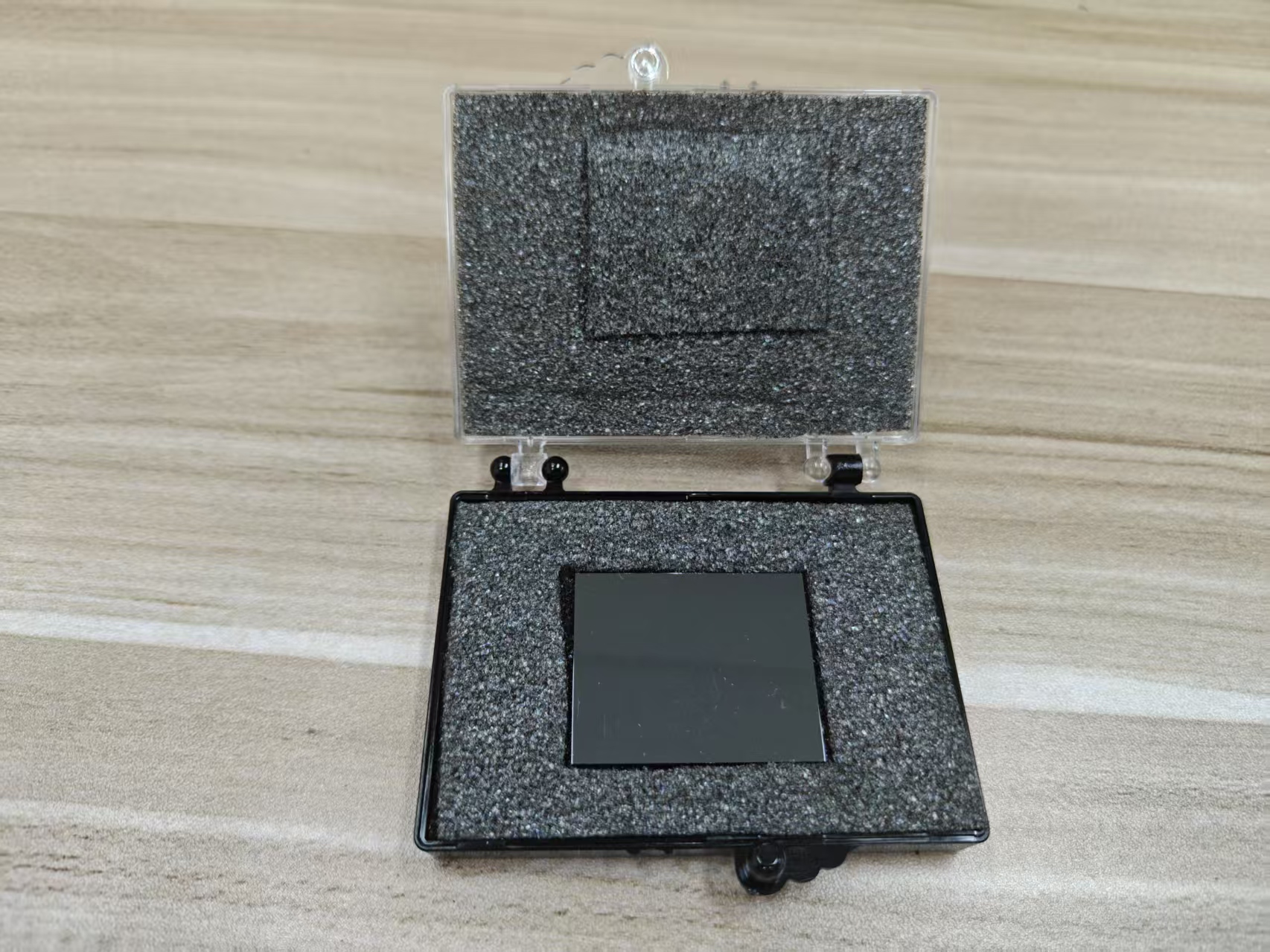
The first step in ensuring detector stability and uniformity is the precise fabrication of CZT crystals. Material uniformity is critical, as variations in composition, defects, or impurities can affect charge transport properties, leakage currents, and photon absorption efficiency. Modern CZT fabrication techniques focus on minimizing inclusions, dislocations, and compositional gradients to produce large-area crystals with homogeneous electrical and spectral properties. Modules are typically screened and characterized for dark current, mobility-lifetime product, and energy response to ensure that only crystals meeting stringent specifications are integrated into the detector array. This intrinsic uniformity forms the foundation for stable, high-fidelity whole-body imaging.
## Pixelation and Readout Consistency
CZT modules employ pixelated anodes to collect charges generated by incident X-ray photons. To maintain uniform response across modules, pixel geometry, pitch, and electrode design are standardized. Variations in pixel size or electrode contact quality can lead to differences in charge collection efficiency, which manifest as non-uniform image intensity or spectral distortions. Each module’s readout electronics are carefully calibrated to account for variations in capacitance, leakage current, and preamplifier gain. By ensuring consistent electronic performance at the pixel level, modules can produce uniform signal output even when subjected to variations in photon flux across the detector array.
## Electronic Calibration and Gain Matching
A crucial component of module uniformity is electronic calibration. Each CZT module is equipped with individual readout channels that must be gain-matched and offset-calibrated to ensure consistent response to photons of identical energy. Calibration typically involves exposing modules to uniform X-ray fields and adjusting electronic gain and offset to equalize energy response across pixels and modules. Advanced PCCT systems implement dynamic calibration routines that compensate for temperature fluctuations, bias drift, and long-term electronic aging. These routines ensure that detector response remains stable over time, preserving both image uniformity and spectral accuracy across the entire field of view.
## Thermal Management and Environmental Stability
Detector stability in whole-body CZT PCCT is sensitive to thermal effects. Variations in temperature can alter carrier mobility, leakage currents, and electronic gain, leading to spatial non-uniformities and energy drift. To mitigate these effects, CZT modules are mounted with active thermal management systems, including heat sinks, thermoelectric coolers, and temperature sensors. By maintaining a tightly controlled thermal environment, temperature-induced variations in module performance are minimized, allowing for stable operation over long scan durations and under varying clinical conditions.
## Cross-Module Synchronization and Data Correction
Whole-body PCCT requires synchronization between multiple CZT modules to avoid inconsistencies at module boundaries. Time-stamped photon counting, synchronized triggers, and shared clocking ensure that all modules record events concurrently. Additionally, software correction algorithms are employed to compensate for residual variations in detector response, including flat-field correction, dead pixel interpolation, and module boundary normalization. These corrections leverage pre-calculated calibration maps and ongoing feedback from reference scans to maintain uniformity across the full detector array, preventing visible seams or artifacts in reconstructed images.
## Monitoring and Quality Assurance
Continuous monitoring is essential for maintaining long-term stability and uniformity. PCCT systems incorporate automated quality assurance routines that periodically measure uniformity, energy calibration, and noise levels across all modules. Any deviation beyond pre-defined thresholds triggers recalibration or alerts for maintenance. This proactive monitoring ensures that detector modules remain consistent in performance, preserving diagnostic accuracy for serial whole-body imaging studies where reproducibility is critical.
## Conclusion
Detector stability and uniformity in whole-body CZT PCCT imaging are maintained through a combination of material uniformity, standardized pixelation and readout design, precise electronic calibration, thermal control, cross-module synchronization, and continuous monitoring. By addressing both intrinsic material properties and extrinsic operational factors, modern CZT PCCT systems ensure consistent image quality, spectral fidelity, and reliability across large detector arrays. This multi-faceted approach is essential for achieving high-resolution, artifact-free whole-body imaging, enabling accurate diagnosis, material decomposition, and longitudinal studies in clinical practice.
CdZnTe Association (CdZnTe.com)
https://www.cdznte.com/blog/how-is-detector-stability-and-uniformity-maintained-across-modules-of-a-czt-detector-in-whole-body-pcct-imaging.html