 Cadmium Zinc Telluride
 (CZT) detectors and Germanium (Ge) detectors are both widely used in radiation detection applications, but they differ significantly in terms of performance characteristics, material properties, and operational requirements. Below is a detailed comparison of the advantages and disadvantages of CZT detectors compared to Ge-based detectors from a professional and technical perspective.
## Advantages of CZT Detectors over Ge-Based Detectors
## 1. Room Temperature Operation
*
CZT: One of the most significant advantages of CZT detectors is their ability to operate at room temperature (RT) without the need for cryogenic cooling. This is due to the relatively high bandgap of CZT (around 1.5–1.7 eV), which minimizes thermal excitation and allows for the collection of charge carriers at ambient temperatures. The absence of a need for cooling systems reduces both operational complexity and costs, making CZT detectors more suitable for portable and field applications.
*
Ge: Germanium detectors require cooling, typically achieved through liquid nitrogen (LN2) or thermoelectric coolers (TEC), to maintain their performance. The need for cryogenic cooling adds to the system's complexity, cost, and operational challenges. This makes Ge detectors less suitable for mobile or cost-sensitive applications, as maintaining the cooling system can be cumbersome and expensive.
## 2. Compact and Lightweight
*
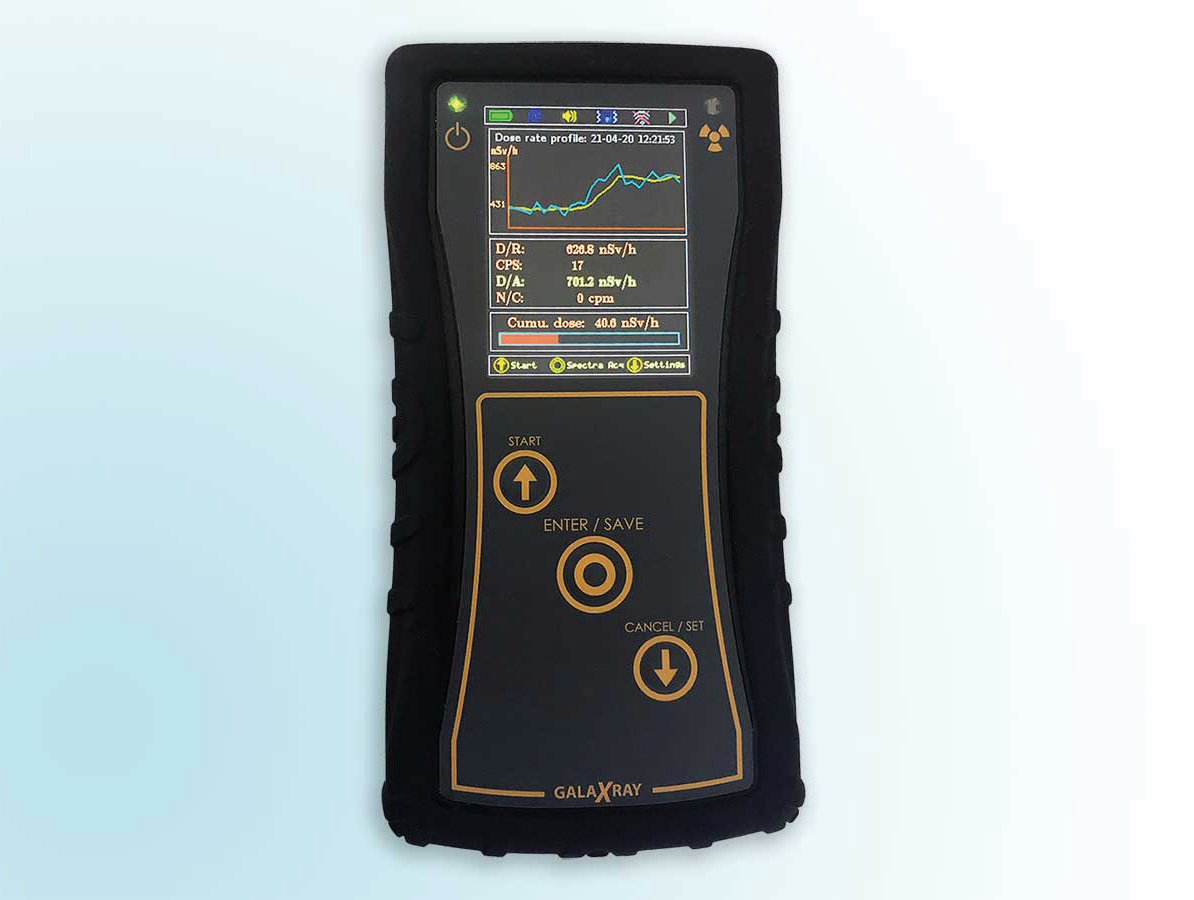
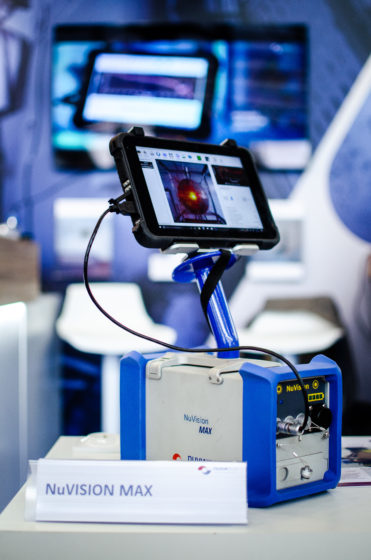
CZT: CZT detectors can be manufactured in smaller, more compact forms due to their ability to operate at room temperature. This allows for lightweight, portable radiation detection systems, which are ideal for applications such as handheld detectors, medical imaging, and portable spectrometers.
*
Ge: Ge-based detectors are typically bulkier and heavier due to the need for the cooling apparatus. The cryostat and thermal management systems add significant weight and size to Ge detectors, making them less suitable for portable applications.
## 3. Better High-Energy Detection Performance
*
CZT: CZT detectors exhibit excellent performance in high-energy photon detection, particularly for energies above 200 keV. The material has a relatively high atomic number (Z), which leads to higher stopping power for high-energy photons, making CZT detectors effective for applications such as gamma spectroscopy, medical imaging (e.g., PET, SPECT), and homeland security.
*
Ge: While Ge detectors offer excellent energy resolution, they can struggle with high-energy photon detection, particularly at energies above 1 MeV. This is partly due to the relatively low Z of Ge (32), which makes it less efficient at detecting high-energy gamma rays compared to CZT.
## 4. Scalability for Large Detector Arrays
*
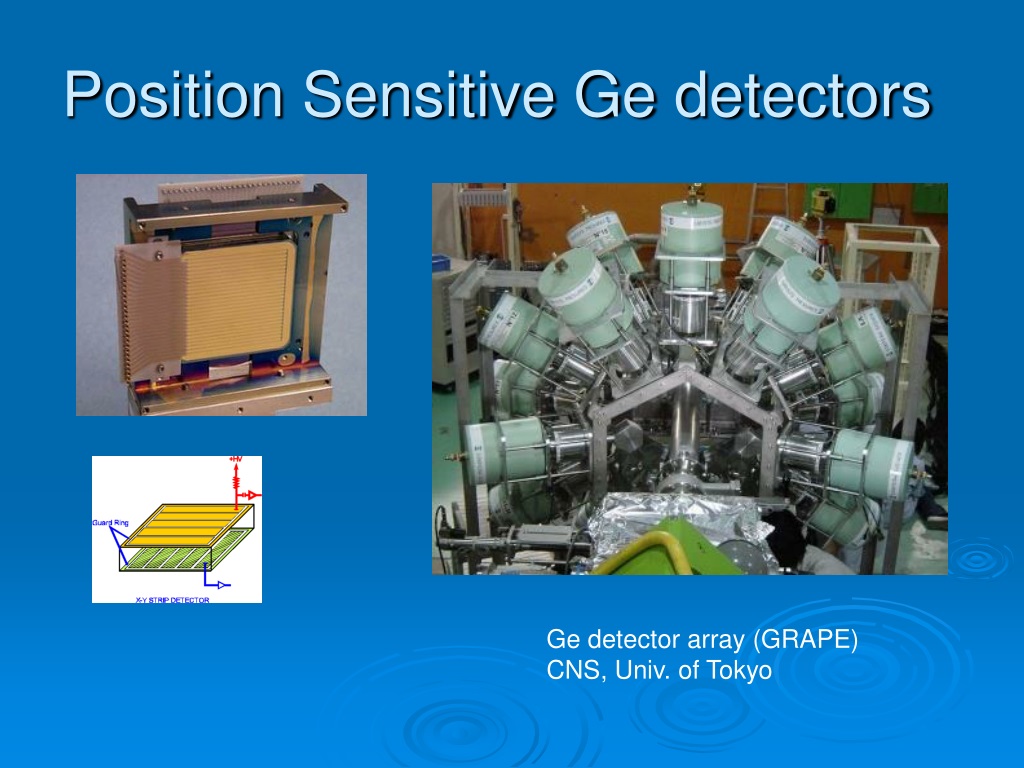
CZT: CZT detectors are easily scalable to form large detector arrays for use in imaging systems. They can be grown as large crystals and segmented into multiple detector elements, providing good energy resolution with high efficiency in a relatively compact form factor. This scalability makes CZT suitable for applications like high-resolution imaging and large-area radiation detection systems.
*
Ge: While Ge detectors offer superior energy resolution, they are typically less scalable than CZT detectors. Ge crystals are expensive to grow and require specific conditions to avoid imperfections, limiting the size and scalability of Ge-based systems. Additionally, the cooling systems required for Ge detectors become more complex and difficult to manage as the number of detector elements increases.
## 5. Cost Effectiveness
*
CZT: The production costs of CZT detectors are generally lower than those of Ge detectors. CZT crystals are more readily available and less expensive to produce, especially when compared to the high-quality Ge crystals required for high-performance detectors. This makes CZT detectors more cost-effective for large-scale applications and for systems where budget constraints are a concern.
*
Ge: Germanium detectors are more expensive due to the high cost of manufacturing high-purity, high-quality Ge crystals. The need for cryogenic cooling systems further adds to the overall cost, making Ge detectors less economically feasible for many applications, especially in large quantities.
## 6. Lower Sensitivity to Radiation Damage
*
CZT: CZT detectors tend to be more robust in environments with high radiation exposure. They are generally less sensitive to radiation damage compared to Ge detectors, which can degrade over time when exposed to high levels of radiation. This makes CZT detectors more durable and suitable for long-term use in environments with intense radiation fields.
*
Ge: Germanium detectors are more sensitive to radiation damage, particularly at high radiation doses, which can lead to performance degradation. Over time, the crystal structure of Ge detectors may deteriorate, leading to a decrease in charge collection efficiency and energy resolution. This necessitates careful handling and periodic maintenance or replacement.
---
## Disadvantages of CZT Detectors Compared to Ge-Based Detectors
## 1. Lower Energy Resolution
*
CZT: One of the main disadvantages of CZT detectors is their lower energy resolution compared to Ge-based detectors. While CZT offers reasonable resolution for certain applications, its intrinsic energy resolution is generally not as high as that of Ge detectors. This is partly due to the presence of deep-level traps and defects in the CZT crystal, which can interfere with charge collection and signal processing.
*
Ge: Ge detectors are known for their excellent energy resolution, which is essential for applications requiring precise energy measurements, such as nuclear spectroscopy. The intrinsic resolution of Ge detectors is much better than CZT, often approaching 0.1% at 1 MeV, making them ideal for high-precision spectroscopic measurements.
## 2. Lower Detection Efficiency at Low Energies
*
CZT: While CZT detectors excel at high-energy photon detection, they generally exhibit lower efficiency for detecting low-energy photons, particularly below 100 keV. This is partly due to the lower atomic number (Z) of CZT compared to Ge, which results in lower stopping power for low-energy photons.
*
Ge: Germanium detectors have a higher detection efficiency at lower energies, particularly below 100 keV. Ge's relatively high atomic number and excellent energy resolution make it superior for applications requiring high sensitivity in the low-energy range, such as alpha, beta, and low-energy gamma spectroscopy.
## 3. Material Defects and Inhomogeneities
*
CZT: CZT crystals are more prone to defects such as grain boundaries, dislocations, and traps due to the complex growth process and the material's sensitivity to impurities. These defects can negatively affect the charge collection efficiency, leading to a lower energy resolution and less uniform detector performance. The quality control required for CZT crystals is more challenging, and imperfections in the crystal can lead to suboptimal performance.
*
Ge: Germanium crystals are more pure and homogeneous compared to CZT crystals, thanks to the more controlled and refined growth processes. Ge detectors are less prone to defects and inhomogeneities, resulting in more consistent performance and higher energy resolution.
## 4. Limited Performance in High-Temperature Environments
*
CZT: Although CZT detectors can operate at room temperature, their performance can degrade in high-temperature environments. The increased thermal energy can cause carrier recombination or leakage currents, reducing charge collection efficiency and energy resolution. CZT detectors typically perform best at lower ambient temperatures, although they are still less sensitive to temperature changes than Ge detectors.
*
Ge: Germanium detectors are also susceptible to temperature effects, especially since they require cooling to operate optimally. However, they can maintain stable performance over a wide range of temperatures when properly cooled, which allows them to work effectively in controlled environments or systems with stable cooling.
## 5. Lower Purity and Higher Intrinsic Noise
*
CZT: The purity of CZT crystals is often lower than that of Ge crystals. Impurities in CZT can create deep-level traps that introduce additional noise, which can reduce the signal-to-noise ratio (SNR) and degrade the energy resolution. The higher intrinsic noise levels in CZT detectors are one of the main reasons why they cannot match the performance of Ge detectors in high-precision applications.
*
Ge: Germanium crystals are highly purified during the manufacturing process, leading to very low intrinsic noise. The purity of Ge contributes to its excellent energy resolution and high signal-to-noise ratio, making it ideal for applications that require high precision.
## Conclusion
Both CZT and Ge-based detectors have their advantages and disadvantages, and the choice between them depends largely on the specific requirements of the application. CZT detectors excel in applications that require room temperature operation, compact size, cost-effectiveness, and the ability to handle high-energy photons. They are well-suited for portable and large-area radiation detection systems. However, CZT detectors generally suffer from lower energy resolution and performance limitations at low energies compared to Ge detectors.
On the other hand, Ge detectors offer superior energy resolution and excellent performance at low energies, making them the gold standard for high-precision spectroscopic applications. However, their dependence on cryogenic cooling, higher cost, and larger size make them less suitable for portable or large-scale systems.
The choice between CZT and Ge-based detectors depends on the balance between resolution requirements, operational conditions (e.g., temperature), system size and portability, and budget constraints.
CdZnTe Association (CdZnTe.com)
https://www.cdznte.com/blog/what-are-the-advantages-and-disadvantages-of-czt-detectors-compared-to-ge-based-detectors.html