## Introduction
The performance of CdZnTe (
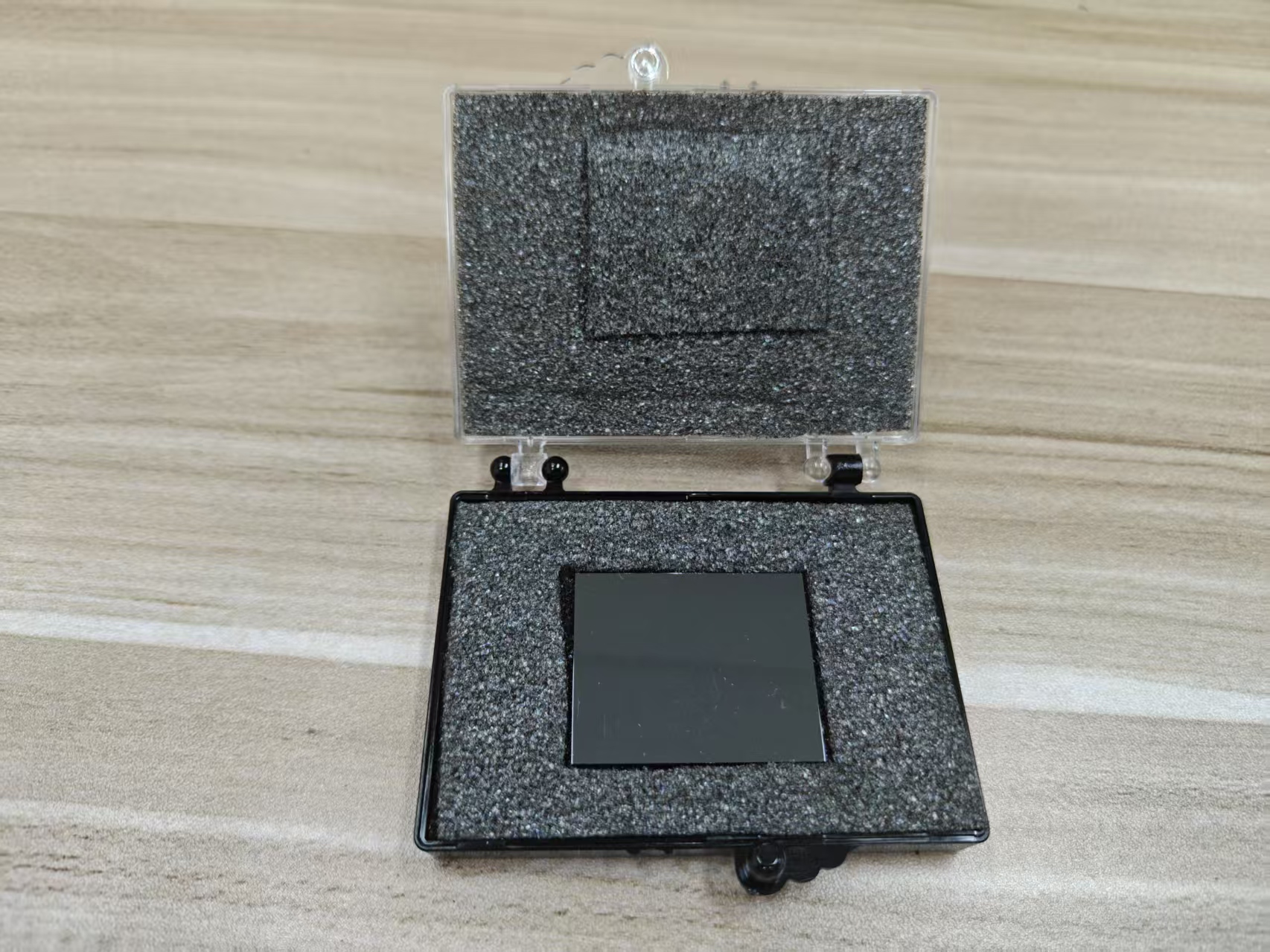
Cadmium Zinc Telluride) radiation detectors is highly dependent on the nature and quality of the metal-semiconductor interface, particularly the electrode material and deposition technique. Platinum (Pt) is a commonly used electrode material due to its high work function, chemical inertness, and ability to form effective Schottky contacts with CdZnTe. Among various methods available for Pt electrode fabrication—such as thermal evaporation, sputtering, and electroplating—
electroless deposition presents a number of distinctive advantages, particularly for preserving material integrity, achieving uniform coatings, and minimizing interfacial defects. This deposition technique does not require external electrical power, relying instead on controlled chemical reduction reactions. These characteristics make electroless deposition a highly suitable method for preparing high-performance Pt contacts on CdZnTe detectors.
## No Need for Vacuum or Complex Equipment
Electroless deposition is a
solution-based wet chemical process, which eliminates the need for high-vacuum equipment required in techniques like thermal evaporation or sputtering. This has several implications:
1.
Cost Efficiency: Avoiding vacuum systems reduces capital and operating costs, making the process more economically feasible for large-scale or research applications.
2.
Simplified Setup: The process can be performed in a laboratory beaker or chemical bath, eliminating the complexity of maintaining vacuum chambers or inert gas environments.
3.
Lower Maintenance: The absence of vacuum pumps, target conditioning, and chamber cleaning contributes to reduced maintenance overhead.
This simplicity and low infrastructure requirement make electroless deposition especially attractive for academic research settings and low-cost detector fabrication processes.
## Conformal and Uniform Coverage on Complex Geometries
One of the most significant advantages of electroless deposition is its
ability to uniformly coat complex and irregular surfaces. This includes:
1.
High Aspect Ratio Structures: Electroless deposition can conformally coat deep trenches or rough topographies that sputtering and evaporation often fail to cover uniformly due to line-of-sight limitations.
2.
Edge Coverage: It ensures smooth and continuous coverage over edges and corners, minimizing localized electric field enhancement and avoiding edge breakdown during detector operation.
3.
Uniform Thickness: The chemical nature of the deposition results in uniform film thickness even on large-area or non-planar CdZnTe crystals.
This uniformity is critical for ensuring consistent electrical performance across the entire detector surface and for minimizing local variations in barrier height and leakage current.
## Low-Temperature Process Minimizes Thermal Damage
CdZnTe is a thermally sensitive material prone to the formation of defects, surface degradation, and stoichiometric imbalance when subjected to high temperatures. Electroless deposition offers a
low-temperature alternative:
1.
Preservation of Material Integrity: Unlike sputtering or evaporation, which may require substrate heating, electroless deposition typically proceeds at temperatures below 100 °C.
2.
Reduced Thermal Stress: This minimizes the generation of thermally induced dislocations, interfacial defects, or degradation of the CZT lattice near the contact.
3.
No Phase Separation: Lower processing temperatures prevent phase separation or the diffusion of cadmium, zinc, or tellurium atoms within the near-surface region.
The ability to fabricate electrodes without damaging the intrinsic semiconductor properties is crucial for achieving high energy resolution and low noise in CdZnTe detectors.
## Enhanced Interface Stability and Adhesion
Electroless deposition can promote
strong adhesion and stable interface formation due to controlled surface pre-treatment and chemical activation:
1.
Surface Preparation Compatibility: The process usually begins with etching or sensitization steps (e.g., using HCl, HNO₃, or NH₄OH), which clean and activate the CdZnTe surface, removing oxides and contaminants that might otherwise compromise adhesion.
2.
Interdiffusion Control: Since the reaction conditions are relatively mild, there is limited diffusion of platinum into the CZT surface. This preserves a clean and sharp interface, reducing defect densities that lead to increased leakage current.
3.
Self-Limiting Growth: Some electroless systems exhibit self-limiting behavior, leading to controllable and reproducible film thickness, thereby enhancing repeatability.
These factors contribute to a reliable and reproducible Schottky barrier, which is essential for achieving consistent detector characteristics.
## Better Control Over Contact Chemistry and Morphology
The chemical bath in electroless deposition can be finely tuned to control the
nucleation rate, growth kinetics, and surface morphology of the deposited platinum layer:
1.
Tailored Grain Structure: The Pt layer morphology, including grain size and surface roughness, can be manipulated by adjusting the pH, temperature, reducing agent concentration, and complexing agents in the solution.
2.
Reduced Surface Defects: Proper optimization can lead to smooth, fine-grained films with fewer grain boundaries and voids, which minimizes carrier recombination and improves detector sensitivity.
3.
Custom Alloying: If desired, co-deposition with other metals (e.g., palladium or gold) can be integrated into the bath chemistry to tailor the work function or mechanical properties of the contact.
Such precise control over the surface microstructure and chemistry is difficult to achieve with physical vapor deposition methods.
## Improved Electrical Performance in CdZnTe Detectors
Electrolessly deposited platinum contacts often demonstrate superior
electrical properties, particularly in terms of:
1.
Lower Leakage Current: Due to better interface quality and reduced defect levels, detectors exhibit lower reverse leakage currents, which is critical for low-noise gamma-ray spectroscopy.
2.
Stable Schottky Barrier Height: The high work function of Pt combined with a clean, defect-minimized interface leads to a stable and reproducible Schottky barrier. This ensures good rectifying behavior and reduces carrier injection from the metal.
3.
Enhanced Energy Resolution: With reduced interface trap density and improved barrier uniformity, the electroless Pt contact helps in minimizing pulse height defects and spectral tailing, thereby improving energy resolution.
These performance advantages make electroless deposition highly suitable for radiation detectors operating under stringent energy discrimination requirements.
## Scalability and Batch Processing Potential
Electroless deposition is naturally amenable to
scalable and batch fabrication:
1.
Parallel Processing: Multiple detector substrates can be processed simultaneously in the same chemical bath, making it efficient for medium- to large-scale production.
2.
Automatability: The process can be automated with controlled stirring, temperature regulation, and timed immersion cycles, reducing operator dependency and process variability.
3.
Reduced Waste: Since the deposition occurs only where catalytic activation is present, material usage is efficient and wastage is minimized compared to sputtering or evaporation.
This scalability is advantageous for producing arrays of detectors or for cost-effective commercial production.
## Conclusion
Electroless deposition offers numerous advantages over conventional Pt electrode fabrication methods for CdZnTe detectors. It enables low-temperature, vacuum-free, and uniform metal layer deposition with superior conformality and interface quality. These features translate into improved Schottky barrier characteristics, lower leakage currents, and enhanced detector performance. Additionally, the process is cost-effective, scalable, and suitable for both simple and complex geometries. As such, electroless deposition stands out as a highly effective technique for fabricating high-quality Pt contacts on CdZnTe radiation detectors.
CdZnTe Association (CdZnTe.com)
https://www.cdznte.com/blog/what-are-the-advantages-of-electroless-deposition-over-other-pt-electrode-fabrication-methods-for-cdznte-detectors.html