## Introduction
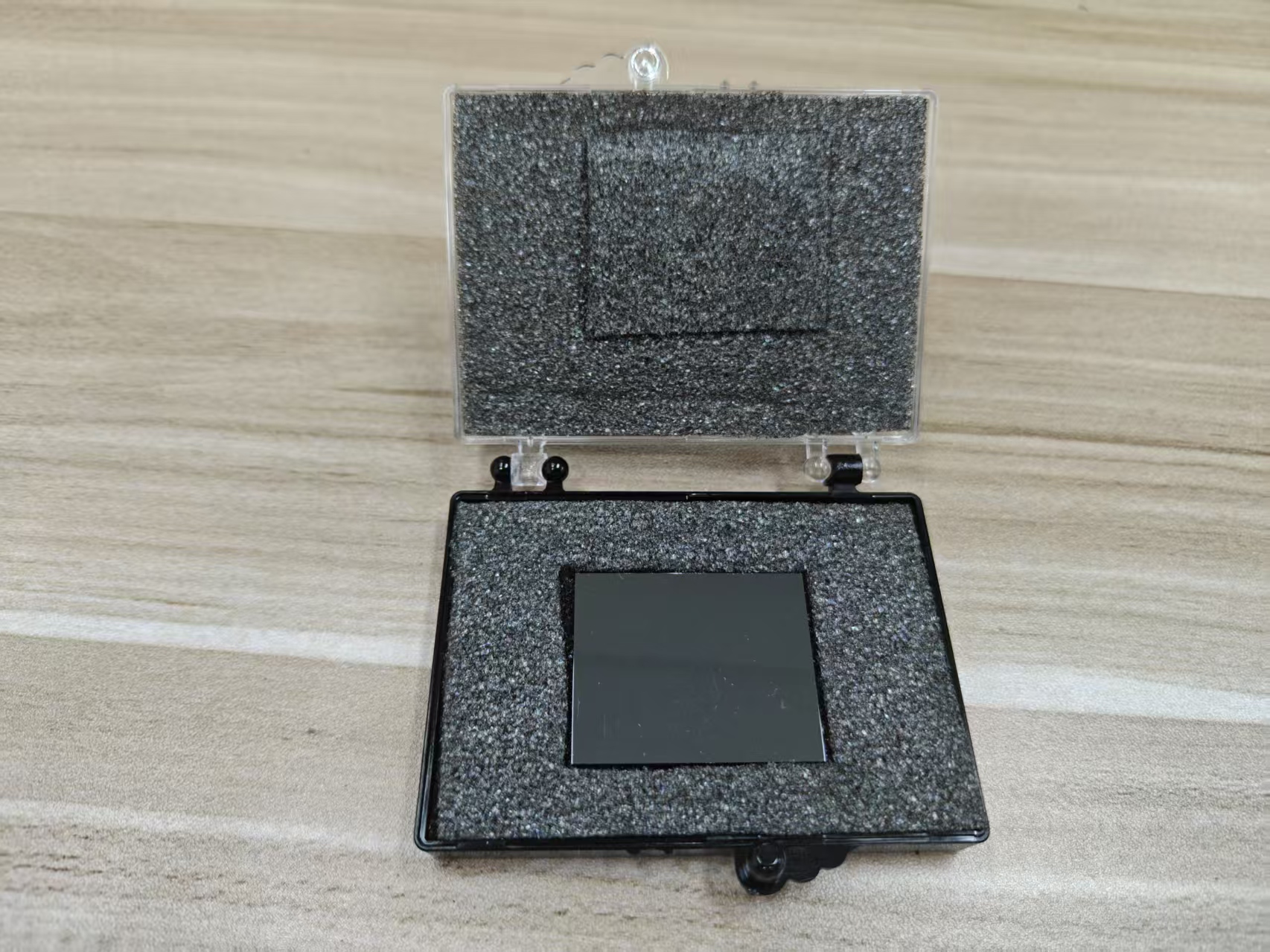
CZT pixeled arrays and conventional scintillator-based detectors are both used in X-ray imaging for a variety of applications, from medical diagnostics to security screening. However, the two technologies have distinct advantages and limitations that influence their performance. While scintillator-based detectors have been traditionally used for X-ray imaging, CZT-based detectors are gaining increasing interest due to their superior energy resolution, spatial resolution, and direct conversion capabilities. In this article, we will explore the key advantages of using CZT pixeled arrays over conventional scintillator-based detectors for X-ray imaging, highlighting their performance benefits and their impact on imaging quality.
## 1. Direct Conversion of X-ray Photons
One of the most significant advantages of CZT pixeled arrays is their ability to directly convert X-ray photons into electrical signals. In contrast, scintillator-based detectors rely on an intermediate step where the scintillator material absorbs the X-ray photon and then emits visible light, which is subsequently detected by a photodetector (usually a photodiode or photomultiplier tube). This two-step conversion process introduces additional noise and reduces the overall efficiency of the detection.
* Direct conversion with CZT: CZT detectors use the photoelectric effect, where the CZT crystal itself absorbs the X-ray photon and generates electron-hole pairs, which are then collected by the electrodes. This direct conversion minimizes energy losses that occur in the scintillation process, leading to higher efficiency in photon detection, especially for high-energy X-rays.
* Indirect conversion with scintillators: The process of converting X-ray photons into visible light introduces photon losses, which can degrade energy resolution and sensitivity, particularly for low-energy X-rays.
CZT pixeled arrays provide a more efficient and direct method of detecting X-rays, resulting in improved sensitivity and faster response for imaging applications.
## 2. Superior Energy Resolution
Energy resolution is a critical factor in X-ray imaging, particularly for applications that require precise measurements of photon energy, such as spectral imaging or material characterization. CZT detectors offer much better energy resolution compared to scintillator-based detectors.
* High energy resolution with CZT: CZT pixeled arrays have intrinsic energy resolution that is far superior to most scintillator-based detectors, especially for high-energy X-rays. This high energy resolution allows for better discrimination between different photon energies, leading to improved image quality, accurate material differentiation, and the ability to detect low-energy X-rays with higher precision.
* Lower energy resolution with scintillators: Scintillator materials such as NaI(Tl) or CsI(Tl) suffer from lower energy resolution due to their relatively broad light emission spectra and photon scattering within the scintillator. These factors contribute to poor energy discrimination, which can result in blurring of photon energy information and reduced image contrast.
The superior energy resolution of CZT pixeled arrays enables them to provide more accurate and detailed information about the photon energy, which is crucial in various X-ray imaging applications.
## 3. Improved Spatial Resolution
Spatial resolution refers to the ability of the detector to distinguish between two closely spaced objects in an X-ray image. The pixel resolution in CZT pixeled arrays directly impacts the spatial resolution of the detector, allowing for finer image details and clearer imaging.
* High spatial resolution with CZT: The small pixel sizes in CZT pixeled arrays (often in the range of hundreds of microns) enable the detector to resolve smaller structures with high precision. This makes CZT pixeled arrays ideal for applications such as medical imaging (e.g., CT scans, mammography) and non-destructive testing, where fine spatial detail is critical.
* Lower spatial resolution with scintillators: Scintillator-based detectors typically have larger pixel sizes and rely on a photon-to-light conversion process, which can introduce blurring and loss of detail in the image. This makes them less capable of resolving fine structures compared to CZT detectors.
By using smaller pixels and direct photon detection, CZT pixeled arrays achieve higher spatial resolution, which translates to sharper images with greater detail.
## 4. Faster Response Time
The response time of a detector is crucial for applications that require real-time imaging or dynamic imaging of moving objects. CZT pixeled arrays offer faster response times compared to conventional scintillator-based detectors, thanks to their direct conversion process.
* Fast response with CZT: Since CZT detectors directly convert X-ray photons into electrical signals, the process is much faster compared to the light emission and detection required in scintillator-based systems. The result is a shorter dead time between successive photon detections, making CZT pixeled arrays more suitable for high-speed imaging applications, such as fluoroscopy and real-time X-ray imaging.
* Slower response with scintillators: The need for scintillators to emit visible light and for photodetectors to capture that light introduces delays in the detection process, making scintillator-based detectors less effective for applications requiring high frame rates or dynamic imaging.
CZT pixeled arrays provide a faster response time, which is essential for capturing moving objects or rapid events in medical or industrial X-ray imaging.
## 5. Lower Power Consumption
Power consumption is a critical consideration for portable or mobile X-ray systems, where battery life and energy efficiency are essential. CZT pixeled arrays generally consume less power than scintillator-based detectors, making them more suitable for compact systems and field applications.
* Lower power with CZT: The direct conversion of X-rays into electrical signals in CZT detectors eliminates the need for energy-intensive photon-to-light conversion stages. This results in lower power consumption and reduced heat generation, which is especially important for portable X-ray imaging systems.
* Higher power with scintillators: Scintillator-based detectors require photodetectors to capture the visible light emitted by the scintillator, which typically involves high-voltage systems and additional components, leading to higher power consumption.
The low power consumption of CZT pixeled arrays makes them more efficient and suitable for portable or battery-operated X-ray systems.
## 6. Compact and Robust Design
CZT detectors offer more compact and robust designs compared to scintillator-based systems, which is a significant advantage for mobile and handheld X-ray devices. This compactness enables CZT detectors to be used in smaller form factors without compromising on performance.
* Compactness with CZT: CZT pixeled arrays are inherently smaller and more robust due to their solid-state nature. These detectors do not require the bulk scintillator crystals or photomultiplier tubes that are common in scintillator-based systems.
* Bulkiness with scintillators: Scintillator-based detectors require larger scintillator crystals and additional light collection systems, which makes them bulkier and less suitable for compact, portable systems.
The compact design of CZT pixeled arrays offers a more robust and integrated solution for portable X-ray systems.
## 7. Reduced Environmental Sensitivity
CZT detectors are less sensitive to environmental factors such as temperature and humidity, which can affect the performance of scintillator-based detectors. Scintillator materials, especially those like NaI(Tl), are highly hygroscopic and require protective enclosures to prevent moisture absorption, which can degrade their performance.
* CZT robustness: CZT detectors are much more stable and reliable under a wide range of environmental conditions, making them suitable for harsh environments and long-term use without the need for special environmental controls.
* Environmental sensitivity with scintillators: Scintillators are more prone to environmental degradation, especially in humid or high-temperature conditions, which can lead to performance degradation over time.
The environmental stability of CZT detectors makes them ideal for use in challenging conditions, with less need for protective measures.
## Conclusion
In summary, CZT pixeled arrays offer several significant advantages over conventional scintillator-based detectors for X-ray imaging. These advantages include direct photon conversion, superior energy and spatial resolution, faster response times, lower power consumption, compact and robust design, and reduced environmental sensitivity. These benefits make CZT-based detectors ideal for applications that demand high resolution, efficiency, and portability, such as medical imaging, security screening, and industrial testing. As a result, CZT pixeled arrays represent a promising alternative to scintillator-based detectors, offering enhanced performance for modern X-ray imaging applications.
CdZnTe Association (CdZnTe.com)
https://www.cdznte.com/blog/what-are-the-advantages-of-using-czt-pixeled-arrays-over-conventional-scintillator-based-detectors-for-x-ray-imaging.html