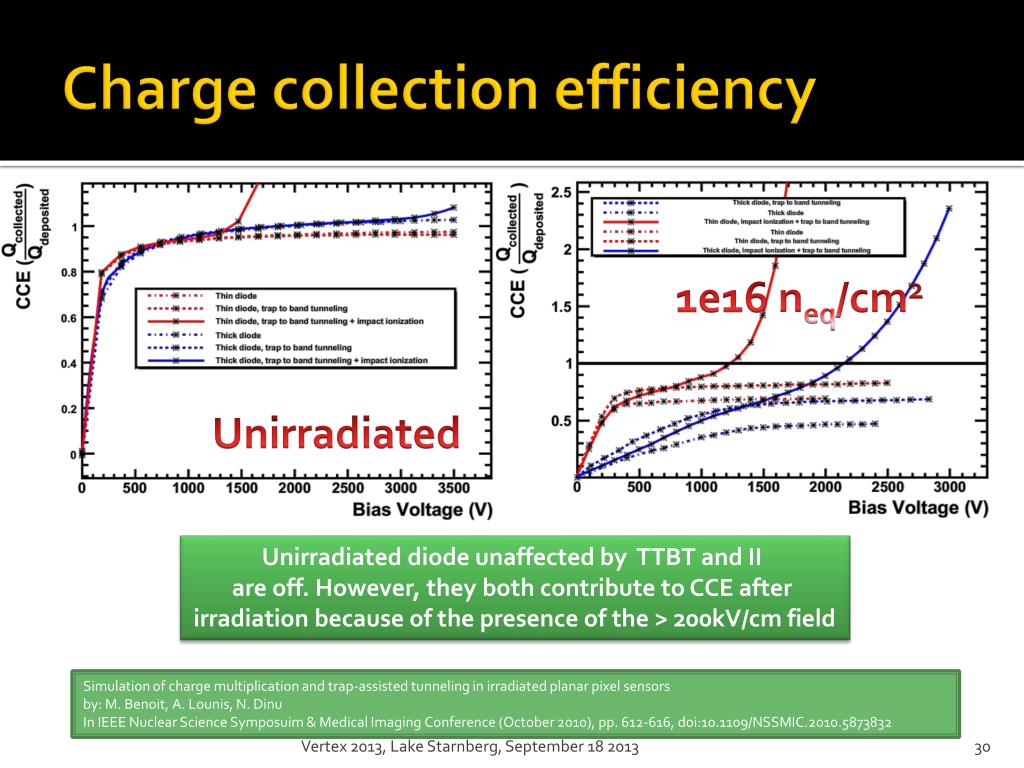
Improving the charge collection efficiency in
Cadmium Zinc Telluride (CZT) crystals is a critical factor for enhancing the performance of CZT-based detectors. The efficiency with which charge carriers (electrons and holes) are collected from the detector’s volume directly impacts the energy resolution, signal amplitude, and overall detection performance. Several strategies and techniques have been developed to address the challenges associated with charge collection in CZT crystals, primarily aiming to reduce defects, improve carrier mobility, and minimize losses due to trapping. Below is a detailed explanation of the different methods used to improve charge collection efficiency in CZT crystals.
## 1. Improving Crystal Quality and Reducing Defects
The charge collection efficiency in CZT detectors is significantly affected by the presence of defects in the crystal lattice. These defects create deep-level traps that capture charge carriers, thereby reducing the amount of charge that reaches the electrodes. Improving the quality of the CZT crystal by reducing these defects is one of the most effective ways to enhance charge collection.
*
Crystal Growth Optimization: One of the key methods for improving charge collection efficiency is optimizing the crystal growth process to minimize defects such as dislocations, vacancies, and grain boundaries. Techniques such as the
vertical Bridgman method or
temperature gradient method can be fine-tuned to produce higher-quality CZT crystals with fewer defects, which results in fewer trapping sites for charge carriers.
*
Post-Growth Annealing: Thermal annealing is a process where the CZT crystal is heated to a specific temperature for a certain duration to repair or reduce the density of point defects. Annealing can help to reduce the number of trapping centers by allowing some of the defects to recombine or migrate, improving charge transport properties and reducing charge losses.
## 2. Improving Material Purity and Composition
The composition of the CZT crystal itself plays a crucial role in charge collection efficiency. Variations in the cadmium-to-zinc ratio and the purity of the materials can influence the charge carrier mobility and the defect density in the material. By optimizing the composition and ensuring high purity, it is possible to reduce defects and improve overall performance.
*
Purity Control: The purity of the starting materials (Cadmium, Zinc, Tellurium) must be closely controlled to prevent contamination that could introduce additional defects. Impurities, such as iron or copper, can act as traps for charge carriers, so using high-purity materials and avoiding contamination during crystal growth can significantly improve charge collection efficiency.
*
Cadmium to Zinc Ratio Optimization: Adjusting the cadmium-to-zinc ratio can affect the electrical properties of the CZT crystal. Increasing the zinc content generally improves the stability and reduces the number of deep traps in the crystal, which enhances charge collection. However, this must be carefully balanced with other properties such as electron mobility, which could decrease if the zinc content is too high.
## 3. Optimizing the Electric Field Configuration
The efficiency with which charge carriers are collected in a CZT detector depends on the electric field applied across the crystal. The electric field drives the electrons and holes towards their respective electrodes, but its effectiveness can be compromised by defects, charge trapping, or material inhomogeneities.
*
Polarity Optimization: The polarity of the electrodes can affect the drift direction of charge carriers. For example, using
reverse polarity (where the anode is on the cathode side and vice versa) can sometimes help improve the charge collection efficiency by better aligning the charge carriers with the electric field. However, this must be carefully calibrated to avoid polarization effects.
*
Improving Field Homogeneity: Achieving a uniform electric field across the entire volume of the detector is essential for efficient charge collection. Inhomogeneities in the electric field, caused by structural defects or non-uniform electrode configurations, can cause charge carriers to become trapped or recombine before reaching the electrodes. Using
field-shaping electrodes or
multi-electrode configurations can help ensure that the electric field is more uniform throughout the CZT crystal.
*
Electrode Design: The design and material of the electrodes play a significant role in the electric field distribution. Using electrodes that form optimal contacts with the CZT crystal while minimizing surface damage is crucial for improving charge collection.
Ohmic contacts (where the contact resistance is low) are often preferred to avoid creating additional barrier layers that could impede charge collection.
## 4. Reducing Surface Effects and Improving Surface Passivation
The surface of the CZT crystal can have a significant impact on the overall charge collection efficiency, particularly because surface states can act as recombination centers for charge carriers. Surface passivation techniques are often employed to reduce the negative effects of surface-related recombination.
*
Passivation Layers: One effective method for improving surface charge collection efficiency is to apply a passivation layer to the surface of the CZT crystal. Passivation layers, such as those made from
silicon dioxide (SiO2) or
polyimide, help to reduce surface recombination by creating a barrier between the surface states and the charge carriers. This helps to maintain the integrity of the signal by preventing charge loss at the surfaces.
*
Surface Polishing: Mechanical or chemical polishing of the CZT crystal surfaces is another method used to reduce surface roughness, which can cause scattering of charge carriers and promote recombination. A smoother surface improves the likelihood of charge carriers reaching the electrodes and enhances charge collection efficiency.
## 5. Using Electric Field Enhancement Techniques
In some cases, the application of external techniques to enhance the electric field within the CZT crystal can improve the collection efficiency of charge carriers. These methods aim to maximize the effectiveness of the applied bias and minimize the effects of charge trapping or recombination.
*
Trapping Site Suppression: Some methods involve adding specific dopants to the CZT material that can passivate or neutralize deep-level traps. For example, introducing certain elements such as
indium (In) can help reduce the density of traps, improving charge carrier transport.
*
Electric Field Gradients: By designing electrode structures that create
non-uniform electric fields (such as using a gradient or differential voltage across the detector), it is possible to enhance charge collection efficiency. This technique can reduce the impact of trapping by focusing the charge carriers toward the collection electrodes.
## 6. Optimizing Operating Temperature
Temperature has a significant effect on the mobility of charge carriers and the rate of recombination in semiconductors, including CZT. At higher temperatures, charge carrier mobility increases, which could potentially enhance the collection efficiency. However, high temperatures also increase the likelihood of thermal generation of carriers, which could lead to increased noise and reduced charge collection efficiency.
*
Cooling Systems: For CZT detectors, especially in high-counting-rate applications, cooling the detector to low temperatures using
thermoelectric coolers (TECs) or
cryogenic systems can reduce thermal noise and help to maintain the charge collection efficiency. By operating at lower temperatures, charge carriers are less likely to recombine before being collected.
*
Optimizing Operating Conditions: It is also essential to carefully monitor the operating temperature of CZT detectors to prevent overheating, which can cause an increase in leakage current and degradation of the crystal structure. A stable, optimized temperature ensures that the charge collection efficiency is maintained over time.
## 7. Advanced Signal Processing Techniques
Although not directly related to the physical structure of the CZT crystal, advanced signal processing can help mitigate some of the effects of imperfect charge collection by improving the accuracy and precision of the measurement system.
*
Pulse Shape Discrimination (PSD): Advanced signal processing techniques, such as
pulse shape discrimination, can help differentiate between valid signals and noise or spurious events caused by incomplete charge collection. This technique can be used to filter out bad events and ensure that only those with adequate charge collection are processed.
*
Energy Calibration and Compensation: Signal processing algorithms can also be employed to correct for small variations in charge collection efficiency. For instance,
dynamic calibration of the system can compensate for any drift or non-linearities in the detector’s response, improving the overall accuracy of energy measurements.
## Conclusion
Improving charge collection efficiency in CZT crystals is essential for optimizing the performance of CZT-based radiation detectors. Various strategies can be applied, ranging from enhancing the crystal quality and purity, optimizing the electric field distribution, and using passivation techniques to reduce surface recombination, to employing advanced cooling methods and signal processing algorithms. Each of these methods addresses specific challenges in the charge collection process, such as defects, trapping, surface effects, and temperature dependence. By combining these techniques, it is possible to significantly enhance the performance and longevity of CZT detectors, making them more effective for applications in medical imaging, high-energy physics, and nuclear detection.
CdZnTe Association (CdZnTe.com)
https://www.cdznte.com/blog/what-are-the-different-methods-to-improve-the-charge-collection-efficiency-in-czt-crystals.html



