What is the role of the high atomic number and wide band gap of CdZnTe in enhancing its gamma-ray detection performance?

Blog / Date: July 29, 2025 / Author: CdZnTe.com / Hits: 121
What is the role of the high atomic number and wide band gap of CdZnTe in enhancing its gamma-ray detection performance?
The high atomic number (Z) and wide bandgap of CdZnTe (CZT) play crucial roles in enhancing its performance as a gamma-ray detector. These properties contribute significantly to its high detection efficiency, spectral resolution, and operability at room temperature—all of which are essential for accurate and reliable gamma-ray spectroscopy.

## 1. High Atomic Number (Z) and Its Effect on Gamma-Ray Interaction


The atomic number (Z) of a material is directly related to its ability to interact with electromagnetic radiation, such as gamma rays. A high Z material has a larger probability of interacting with gamma photons via various mechanisms, such as the photoelectric effect, Compton scattering, and pair production. Here's how the high Z of CdZnTe benefits gamma-ray detection:

## a. Enhanced Photoelectric Absorption


* The photoelectric effect is the dominant interaction process for low-energy gamma-rays (up to a few hundred keV). In this process, the photon is completely absorbed by the material, and the energy is transferred to an electron, creating a photoelectron.
* CdZnTe has a high Z (Cd = 48, Zn = 30, Te = 52), meaning that it has a higher probability of photoelectric absorption compared to low-Z materials like silicon or germanium. This increases the efficiency of energy deposition from the gamma photons, which is essential for accurate energy resolution in gamma-ray spectroscopy.

## b. Higher Compton Scattering Efficiency


* For gamma-rays with higher energy (a few hundred keV to several MeV), the Compton scattering process dominates. During Compton scattering, a gamma photon transfers part of its energy to an electron, causing the photon to scatter in a different direction.
* The probability of Compton scattering is also higher in materials with a high atomic number, contributing to better charge generation in the detector and improved signal production.
* The efficient conversion of gamma energy into measurable signals enhances the overall gamma-ray detection efficiency.

## c. Pair Production at High Gamma Energies


* For very high-energy gamma-rays (greater than 1.02 MeV), pair production can occur, where the gamma photon converts into an electron-positron pair. This interaction is more probable in materials with a high Z.
* CdZnTe’s high Z increases its ability to detect high-energy gamma rays and participate in pair production, thereby improving its ability to detect a wide range of gamma-ray energies.

## 2. Wide Bandgap and Its Effect on Detector Performance


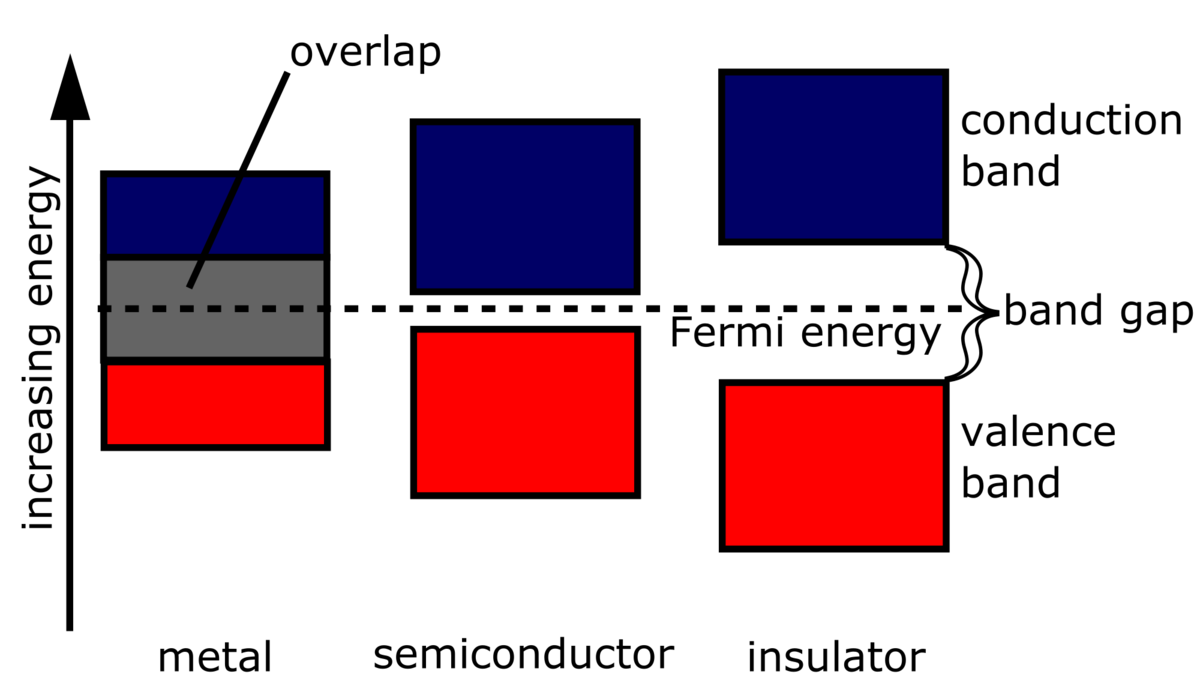
CdZnTe has a wide bandgap (approximately 1.5–2.0 eV), which means the energy required to promote an electron from the valence band to the conduction band is relatively large. This property plays several important roles in the performance of CZT detectors:

## a. Reduced Dark Current and Low Leakage Current


* A wide bandgap minimizes the number of thermally generated charge carriers (electrons and holes) at room temperature. This is especially important in semiconductor detectors, where dark current (unwanted current flow in the absence of radiation) can cause significant noise.
* The reduced thermal generation of charge carriers helps maintain low leakage current, ensuring that the signal from gamma-ray interactions is not obscured by background noise or undesired currents.

## b. Room-Temperature Operation


* The wide bandgap allows CdZnTe detectors to operate at room temperature without the need for cryogenic cooling, which is typically required for other materials like germanium.
* The absence of cooling equipment simplifies the design of the detector system, reduces operational costs, and makes the detector more versatile in field applications, such as handheld gamma spectrometers or portable radiation monitoring.

## c. Better Charge Collection Efficiency


* The wide bandgap ensures that the mobility of charge carriers (electrons and holes) is high, and the likelihood of recombination (where electrons and holes neutralize each other before being collected) is low.
* This leads to efficient charge collection and higher energy resolution, as the full energy deposited by the gamma-ray is converted into a measurable signal with minimal loss.

## d. High Signal-to-Noise Ratio


* With low thermal noise and high charge collection efficiency, the wide bandgap material reduces the signal broadening and improves the signal-to-noise ratio.
* This results in clearer photopeaks and improved spectral resolution, which is crucial for discriminating between different gamma-ray energies and accurately identifying radiation sources.

## 3. Summary of Key Benefits from High Atomic Number and Wide Bandgap


| Property | Effect on Gamma-Ray Detection Performance |
| -------------------------- | ----------------------------------------------------------------------------------------------------------------------------------------------------------------------------------------- |
| High Atomic Number (Z) | Increased interaction probability with gamma photons (photoelectric absorption, Compton scattering, pair production) leading to better energy deposition and higher detection efficiency. |
| Wide Bandgap | Low thermal noise, reduced leakage current, high charge collection efficiency, and ability to operate at room temperature. |
| Combined Effect | Improved energy resolution, enhanced signal-to-noise ratio, high detection efficiency across a wide energy range, and practical room-temperature operation. |

## Conclusion


The high atomic number of CdZnTe enhances its interaction with gamma rays, increasing its detection efficiency for both low and high-energy gamma photons. The wide bandgap ensures low thermal noise, efficient charge collection, and the ability to operate at room temperature, which is critical for high-performance, cost-effective gamma-ray detectors. Together, these properties make CdZnTe a superior material for gamma-ray detection in various applications, including radiation monitoring, nuclear medicine, and gamma-ray spectroscopy.


CdZnTe Association (CdZnTe.com)
https://www.cdznte.com/blog/what-is-the-role-of-the-high-atomic-number-and-wide-band-gap-of-cdznte-in-enhancing-its-gamma-ray-detection-performance.html
CZT Detectors
Collection of a curated range of high-performance cadmium zinc telluride (CZT) radiation detectors for medical, security, and scientific applications