## Introduction to Dual-Isotope SPECT-CT
Dual-isotope imaging is an advanced SPECT-CT protocol in which two radiotracers with distinct gamma photon energies are administered to the patient simultaneously or sequentially. A common example is 99mTc (140 keV) combined with 201Tl (69–80 keV), widely used in myocardial perfusion imaging to assess both stress and rest perfusion in a single session. The ability to accurately separate the signals from these isotopes depends critically on the detector’s energy discrimination, sensitivity, and temporal response. CZT detectors play a transformative role in enabling dual-isotope protocols by combining high energy resolution, small-pixel architecture, and event-level acquisition, thereby overcoming many limitations of conventional NaI(Tl) scintillation detectors.
## Superior Energy Resolution for Photon Discrimination
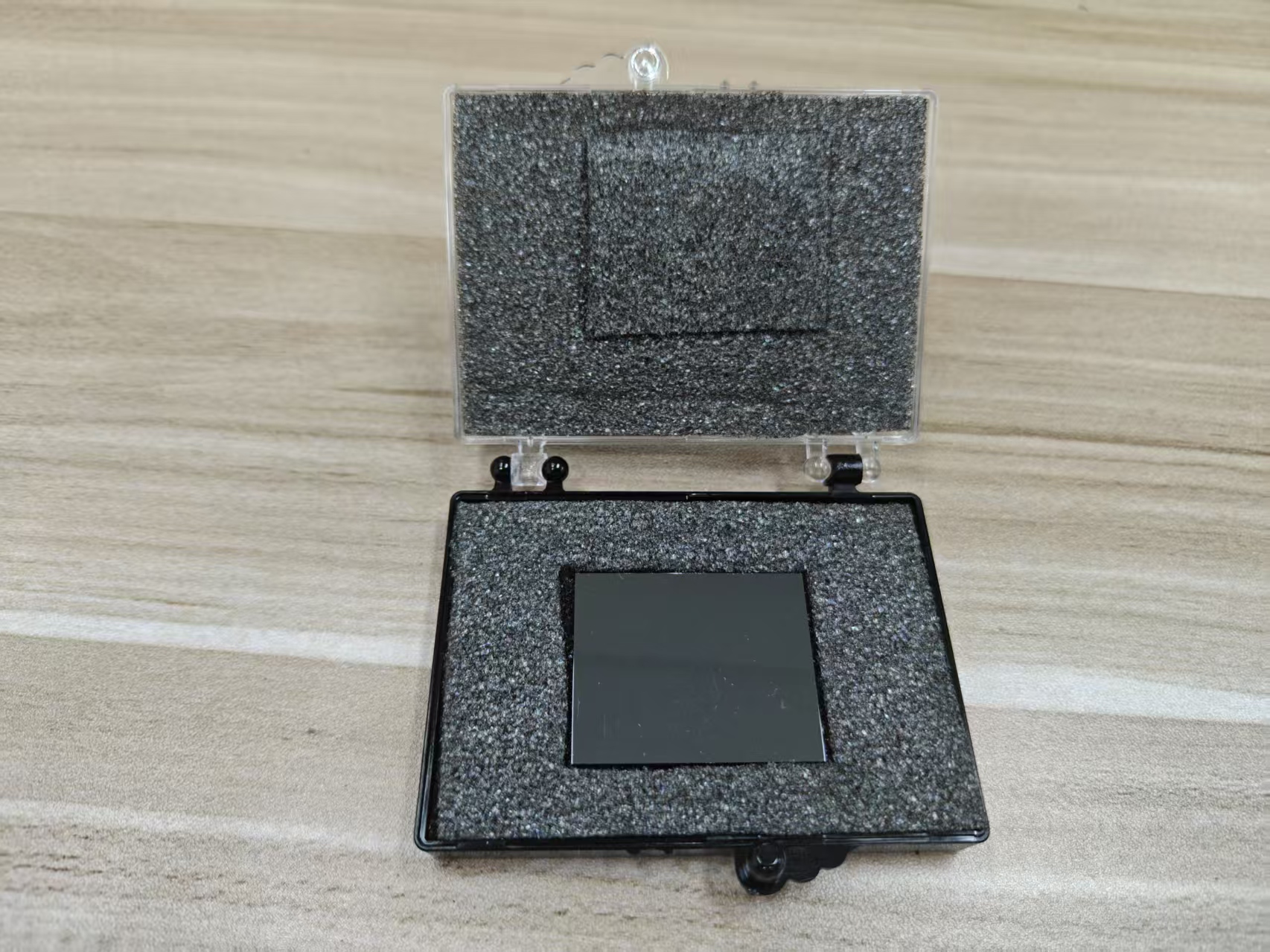
A primary requirement for dual-isotope imaging is the ability to discriminate photons from different isotopes based on their energy. CZT detectors achieve energy resolutions of approximately 4–6% at 140 keV, significantly better than the 8–10% typical of NaI(Tl) detectors. This superior resolution allows for narrow energy windows to be set around each isotope’s photopeak, minimizing cross-talk between 99mTc and 201Tl. Improved separation reduces misclassification of photons, enhances contrast, and ensures that quantitative measurements of tracer uptake remain accurate, which is particularly important for myocardial perfusion studies where small differences in uptake are clinically relevant.
## Direct Conversion and High Detection Efficiency
CZT detectors operate via direct conversion of gamma photons into electron-hole pairs, bypassing the intermediate scintillation step present in NaI(Tl) detectors. This direct mechanism reduces statistical losses in the signal, providing high detection efficiency even for low-energy isotopes such as 201Tl. High sensitivity ensures that sufficient counts are recorded for both isotopes simultaneously, enabling dual-isotope protocols without excessively increasing acquisition time or patient radiation dose. This is critical for low-energy isotopes, which are otherwise prone to poor counting statistics and noise contamination.
## List-Mode Acquisition for Event-by-Event Processing
CZT detectors support list-mode acquisition, recording each detected photon individually with its energy, position, and timestamp. This event-by-event data enables reconstruction algorithms to assign each photon to its correct isotope based on energy windows. In dual-isotope imaging, this allows dynamic adjustment of energy thresholds and weighting factors to account for count-rate variations, scatter, and detector response. The list-mode approach enhances quantitative accuracy by ensuring that photons from 99mTc and 201Tl are correctly attributed, even in high-count-rate conditions or when there is spectral overlap.
## Scatter Rejection and Low-Energy Sensitivity
201Tl emits low-energy photons (69–80 keV) that are more prone to scattering in tissue. CZT detectors’ excellent energy resolution and low-energy threshold capabilities allow narrow energy windows that reject scattered photons while capturing the majority of primary photons. Accurate scatter rejection is essential in dual-isotope protocols, as misclassified scatter events could contaminate the higher-energy 99mTc channel, degrading image quality and quantitative accuracy. CZT’s sensitivity to low-energy photons ensures that 201Tl uptake is reliably measured even when administered at low activity for dose optimization.
## Small-Pixel Architecture and Spatial Resolution
Pixelated CZT detectors improve spatial localization of photon interactions through the small-pixel effect. High spatial resolution is critical in dual-isotope imaging because overlapping projections from two isotopes can confound image interpretation. Precise photon localization reduces partial volume effects and inter-pixel charge sharing, preserving image sharpness for both isotopes. This allows for accurate assessment of regional myocardial perfusion and small defects without signal smearing, which is particularly important in simultaneous dual-isotope studies.
## Depth-of-Interaction and Parallax Corrections
CZT detectors can provide depth-of-interaction information for each photon, allowing reconstruction algorithms to correct for parallax errors and oblique incidence, especially in cardiac imaging where the heart is not centered in the field of view. Accurate DOI corrections ensure that photons from both 99mTc and 201Tl are properly mapped in three-dimensional space, minimizing artifacts and preserving quantitative accuracy. This is particularly beneficial when combining two isotopes with different photon energies, as geometric effects can otherwise lead to energy-dependent misregistration.
## Clinical Benefits and Protocol Optimization
The combination of energy discrimination, low-energy sensitivity, and spatial precision enables CZT-based SPECT-CT systems to implement dual-isotope protocols efficiently. Clinically, this allows simultaneous imaging of stress and rest perfusion in a single scan, reducing total scan time, patient movement, and cumulative radiation dose. Quantitative perfusion analysis is more accurate because cross-talk between isotopes is minimized, and advanced reconstruction algorithms can leverage list-mode data to further correct for scatter, attenuation, and partial volume effects. Dual-isotope CZT SPECT-CT imaging therefore enhances diagnostic confidence and workflow efficiency.
## Conclusion
CZT detectors play a pivotal role in enabling dual-isotope SPECT-CT protocols such as 99mTc-201Tl by providing high energy resolution for precise photon discrimination, direct conversion for high sensitivity, list-mode acquisition for event-level isotope assignment, and small-pixel architecture for enhanced spatial resolution. Depth-of-interaction corrections and low-energy photon sensitivity further improve image fidelity and quantitative accuracy. These capabilities allow simultaneous acquisition of multiple radiotracers with minimal cross-talk, reduced scan time, and optimized patient radiation dose, making dual-isotope imaging practical, efficient, and clinically robust.
CdZnTe Association (CdZnTe.com)
https://www.cdznte.com/blog/what-role-does-a-czt-detector-play-in-enabling-dual-isotope-protocols-such-as-99mtc-201tl-in-spect-ct.html